Metallurgical Laboratory
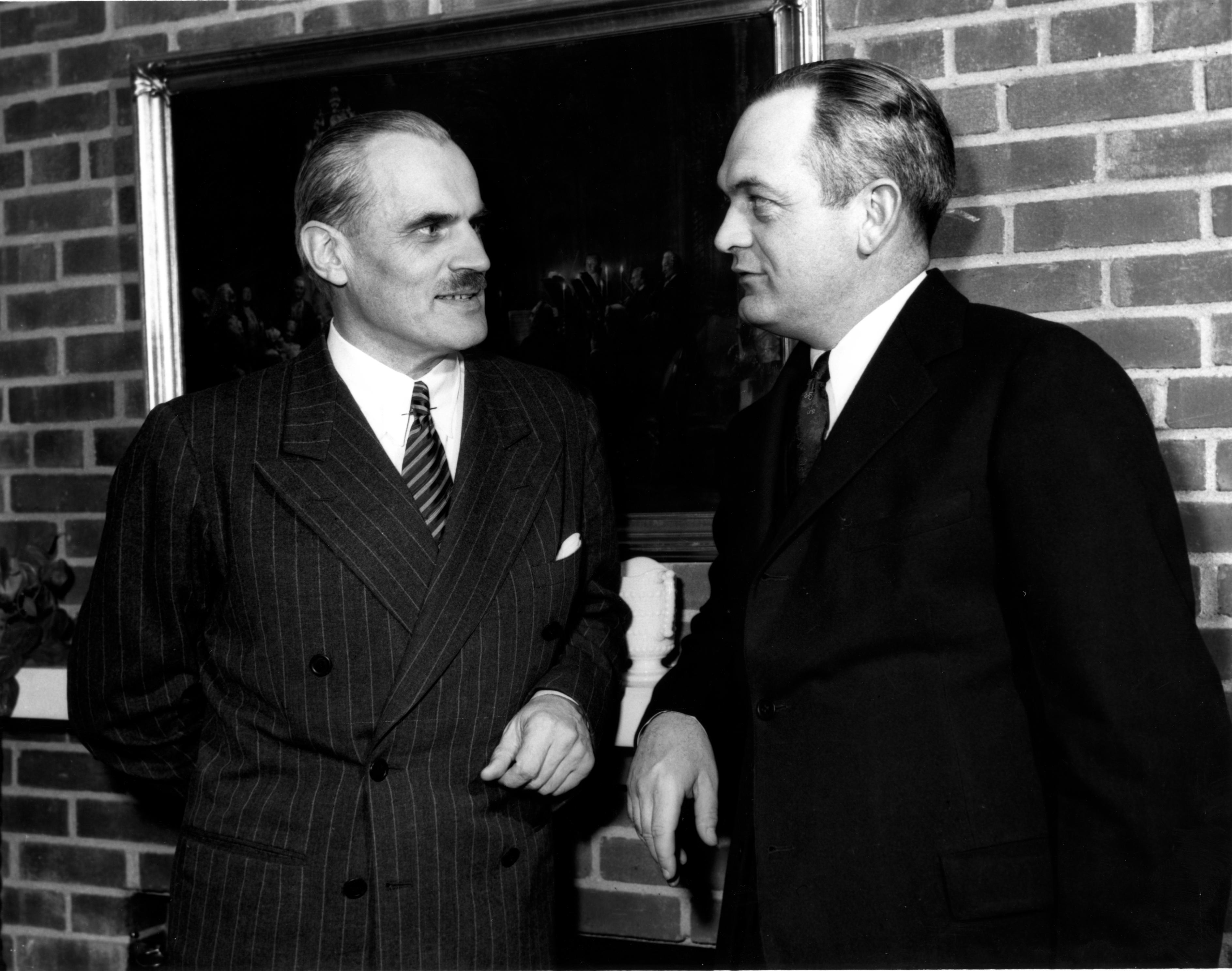
The name was a lie. When the University of Chicago announced the creation of a "Metallurgical Laboratory" in February 1942, the cover story suggested routine metals research. In reality, the Met Lab was the birthplace of the nuclear age - a sprawling, classified operation where Nobel laureates worked in converted squash courts, chemistry buildings, and hospital basements to unlock the power of plutonium. At its peak, 2,008 people labored here on what would become the Manhattan Project, and on December 2, 1942, physicist Enrico Fermi achieved the first controlled, self-sustaining nuclear chain reaction in a makeshift reactor built beneath the stands of the university's abandoned football stadium, Stagg Field.
A Chain Reaction of Decisions
The path to Chicago began with fear. In August 1939, Leo Szilard drafted a letter to President Roosevelt warning that Nazi Germany might develop an atomic bomb, and convinced Albert Einstein to co-sign it. By December 1941, days after Pearl Harbor, Nobel Prize-winning physicist Arthur Compton was placed in charge of the plutonium project. Compton faced a problem: his researchers were scattered across Columbia, Princeton, Berkeley, and Chicago, duplicating work and barely collaborating. Nobody wanted to move. Compton chose his own university, reasoning that Chicago sat centrally, had available facilities, and was far enough inland to be safe from enemy attack. In January 1942, reluctant scientists began arriving in the Windy City. The Metallurgical Laboratory was born - a name designed to attract no attention at a university already considering a metals research institute.
Fire Under the Bleachers
Between September and November 1942, teams under Herbert Anderson and Walter Zinn built sixteen experimental reactors beneath Stagg Field's stands. Fermi designed a new uranium-and-graphite pile that could achieve a controlled chain reaction. Construction of a proper facility at Argonne Forest was falling behind schedule due to labor disputes. When materials arrived faster than the building, Compton approved Fermi's audacious proposal: build the reactor right there, under the bleachers. Construction of Chicago Pile-1 began on November 16, working in twelve-hour shifts. The completed structure was elliptical, containing uranium metal, uranium oxide, and graphite, costing an estimated $2.7 million. On December 2, 1942, Fermi's team achieved the impossible. The reactor went critical. Ten days later, they pushed output to 200 watts - enough to power a light bulb. The reactor had no shielding whatsoever, making it a radiation hazard for everyone nearby. They quickly dialed it back to half a watt.
The Unknown Element
Plutonium was so new it barely existed. Glenn Seaborg's team had produced only micrograms of it, and its metallurgy was completely unknown. In August 1942, the Met Lab achieved a milestone: the first chemical separation of a weighable amount of plutonium from irradiated uranium, done in the George Herbert Jones Laboratory. Working with this near-mythical element revealed alarming properties. When uranium was cut, the shavings burst into flame. Existing references listed uranium's melting point off by nearly 500 degrees Fahrenheit. The chemistry division partnered with DuPont to develop the bismuth phosphate process for separating plutonium from uranium at industrial scale. Meanwhile, the health division made a chilling discovery: plutonium, like radium, was a bone seeker - once in the body, it lodged in bones and stayed there. Herbert Parker created a new unit of radiation measurement, the roentgen equivalent man, or rem, which after the war replaced the roentgen as the standard measure of radiation exposure.
Scattering to the Winds
The Met Lab was never meant to last. By 1943 and 1944, its designs were being built at scale elsewhere - the X-10 Graphite Reactor at Oak Ridge, Tennessee, and the B Reactor at Hanford, Washington. Scientists and entire divisions peeled away. Fermi left for Los Alamos in September 1944. Seaborg departed in May 1946, taking the chemistry division with him. From a peak of 2,008 staff in July 1944, the lab shrank to 1,444 by July 1945. On July 1, 1946, what remained became Argonne National Laboratory, the nation's first designated national lab, still managed by the University of Chicago. The total cost of the Met Lab's contract: $27,933,134.83. Stagg Field was demolished in 1957. Decades later, government teams returned to decontaminate 23 locations in Kent Laboratory, 99 more in Eckhart, Ryerson, and Jones buildings, and the old armory site - quietly cleaning up the residue of the atomic age from a college campus.
A Constellation of Genius
The Met Lab's roster reads like a who's who of twentieth-century physics: Fermi, Szilard, Wigner, Seaborg, Franck, Compton, and briefly Oppenheimer, who ran the bomb design effort here before it became Project Y at Los Alamos. Over 5,000 people in 70 research groups participated in the broader Metallurgical Project. Leo Szilard later wrote that "the morale of the scientists could almost be plotted in a graph by counting the number of lights burning after dinner in the offices at Eckhart Hall." Today, a Henry Moore sculpture called Nuclear Energy marks the spot where Chicago Pile-1 stood. The work done here also led to the creation of the Enrico Fermi Institute and the James Franck Institute at the University of Chicago - permanent legacies of a laboratory that was never supposed to exist.
From the Air
Located at 41.79°N, 87.60°W on the University of Chicago campus in Hyde Park, on Chicago's South Side. From altitude, the campus is visible south of the Midway Plaisance, a long green strip. Stagg Field was demolished in 1957; the Henry Moore sculpture marking the site of Chicago Pile-1 is near the Regenstein Library. Nearby airports include Chicago Midway (KMDW, 7 miles west) and Chicago O'Hare (KORD, 18 miles northwest). Lake Michigan shoreline is visible to the east.