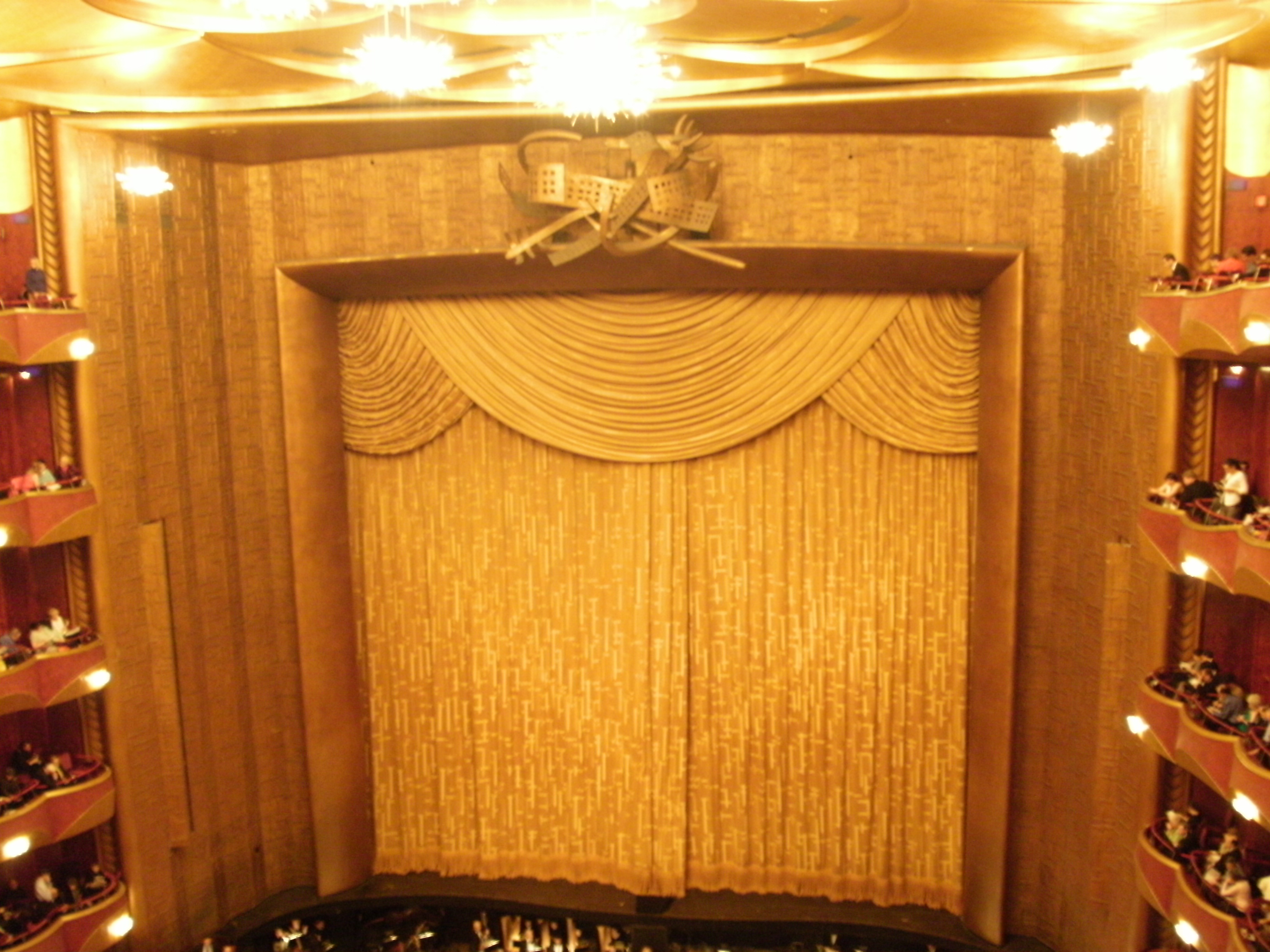
Metropolitan Opera
Twenty-two men gathered at Delmonico's restaurant on April 28, 1880, and what they built from that dinner would become the most powerful opera company in the Western Hemisphere. The reason for their meeting was not artistic idealism but social exclusion: the Morgan, Roosevelt, and Vanderbilt families had been shut out of box seats at the Academy of Music, New York's established opera house, by the old-money families who controlled it. Rather than accept the snub, they decided to build their own theater. The Metropolitan Opera opened on October 22, 1883, at 39th and Broadway, and American opera has revolved around it ever since.
A Theater Born from Rivalry
The original Metropolitan Opera House featured three tiers of private boxes where New York's industrial titans could display their wealth. That first season offered 150 performances of 20 operas, all sung in Italian, featuring stars like soprano Marcella Sembrich and tenor Italo Campanini. The company immediately began touring -- Brooklyn, Boston, Philadelphia, Chicago, St. Louis -- establishing a national presence that would endure for over a century. Financial difficulties plagued the early years. Abbey's inaugural season ended in massive deficits. When the house was gutted by fire in August 1892, it was rebuilt and reopened the following year, entering what became known as the "Golden Age of Opera" under Abbey, Schoeffel, and Grau, with legendary artists including Jean and Edouard de Reszke, Nellie Melba, and Emma Calve gracing the stage.
Voices That Shaped a Century
The Met's story is inseparable from the singers who defined it. Enrico Caruso made the house his home in the early twentieth century. The Norwegian soprano Kirsten Flagstad and heldentenor Lauritz Melchior drew audiences even through the Depression. Under general manager Rudolf Bing, who led the company from 1950 to 1972, the Met desegregated its roster: Marian Anderson's historic 1955 debut opened the door for Leontyne Price, Grace Bumbry, Shirley Verrett, and George Shirley, among others. Price would inaugurate the new Lincoln Center house in 1966. The conductors, too, left their marks -- Arturo Toscanini, Gustav Mahler, and later James Levine, who served as music director from 1976 to 2016 and built the orchestra into a world-class ensemble before his dismissal in 2018 over sexual abuse allegations. Yannick Nezet-Seguin became music director in 2018.
The Move to Lincoln Center
The old Broadway house was elegant and acoustically superb, but its stage facilities were inadequate from the earliest days. Plans for a new home were explored and abandoned for decades, including a proposal to incorporate the Met into Rockefeller Center. It was only with the development of Lincoln Center on the Upper West Side that the company finally relocated. The Met held a lavish farewell gala on April 16, 1966, and despite interest in preserving the theater, it was demolished the following year. The new house, designed by Wallace K. Harrison, seats approximately 3,800 and features two enormous Marc Chagall murals in the lobby -- The Triumph of Music and The Sources of Music -- each measuring 30 by 36 feet. The opening night premiere of Samuel Barber's Antony and Cleopatra was considered a disappointment, but the building itself became an icon.
Broadcasting to the World
The Met's reach has always extended beyond its walls. Lionel Mapleson made the first known recordings at the house between 1900 and 1904, capturing performances on Edison cylinder phonographs. Radio broadcasts began on Christmas Day 1931, with Hansel and Gretel -- a lifeline during the Depression that Texaco would sponsor for an astonishing 63 consecutive years. Television came in 1948 with a live broadcast of Otello. In 2006, Peter Gelb launched the "Live in HD" series, beaming performances via satellite into movie theaters worldwide. By the end of its second season, 920,000 people had attended HD screenings, exceeding the total attendance at the opera house itself. The broadcasts also brought controversy: in 2022, the Met severed ties with artists who supported Vladimir Putin following Russia's invasion of Ukraine, and Ukrainian bass-baritone Vladyslav Buialskyi sang his country's national anthem from the Met stage.
Financial Fragility Behind the Grandeur
For all its artistic ambition, the Met has perennially teetered on the edge of financial crisis. The Wall Street Crash of 1929 nearly destroyed it; soprano Lucrezia Bori personally led fundraising drives that raised the $300,000 needed to keep the lights on. The pattern has repeated across generations. The company's annual operating budget exceeded $325 million by 2012, with 43 percent coming from private donations. In 2025, Gelb announced a five-year winter residency at the Royal Diriyah Opera House in Riyadh, funded by more than $200 million from Saudi Arabia -- a deal that drew criticism but reflected the urgency of the Met's finances. By 2026, delays in that funding forced further cuts, including reduced productions and layoffs. The Met even considered selling the Chagall murals. It is a company that has always lived grandly and precariously, producing some of the finest opera in the world while scrambling to pay for it.
From the Air
Located at 40.7728N, 73.9842W at Lincoln Center on Manhattan's Upper West Side. The Metropolitan Opera House is the largest building in the Lincoln Center complex, identifiable from the air by its distinctive arched facade facing the plaza fountain. Nearby landmarks include Central Park to the east and the Hudson River to the west. Nearest airports: KJFK (14 nm SE), KLGA (7 nm NE), KEWR (10 nm W). Best viewed at 2,000-3,000 ft AGL.