Metropolitan Theatre (Winnipeg)
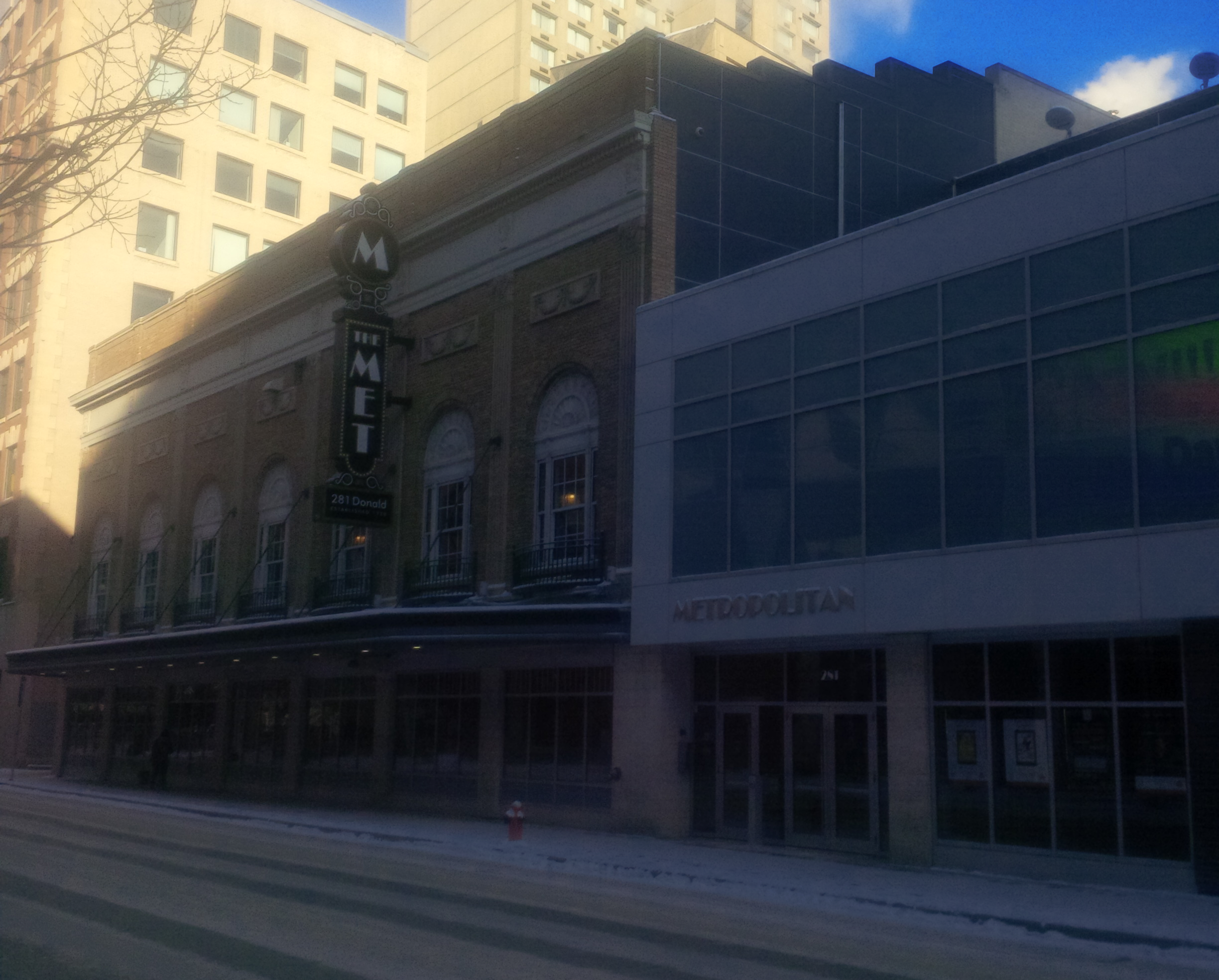
The last film ever screened here was Date with an Angel, a forgettable 1987 romantic comedy. Then the lights went dark, the doors were locked, and one of Canada's grandest movie palaces sat empty for a quarter century. Rain leaked through the plaster ceiling dome. The chandelier gathered dust above 2,500 abandoned seats. Outside on Donald Street, downtown Winnipeg transformed around the shuttered theatre -- the massive Eaton's store across the way closed, the entertainment district shifted, whole blocks were reimagined. But inside 281 Donald Street, time stood still. The neoclassical facade, with its fluted pilasters and terra cotta swags, kept watch over an interior that was, against all odds, in remarkably good condition when restoration crews finally arrived in 2011.
The Brothers Who Built an Empire
Jay J. Allen and Jules Allen, along with their father Bernard, grew up in Brantford, Ontario, and set out to do something no Canadian family had attempted: build a national cinema chain. At its peak, the Allen brothers controlled 45 theatres across the country. For every one, they hired the same architect -- C. Howard Crane, a Detroit-based designer who would go on to create some of North America's most celebrated movie palaces. Crane opened an office in Windsor, Ontario, just to keep up with Canadian commissions. The Winnipeg theatre, constructed in 1919, was among the chain's crown jewels. Named the Allen Theatre, it was meant to open on Christmas Day, but the theatre organ had not yet been installed and some interior finishes remained incomplete. The formal opening came on January 2, 1920, with a screening of Upstairs and Down. The 2,500-seat auditorium featured a plaster dome ceiling, a grand chandelier, and twin staircases sweeping up to a mezzanine -- pure cinematic ambition rendered in brick and ornamental terra cotta.
From First-Run Films to Final Reel
The Allen brothers' empire did not survive the decade. Famous Players acquired the theatre in 1923 and renamed it the Metropolitan, operating it as a first-run cinema for the next sixty-four years. A 1948 renovation relocated the box office, dropped the ceiling, and expanded the candy counter -- changes that reflected postwar tastes but buried some of Crane's original design. By 1987, the era of downtown movie palaces was ending across North America. The Metropolitan screened its last film on November 26 of that year and closed its doors. Plans came and went. In 2006, the city-owned CentreVenture Development Corporation sold the building to Canad Inns for just $100,000. The initial vision was bold: a rock and roll museum, backed by prominent Winnipeg business leaders including Leonard Asper. That dream never materialized. The theatre sat vacant, accumulating water damage but retaining its bones.
Twenty-Five Years of Silence
A building vacant for a quarter century in a Canadian prairie city should have been beyond saving. Winnipeg winters are punishing, and water infiltration can destroy interiors in a fraction of that time. Yet when restoration teams assessed the Metropolitan in 2011, they found the original mezzanine, mouldings, and front facade largely intact. The National Historic Site designation, granted in 1991, had helped protect it from demolition. The theatre is one of only four surviving Allen brothers theatres in Canada, and one of just three surviving Canadian buildings designed by Crane. That rarity made the case for restoration compelling. Canad Inns committed $17 million. The municipal government of Winnipeg contributed $1.5 million from its Heritage Investment Reserve Fund. The provincial Government of Manitoba matched that amount, with the condition that the restored building be available for nonprofit use 30 days per year.
A Palace Reborn on Donald Street
The renovation aimed to peel back the postwar alterations and reveal Crane's original vision. Workers removed a false canopy from the exterior, repointed the light-brown brickwork, and installed new windows with interior backlighting. Heritage elements damaged or destroyed in previous renovations were carefully reconstructed. The original sloped theatre floors gave way to tiered platforms better suited to events, while the front facade, main entrance, mezzanine, and decorative mouldings were preserved. A new structure on the south side added modern necessities: a kitchen, bathrooms, and elevators. On November 30, 2012, the Metropolitan Entertainment Centre opened at an invitation-only unveiling. The building that once projected silent films and early talkies now hosts concerts, gala dinners, film screenings, and fundraising events. It screens Winnipeg Jets playoff games and hosts NHL Entry Draft parties. A supper club and dinner-and-movie nights offer a deliberate echo of the building's original purpose, proving that a 1919 movie palace can still command a room.
From the Air
Located at 49.893°N, 97.143°W in downtown Winnipeg, Manitoba. The theatre sits on Donald Street just south of Portage Avenue, across from Canada Life Centre (home of the Winnipeg Jets). Winnipeg James Armstrong Richardson International Airport (CYWG) is approximately 7 km west-northwest. The downtown core is identifiable from altitude by the confluence of the Red and Assiniboine rivers and the distinctive cluster of high-rise buildings at the Portage and Main intersection nearby. Best viewed from 3,000-5,000 feet during approach to CYWG.