Mexico City: The Aztec Capital Rebuilt in Spanish and Slowly Sinking
Mexico City was built on water - literally. When Cortés conquered Tenochtitlan in 1521, the Aztec capital sat on an island in Lake Texcoco, connected to the mainland by causeways. The Spanish drained the lake and built their colonial capital on the lakebed, a decision whose consequences become clearer with each passing century. The city sinks 10 inches per year in places as it extracts groundwater from beneath itself. The colonial architecture tilts; the metro stations require constant adjustment; the aquifer that supplies the city is the same soft ground that collapses beneath its weight. Mexico City is the world's largest metropolitan area outside Asia, built on geology that punishes the building.
The Sinking
Mexico City extracts 70% of its water from aquifers beneath the former lake. As the water is pumped out, the clay lakebed compacts; the city above subsides. The Palacio de Bellas Artes has sunk about 4 meters (13 feet) since its construction. The Metropolitan Cathedral tilts visibly. Some neighborhoods have dropped 30 feet since measurements began. The problem is worsening: population growth demands more water, more pumping, more subsidence. Solutions exist - importing water, capturing rainfall, recycling wastewater - but none at the scale the crisis demands. The city is slowly swallowing itself, disappearing into the lake it drained.
The Earthquakes
The soft lakebed that causes subsidence also amplifies earthquakes. The 1985 earthquake killed at least 10,000 people - some estimates say 35,000 - when buildings constructed on the old lakebed collapsed while buildings on bedrock survived. The 2017 earthquake killed 370, striking on the anniversary of 1985. The physics are straightforward: seismic waves slow and amplify in soft soil, shaking buildings longer and harder than on solid ground. Mexico City's vulnerability is built into its geology; construction codes have improved, but the fundamental risk remains. The city lives on borrowed stability.
The Layered City
Tenochtitlan lies beneath Mexico City - not metaphorically, but physically. The Templo Mayor, the Aztec temple that once dominated the sacred precinct, was discovered in 1978 when electrical workers stumbled on a massive carved stone. Excavations have since uncovered pyramids, offerings, and sacrificial remains beneath the Zócalo, the central square. The Metropolitan Cathedral, built atop the temple site, contains construction stones taken from Aztec buildings. The National Palace sits where Moctezuma's palace stood. The city is literally built on the rubble of the civilization it destroyed - colonial architecture above, Aztec archaeology below.
The Culture
Mexico City's cultural infrastructure rivals any city in the world: the National Museum of Anthropology holds the finest collection of pre-Columbian art anywhere; the Palacio de Bellas Artes hosts murals by Rivera, Orozco, and Siqueiros; the UNAM campus is a UNESCO World Heritage Site. The neighborhoods vary from colonial Centro to hipster Roma to wealthy Polanco to sprawling Ecatepec. The food culture produces some of the world's best street tacos, fine dining, and everything between. The chaos is manageable; the culture is inexhaustible; the experience rewards visitors willing to navigate a city whose scale exceeds comprehension.
Visiting Mexico City
Mexico City is served by Benito Juárez International Airport (MEX). The Centro Histórico concentrates colonial and pre-Columbian sites: the Zócalo, Cathedral, Templo Mayor, and National Palace are within walking distance. The National Museum of Anthropology in Chapultepec Park requires half a day minimum. Coyoacán offers the Frida Kahlo Museum (Casa Azul). The Roma and Condesa neighborhoods provide restaurants, cafes, and galleries. The metro is efficient and cheap; Uber supplements. Street food is essential - tacos al pastor, tlacoyos, tamales from markets. Air quality varies; altitude (7,350 feet) affects some visitors. The experience is overwhelming by design - 21 million people creating a city that exists despite every reason it shouldn't.
From the Air
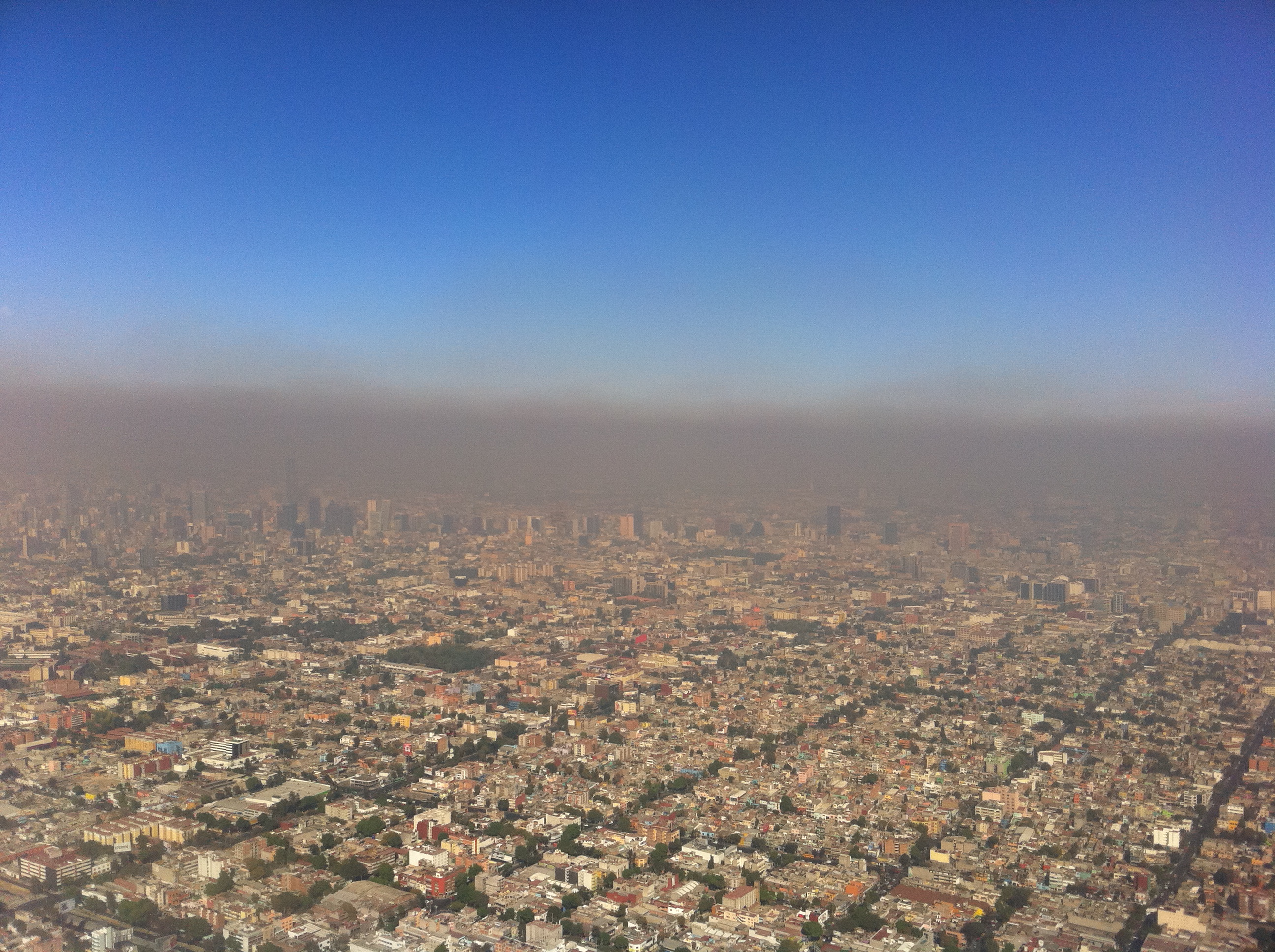
Located at 19.43°N, 99.13°W in the Valley of Mexico at 7,350 feet elevation. From altitude, Mexico City appears as an enormous urban basin surrounded by mountains - the former lake bed visible as the flat zone where development is densest. The volcanoes Popocatépetl and Iztaccíhuatl rise to the southeast. The irregular pattern of the Centro Histórico contrasts with the grid of later development. The sprawl extends to the horizon in all directions. What appears from altitude as one of the world's largest metropolitan areas is built on a drained lake atop an earthquake zone - 21 million people living where geology argues against habitation.