Miankaleh Peninsula
Somewhere below sea level, a thin ribbon of sand holds back the Caspian. The Miankaleh Peninsula stretches 48 kilometers along the southeastern corner of the world's largest enclosed body of water, barely 1.3 kilometers wide at its narrowest, separating the shallow waters of Gorgan Bay from the open Caspian Sea. Its elevation sits at minus 23 meters, a reminder that this entire coastline exists in a geological depression that has been rising and falling for millennia. Four villages cling to this slender landform, and at its eastern tip, the island of Ashuradeh marks the point where land finally surrenders to water.
A Sanctuary Between Two Waters
The peninsula and its adjoining wetlands cover roughly 68,000 hectares of habitat that earned international recognition remarkably early. In 1975, Gorgan Bay and Miankaleh received designation as a Ramsar wetland site, and by 1976 UNESCO had added it to its network of Biosphere Reserves. The reasons are visible overhead: flamingos wading in the shallows, whooper swans arriving from Siberia, red-breasted geese pausing on their southward migrations, peregrine falcons hunting from the dunes. Smew and white-headed ducks bob in the protected waters of the bay. On land, wolves and jackals roam beside wild boar and hedgehogs, while Caspian seals haul out on the shoreline. The average annual rainfall of 717 millimeters sustains a landscape of poplars, sedges, raspberry thickets, and medlar trees in a climate that ranges from hot and humid to moderate.
The Tigers That Might Return
The Caspian tiger once prowled the forests and reed beds of northern Iran. By the late twentieth century, it was gone. In 2010, Russia sent a pair of Siberian tigers to Iran's Tehran Zoological Garden in exchange for Persian leopards, and two more pairs arrived in 2012. These Siberian tigers, the closest living relatives of the extinct Caspian subspecies, are part of a plan to reintroduce big cats to Miankaleh. The idea is bold and scientifically grounded in genetic studies that show the two subspecies are nearly identical. Whether the peninsula's ecosystem can support apex predators while also absorbing the pressures it already faces is a question that remains unanswered.
A Refuge Under Pressure
The threats read like a catalog of modern environmental conflicts. Tourism-related pollution accumulates along the shoreline. The Iranian government has sold portions of the peninsula for industrial and residential development, and plans for a large hotel complex in the heart of the nature reserve have drawn sharp criticism from conservationists. Extensive fishing and hunting have disrupted the ecological balance that earned Miankaleh its international protections. The number of migratory birds has dropped significantly in recent years. Some species are described as moribund. Others face the possibility of local extinction. One small bright spot persists: the controlled harvest of Miankaleh's distinctive sour pomegranates by local communities continues in alignment with UNESCO's Man and Biosphere program, a model of sustainable use that the rest of the peninsula's management has struggled to replicate.
Deep Time in the Sand
Beneath the dunes and shifting sands lie traces of a far older Caspian. Alluvial sediments along the coast alternate between layers of clay, sandstone, and scallop shells, evidence of the sea's repeated advances and retreats over geological time. The rocks on the slopes are large, sharp, and angular, but in the coastal lowlands they are smoothed and filled with animal and plant remains. These fossils connect to Jurassic-era formations, remnants of a time when the Caspian basin looked nothing like the enclosed sea it is today. Walking the peninsula is walking on layers of deep geological history, compressed and rearranged by each successive transgression and regression of the water.
From the Air
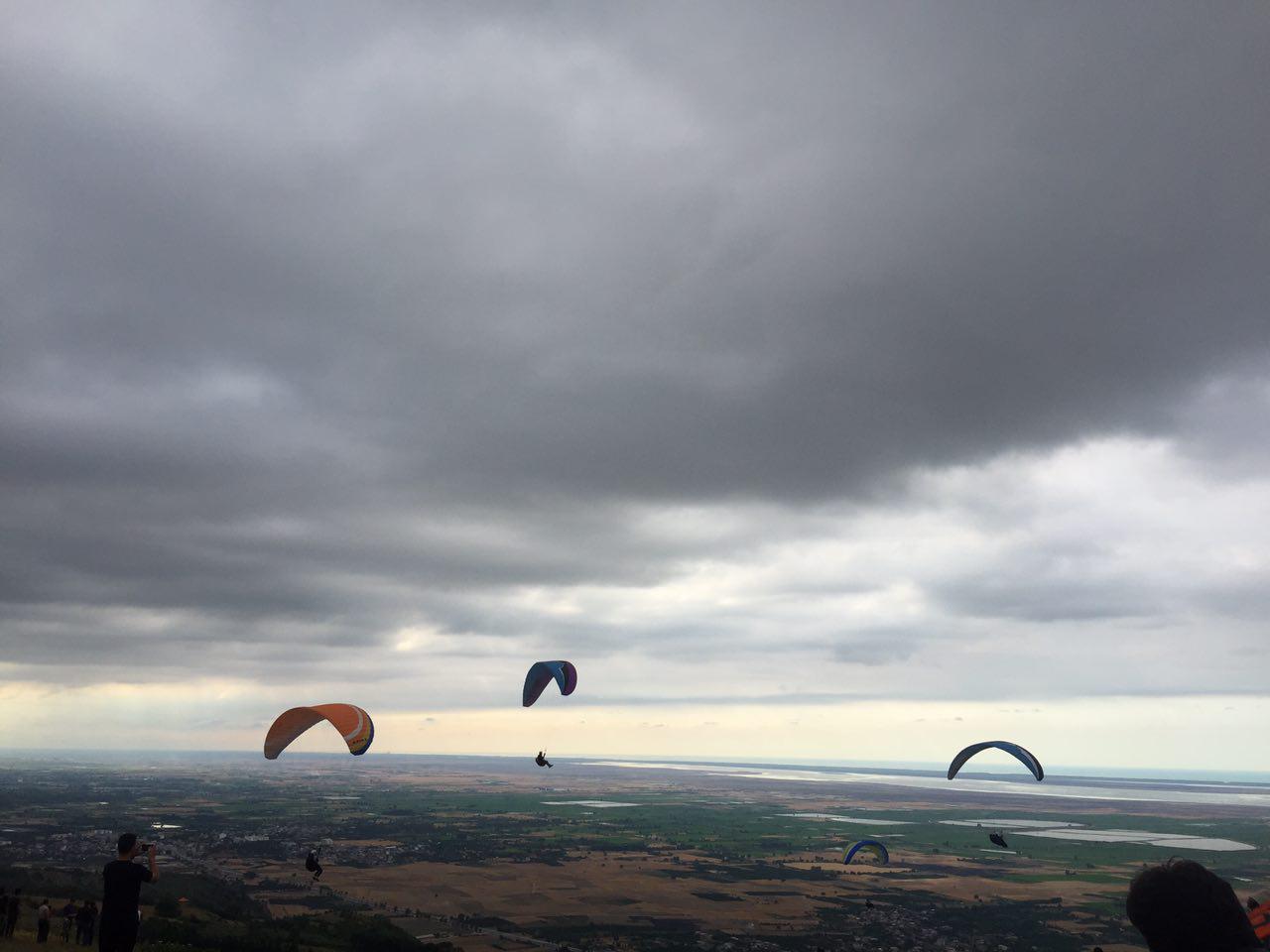
Located at 36.88N, 53.75E along the southeastern Caspian coast in Mazandaran Province, Iran. The peninsula is clearly visible from altitude as a narrow sand spit separating Gorgan Bay from the open Caspian Sea. Best viewed at 5,000-10,000 feet for full length perspective. The nearest airport is Gorgan Airport (OING). The city of Bandar Torkaman sits opposite the eastern tip. Clear weather recommended for best visibility of the wetland and bay contrast.