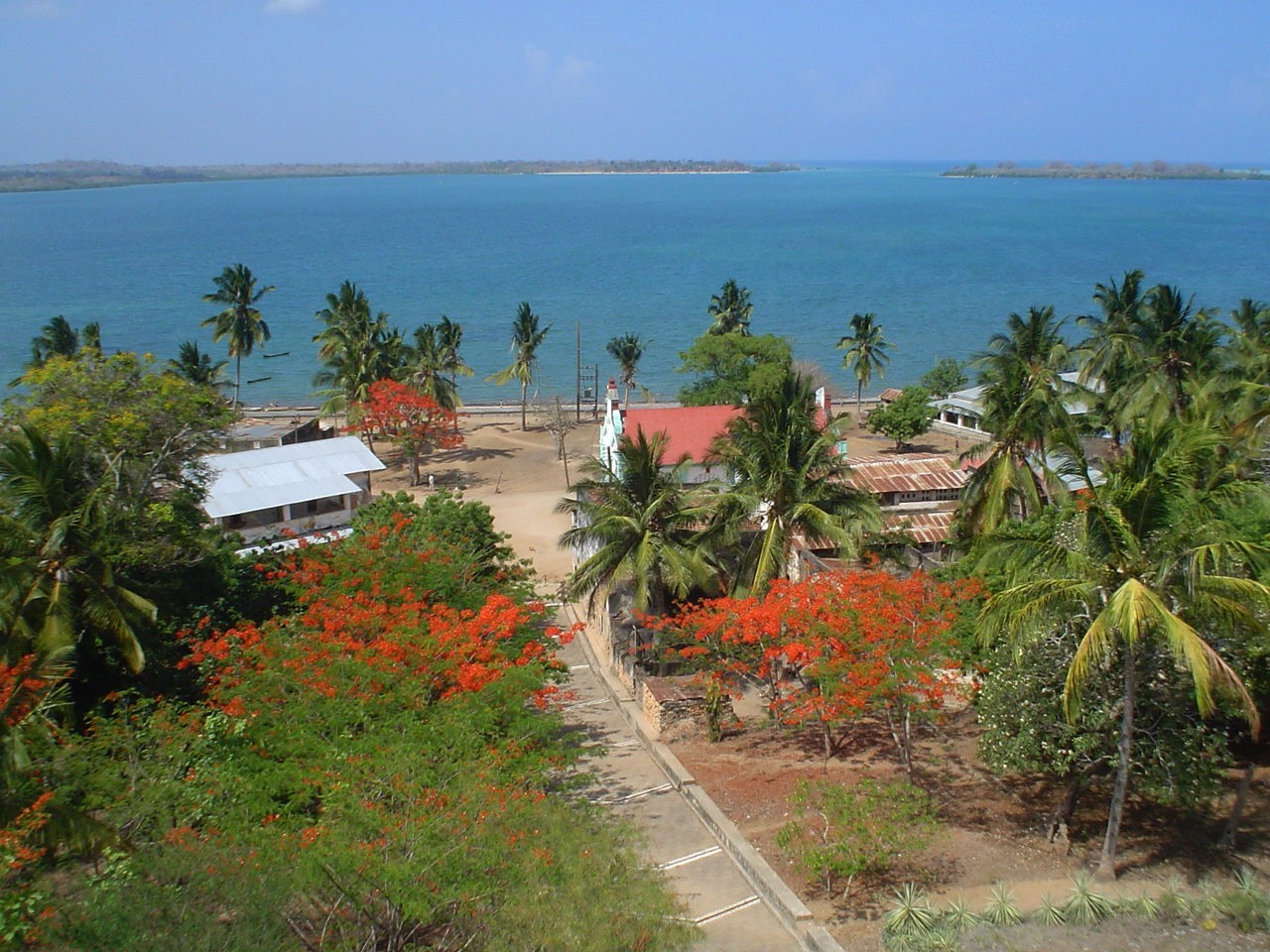
Mikindani
In 1866, David Livingstone walked out of Mikindani and into the African interior on what would be his last expedition. He never returned to this small bay on Tanzania's southern coast. The town that watched him leave had already been trading with the wider world for centuries -- Arab merchants, Portuguese explorers, Indian Ocean dhow captains had all known this harbor. Today, Mikindani sits ten kilometers north of the regional capital Mtwara, largely forgotten by the forces that once made it important, and perfectly content with the arrangement.
Crossroads of the Indian Ocean
Mikindani's original inhabitants were the Makonde people, but Arab traders had established a presence here by the ninth century. The town became a node in the Indian Ocean trading network -- ivory, gum copal, and enslaved people moved through its harbor for centuries. The wealth that built Mikindani's coral-stone buildings came at an enormous human cost: the slave trade continued here long after Britain pressured the Sultanate of Zanzibar to outlaw the practice in the 1870s. The old slave market still stands in town, though as the Wikivoyage guide drily notes, "the old slave market isn't that old." What is genuinely old is the pattern of exchange that shaped Mikindani -- layers of Arab, Portuguese, German, and British influence compressed into a few blocks of weathered architecture along a crescent bay.
The German Boma and British Twilight
The Old Boma, built in 1895, served as the German colonial administration's southern headquarters during the period of German East Africa. It is a handsome two-story structure that has survived better than most of the town's colonial-era buildings, in part because it was repurposed under British rule after World War I and remained an administrative center until 1947. That was the year the British decided to develop Mtwara's larger natural harbor as the regional capital, a decision that effectively ended Mikindani's centuries-long role as the area's most important settlement. The Boma has since been restored as a hotel, and depending on the management, may offer bicycle rentals for exploring the surrounding lanes. The house where Livingstone reportedly stayed before his final journey now serves as the town's museum, though the connection to the explorer is somewhat tenuous.
The Pace of a Fishing Village
Modern Mikindani is small enough to walk from end to end, and the Wikivoyage description captures its character well: there is little in the way of formal sights, but the town is atmospheric and rewards aimless wandering. Daladalas -- the minibuses that serve as Tanzania's public transit -- run between Mikindani and Mtwara throughout the day, a thirty-minute ride that costs a few thousand shillings. The daladala stand doubles as the town's commercial and social hub, home to the best general shops, the liveliest bar (Muku's), and a vendor who makes chipsi mayai -- a chip omelette that sounds improbable but is a Tanzanian classic. Kuchele, the town's resident artist, keeps a shop next to the old slave market and will find visitors before they find him, though without the hard sell. The bay itself is the main attraction: fishing boats work the water in the early morning, and Hiphop Beach overlooks it all, offering cold soda if not yet cold beer.
Getting There Is Part of the Story
Reaching Mikindani is an exercise in patience that filters out the casual tourist. Buses from Dar es Salaam take at least eight hours, and during the rainy season, flooded roads can double the journey. The route from Masasi requires four to five hours. Precision Air flies from Dar to Mtwara, but the schedule is, in the local understatement, "highly erratic." This remoteness is both Mikindani's limitation and its preservation. The town sits about fifty kilometers from the Mozambican border, closer to the insurgency in Cabo Delgado than to the tourist circuits of Zanzibar or the Serengeti. It has no luxury resorts, no dive operators, no Instagram infrastructure. What it has is a thousand years of layered history, a working fishing harbor, and the kind of quiet that lets you hear the call to prayer echo off coral stone walls that were old when Livingstone passed through.
From the Air
Mikindani bay at approximately 10.28S, 40.11E, on Tanzania's southern coast about 50 kilometers north of the Mozambican border. The crescent-shaped bay and the cluster of buildings around the Old Boma are visible from altitude. Mtwara Airport is the nearest airfield, about 10 kilometers south. The town sits at the end of a long road from Dar es Salaam with limited infrastructure. From 3,000-5,000 feet, the bay, fishing boats, and contrast between the compact old town and the surrounding bush are clearly visible.