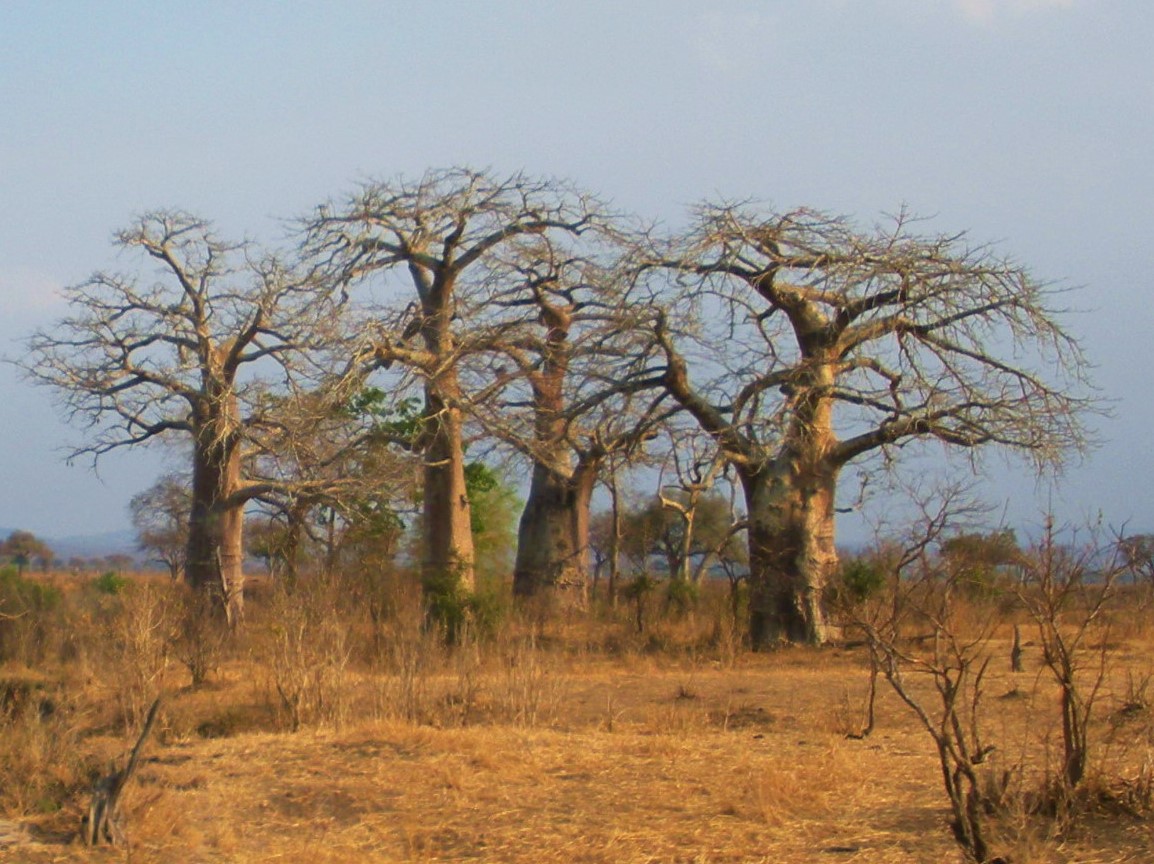
Mikumi National Park
The elephants of Mikumi are smaller than they should be. Their tusks are thinner, their frames more compact, and local lore offers a darkly practical explanation: over generations, ivory hunters selected for the largest tusks, and what remains are the descendants of the elephants least worth killing. Whether the biology holds up to scrutiny or not, the story captures something true about Mikumi National Park -- this is a place shaped by proximity to human pressure, positioned just 250 kilometres west of Dar es Salaam along a highway where long-haul trucks rumble past the park gates day and night. That proximity makes Mikumi the most accessible major wildlife park in Tanzania. It also makes the wildness inside its boundaries feel earned rather than assumed.
The Little Serengeti
Mikumi's open grassland plains have drawn comparisons to the Serengeti since the park's establishment, and the resemblance is genuine. Wide floodplains stretch beneath a ring of forested hills, and during the dry season from June to October, the grass thins to stubble and the animals become impossible to miss. Two days of driving the park's trail network will typically produce lions, elephants, giraffes, buffaloes, zebras, hippos, wildebeest, and impalas, along with enough bird species to keep binoculars busy for a week. The hippo pool is the park's most reliable gathering point -- a permanent water source where the animals compress into viewing range that feels almost theatrical. Park guards at the gate can often tell you where the lions were seen that morning, and circling vultures overhead are a reliable indicator that something with claws recently finished eating.
Where the Highway Meets the Bush
Most of Tanzania's famous parks require bush flights or full-day drives from the nearest city. Mikumi sits right along the A7 highway connecting Dar es Salaam to Zambia, making it reachable in about four hours by road -- though 'road' is a generous term for stretches of the route. The town of Mikumi sits at the park's western entrance, 15 kilometres from the main gate, and serves as a staging point where Swiss-owned lodges and African truckers' guesthouses exist side by side. The park's accessibility has made it a popular destination for Dar es Salaam residents and school groups, giving Mikumi a different character from Tanzania's more exclusive northern circuit parks. This is not a wilderness you need a charter flight to reach. It is one you can drive to on a weekend, which means the conservation challenge here is ongoing and immediate.
Tsetse Flies and Other Realities
Mikumi does not pretend to be a manicured safari experience. Tsetse flies are abundant, particularly in the denser forest sections of the park. They resemble houseflies but bite with a sting sharp enough to interrupt any conversation, and they carry the parasite that causes sleeping sickness. Park veterans know to keep windows closed in wooded areas and to kill any fly that breaches the vehicle immediately. During the wet season from November to May, afternoon rains turn the unpaved park roads into mud traps that can strand even capable four-wheel-drive vehicles. A full tank of fuel, a spare tire, a tow rope, and drinking water are not optional equipment -- they are the price of admission. If a flat tire forces you out of the vehicle, the standard advice is blunt: lions and cheetahs are ambush hunters, so stay close to the car and keep children inside.
Nights Under Canvas
Accommodation inside the park ranges from government-run hostels and guesthouses to privately operated tented camps perched on hilltops above the plains. Foxes Safari Camp, positioned near the park's centre, offers the particular experience of hearing animals walk beneath and around your elevated tent after dark -- a sound that recalibrates the relationship between guest and landscape. Vuma Hills, closer to the main gate, overlooks a watering hole that draws steady wildlife traffic during the dry season. The park restaurant offers meals starting at prices low enough to remind visitors that this is not the Ngorongoro Crater. Mikumi's appeal is rougher, more honest. The climate is warm to hot year-round, with little variation except that the wet season adds humidity and the dry season adds dust. Either way, the park delivers what it promises: big animals on open plains, close to the road, with just enough discomfort to keep the experience real.
From the Air
Located at 7.20S, 37.13E in south-central Tanzania, straddling the A7 Dar es Salaam-Zambia highway. From altitude, the park appears as a broad grass plain ringed by forested hills, with the highway cutting through or alongside the park boundary. The town of Mikumi is visible at the western edge. Morogoro lies to the northeast and Iringa to the southwest along the same highway. No ICAO-coded airport at Mikumi itself; the nearest airfields are Morogoro and Iringa (HTIR). Dar es Salaam (HTDA) is the nearest major international airport, approximately 250 km east. The Udzungwa Mountains are visible to the south and west as a dramatic escarpment rising from the lowlands.