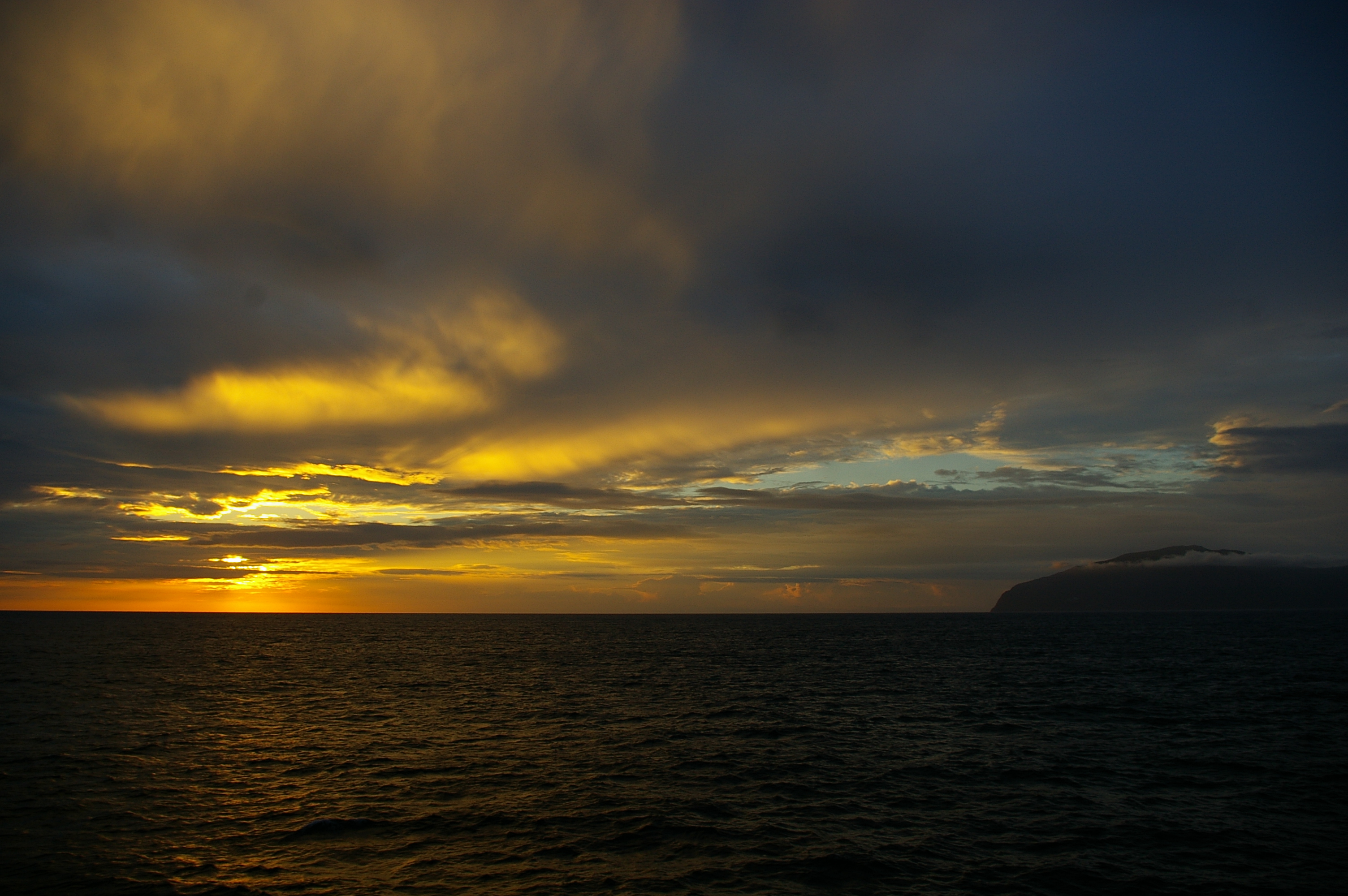
Mikura-jima
Two million birds and 351 people share an island the size of a small Tokyo neighborhood. Mikura-jima, a volcanic speck in the Philippine Sea administered as part of Tokyo Metropolis, hosts the largest breeding colony of streaked shearwaters on the planet -- a swirling, shrieking cloud of seabirds that outnumber the human population by a factor of roughly 5,700 to one. The island sits south of Miyake-jima in the Izu archipelago, wrapped in old-growth forest that has survived where other islands' forests have not, and ringed by waters where pods of wild dolphins have drawn visitors from across Japan for decades.
The Exiles' Island
Mikura-jima has been inhabited for thousands of years, though written records only reach back to the Edo period. During the Tokugawa shogunate, the entire Izu Islands chain was designated as a place of exile -- a remote dumping ground for political dissidents, fallen officials, and other inconvenient persons. The legacy is still woven into the population: up to 10 percent of current island residents are descendants of those exiles. In 1714, a particularly consequential exile arrived. Kochikuin Okuyama, a physician with connections to the shogunate, landed on Mikura-jima and discovered that officials on nearby Miyake Island had been using Mikura's official seal to skim profits from the island's lumber exports. Okuyama leveraged his political ties to recover the seal, a small act of bureaucratic justice that secured Mikura's economic independence from its larger neighbor.
A Forest the Volcanoes Spared
What sets Mikura-jima apart from its siblings in the Izu chain is its forest. Unlike the other islands, where eruptions, logging, and development have stripped much of the original cover, Mikura has preserved most of its old-growth canopy. Endemic species like the nioiebine orchid grow here in habitat that has remained relatively undisturbed. BirdLife International recognized the island as an Important Bird Area, not only for the staggering shearwater colony but for populations of Japanese wood pigeons, Japanese murrelets, Pleske's grasshopper warblers, Ijima's leaf-warblers, and Izu thrushes. The forest floor hums with life, and the canopy overhead is dense enough to block out the subtropical sun. This is one of the last places in the Izu Islands where the original landscape still dictates the terms.
Swimming with Dolphins, by the Rules
Tourism is Mikura-jima's primary industry, drawing about 10,000 visitors per year to an island with a permanent population of just 351. The main attraction is the resident dolphin population in the surrounding waters. Dolphin tours operate from March through October, with boats departing from both Mikura-jima itself and from Miyake-jima, a 45-minute crossing by fishing vessel. But Mikura-jima's approach to tourism is deliberately restrictive. Tourists cannot hike without an island guide. Camping is prohibited. Visitors must stay in designated inns. These rules exist not to discourage visitors but to protect the fragile ecosystem that makes the island worth visiting in the first place. The approach has kept Mikura-jima from suffering the ecological degradation that unregulated tourism inflicts on small islands worldwide.
Boxwood, Orchids, and the Art of Shogi
Beyond dolphin tours, Mikura-jima's economy rests on a handful of niche exports that reflect the island's unique ecology. Ashitaba, a fast-growing plant native to the Izu Islands, is harvested and shipped to the mainland. Calanthe orchids, cultivated in the island's subtropical climate, find buyers among collectors. But the most prized export is Japanese boxwood. Mikura-jima's boxwood is considered among the finest in Japan, and it is the material of choice for crafting top-quality shogi tiles -- the playing pieces of Japan's ancient chess-like strategy game. The slow-growing, dense-grained wood from this remote island ends up in the hands of shogi masters across the country, a quiet connection between a volcanic outpost and one of Japan's most cerebral traditions.
At the End of the Ferry Line
Reaching Mikura-jima requires the kind of planning that filters out casual visitors. The island sits along the route of the overnight ferries that serve the Izu chain from Takeshiba Pier in Tokyo, but the sea conditions in this stretch of the Philippine Sea can be rough, and port access depends on weather. There is no airport. The isolation is the point. Within the boundaries of the Fuji-Hakone-Izu National Park, Mikura-jima exists as a kind of counterargument to the notion that Tokyo is only neon and concrete. This is Tokyo too -- a volcanic island where old-growth forest meets open ocean, where two million seabirds wheel overhead at dusk, and where the descendants of exiled samurai-era dissidents run dolphin boats and cultivate orchids on slopes that have never been logged.
From the Air
Mikura-jima is located at approximately 33.87N, 139.61E, about 20 km south-southeast of Miyake-jima in the Izu Islands chain. The island has no airport, so the closest landing option is Miyakejima Airport (RJTQ) on neighboring Miyake-jima, with connecting boat service. Haneda Airport (RJTT) is the nearest major airport on the mainland. From the air, Mikura-jima appears as a small, densely forested volcanic cone surrounded by deep blue Pacific water. Fly at 2,000-4,000 feet for the best perspective on the island's old-growth canopy and rugged coastline. The island is part of Fuji-Hakone-Izu National Park. Look for Miyake-jima's distinctive caldera to the north-northwest as a navigation reference.