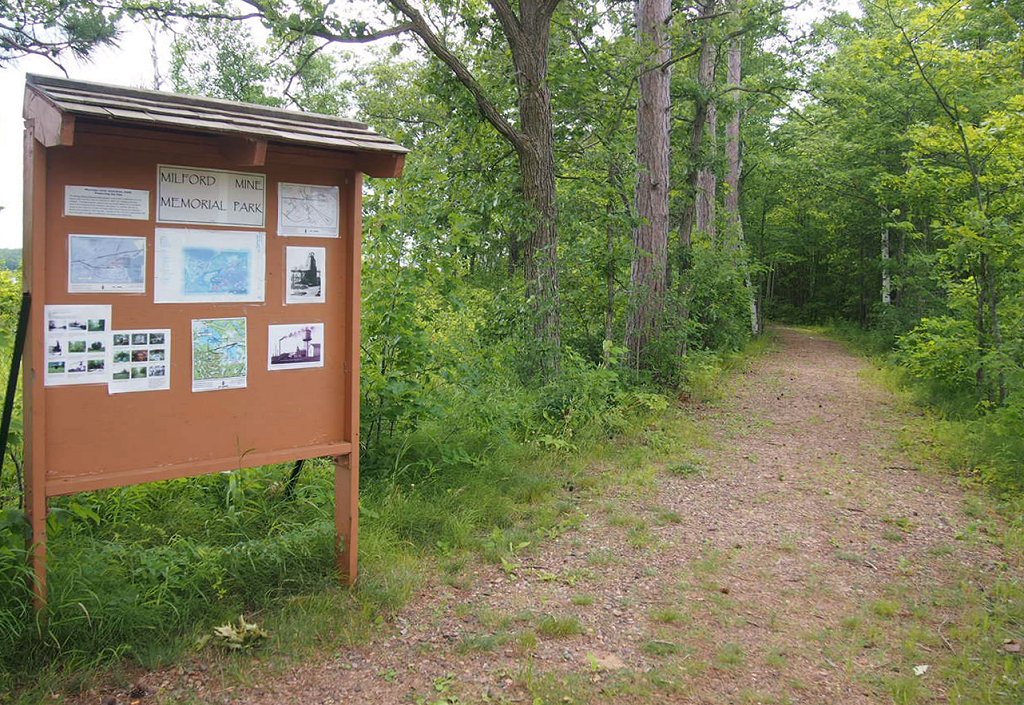
Milford Mine
On the morning of February 5, 1924, forty-eight men descended into the Milford Mine in Crow Wing County, Minnesota. By afternoon, only seven would climb back out. A wall of mud and water from nearby Foley Lake had burst through the easternmost tunnel, flooding the shaft to within fifteen or twenty feet of the surface in less than twenty minutes. Forty-one miners drowned in what remains the deadliest mining disaster in Minnesota history. The mine sits on the Cuyuna Range, a stretch of iron country that had been producing ore rich in manganese since 1917. The Milford Mine was supposed to be another source of prosperity. Instead, it became a grave.
Manganese and the Making of Steel
First mined for iron ore in 1917, the Milford Mine operated under owner George H. Crosby in Wolford Township. By 1924 the mine had reached considerable depths, and 70,000 tons of ore were extracted and shipped that year alone. The Cuyuna Range's ore was prized not just for iron but for its high manganese content, a critical alloy in steel manufacturing. From the Milford site, ore traveled by rail to Duluth, then onward by ship to the steel factories of Detroit and Cleveland. The mine was productive and profitable, feeding an industrial chain that stretched across the Great Lakes and into the foundries of the Midwest.
Twenty Minutes of Mud
The disaster struck when a surface cave-in at the mine's easternmost end broke through to mud that connected directly to Foley Lake. Water and debris surged into the tunnels with devastating speed. The shaft flooded in less than twenty minutes. Seven men near the surface managed to scramble to safety. The other forty-one were trapped by the rising water and suffocating mud. Thirty-eight of the dead were married men, and they left behind more than eighty children. In an instant, the Milford Mine went from an engine of Cuyuna Range prosperity to a scene of communal devastation that scarred the surrounding towns for generations.
Nine Months of Recovery
Recovering the bodies was agonizing work. The mine was filled with mud and debris, and rescue teams worked in constant fear of further cave-ins. The effort stretched from February through the rest of the year. The last body was not removed until November 9, 1924, nine months after the disaster. Minnesota Governor J. A. O. Preus appointed a five-man committee to investigate. After hearings in May and June, the committee concluded: "No blame can be attached to the mining company for this unfortunate accident. The real cause of the disaster was the fact that imminence and danger from such a rush of mud was not recognized by anyone." The mine resumed operations soon after the last body was recovered.
Silence, Then Remembrance
The Milford Mine closed in 1932, a casualty of the Great Depression's collapse in steel demand. For decades, the site sat quietly in the Minnesota woods, its story known mainly to the descendants of the men who died there. That changed in 2010, when Crow Wing County began developing the property as Milford Mine Memorial Park. The site was listed as the Milford Mine Historic District on the National Register of Historic Places in 2011, recognized for its significance in the themes of industry and historical archaeology. The nomination noted its potential to illuminate mining technology, the rise and fall of iron-ore mining on the Cuyuna Range, and the daily lives of the workers who made their living underground. A century after the disaster, the park stands as a place of remembrance in a landscape shaped by extraction, loss, and the slow reclaiming power of the natural world.
From the Air
Located at 46.53N, 93.97W in Wolford Township, Crow Wing County, Minnesota, on the Cuyuna Range. The site is now Milford Mine Memorial Park, surrounded by forest and the flooded mine pits characteristic of the former iron range. Brainerd Lakes Regional Airport (KBRD) is approximately 15 miles to the southwest. The terrain is flat to gently rolling, with numerous lakes formed from abandoned mine pits visible as blue pools among the tree canopy. The nearby towns of Crosby and Ironton are visible as small settlements along State Highway 210.