Mille Lacs Indian Museum and Trading Post
Step into the Four Seasons Room and time collapses. Life-size dioramas built in 1964 surround you with scenes of Ojibwe life organized by the calendar that mattered most: berry picking in summer, wild ricing in fall, hunting and trapping through winter, maple syrup camp in spring. The figures are not behind glass in some distant gallery. They are right there, at eye level, in a museum that sits on the southwestern shore of Mille Lacs Lake in Onamia, Minnesota -- the same waters where the Mille Lacs Band of Ojibwe has lived since driving the Dakota from these shores in the mid-eighteenth century. Opened on May 18, 1996, the Mille Lacs Indian Museum and Trading Post is one of 26 historical sites operated by the Minnesota Historical Society, but its origins reach back to a homesteader, a resort couple, and 2,200 artifacts collected over decades of proximity and trust.
From Sawmill to Museum
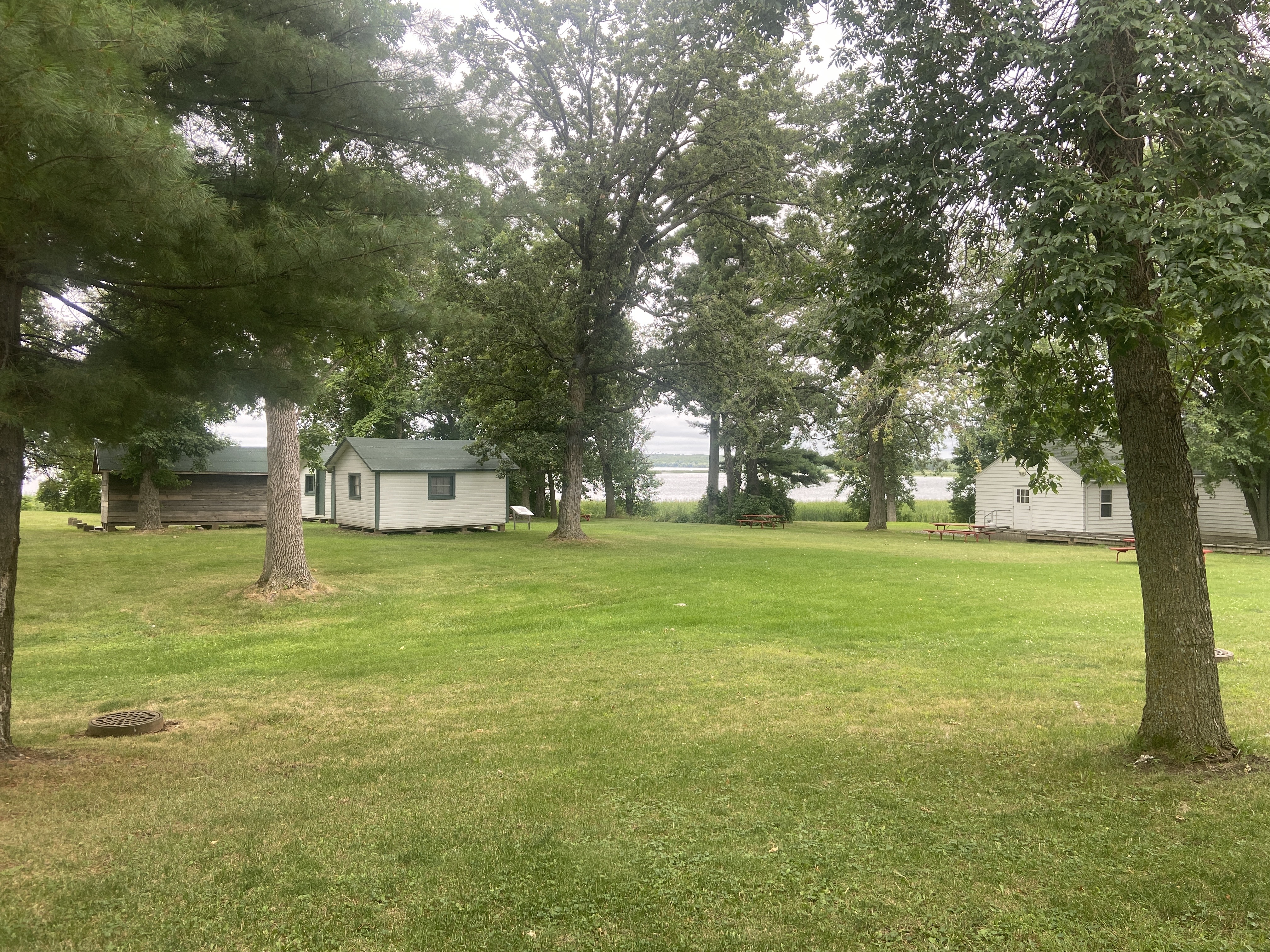
The land beneath the museum has its own layered history. D.H. Robbins homesteaded near the site in 1884, operating a sawmill, farm, and trading post in the decades that followed. In 1916, Robbins sold part of his land to Harry and Jeanette Ayer; two years later, he sold the rest to the U.S. government. The Ayers saw opportunity on Mille Lacs Lake. By 1930, they had purchased additional lakeshore acreage and began renting cabins to hunters and visitors. Within seven years, the Ayers' resort was a full operation: cabins, boats, a dining hall, a dock, a boat factory, a maple sugar syrup refinery, a gas station, and a trading post. Throughout those years, the Ayers collected American Indian artifacts -- bandolier bags, moccasins, birch-bark baskets -- building a collection that would eventually number 2,200 pieces.
A Gift to the State
In 1959, Harry Ayer donated the buildings, the land, and his entire collection to the Minnesota Historical Society. The Society opened a public exhibit of the artifacts in 1960 and by 1969 unveiled the Four Seasons exhibit that remains the museum's centerpiece. The original building housed these displays for more than two decades before closing in 1992 to make way for the new museum, which opened four years later. The transition from private collection to state institution preserved something that might otherwise have scattered: a concentrated record of Ojibwe material culture assembled by people who lived alongside the community. The Ayer Collection's strength lies not in rare or ceremonial objects but in the everyday items that tell you how people actually lived -- the tools, the clothing, the baskets shaped by hands that knew exactly what they needed to carry.
Seasons in a Room
The Four Seasons Room remains the heart of the museum. The dioramas depict not a frozen past but a cycle that continues: Ojibwe families still harvest wild rice on Mille Lacs Lake each fall, still tap maple trees in spring. The museum's exhibits are presented in both English and Ojibwe, a deliberate bilingualism that reflects the Band's commitment to language preservation. Beyond the seasonal displays, "Our Living Culture" showcases contemporary powwow regalia, reminding visitors that tradition is not something stored behind glass but something worn, danced in, and handed down. "Making a Living" documents the economic history of the Ojibwe people over the past century, from fur trading through the wage labor era. "Nation Within a Nation" addresses the Mille Lacs Band's ongoing work in sovereignty and self-governance -- the political reality that underpins everything else in the building.
A Museum on Contested Ground
The museum sits within the Mille Lacs Indian Reservation, land established by the Treaty of Washington in 1855 and subject to nearly two centuries of legal disputes. In March 2022, a federal court reaffirmed that the 61,000-acre reservation boundaries still hold -- a ruling that gave legal weight to what the Mille Lacs Band had never stopped asserting. The museum, in this context, is more than a repository of artifacts. It is a statement of presence, anchored to the same lakeshore where the Ojibwe first established themselves after the Battle of Kathio. The restored Ayer trading post now serves as the museum's gift shop, a tidy bit of transformation: what was once a place where cultures exchanged goods is now a place where one culture invites others to understand its story on its own terms.
From the Air
Located at 46.177°N, 93.756°W on the southwestern shore of Mille Lacs Lake in Onamia, Minnesota. The museum sits along U.S. Highway 169, which traces the western edge of the lake. Mille Lacs Lake is Minnesota's second-largest inland lake and dominates the landscape from altitude -- roughly 14 miles across, easily identifiable. The museum is a small complex near the shoreline, adjacent to the Mille Lacs Band government buildings in the Vineland area. Nearest airports: Mille Lacs Lake Airport (7MN4) near Garrison to the north; Isle Airport (MY72) to the east. Regional airports include St. Cloud Regional (KSTC) approximately 55 nm southwest and Brainerd Lakes Regional (KBRD) about 40 nm northwest. Best viewed at 2,000-4,000 feet AGL where the lakeshore developments and highway corridor are clearly visible.