Millicent Rogers Museum
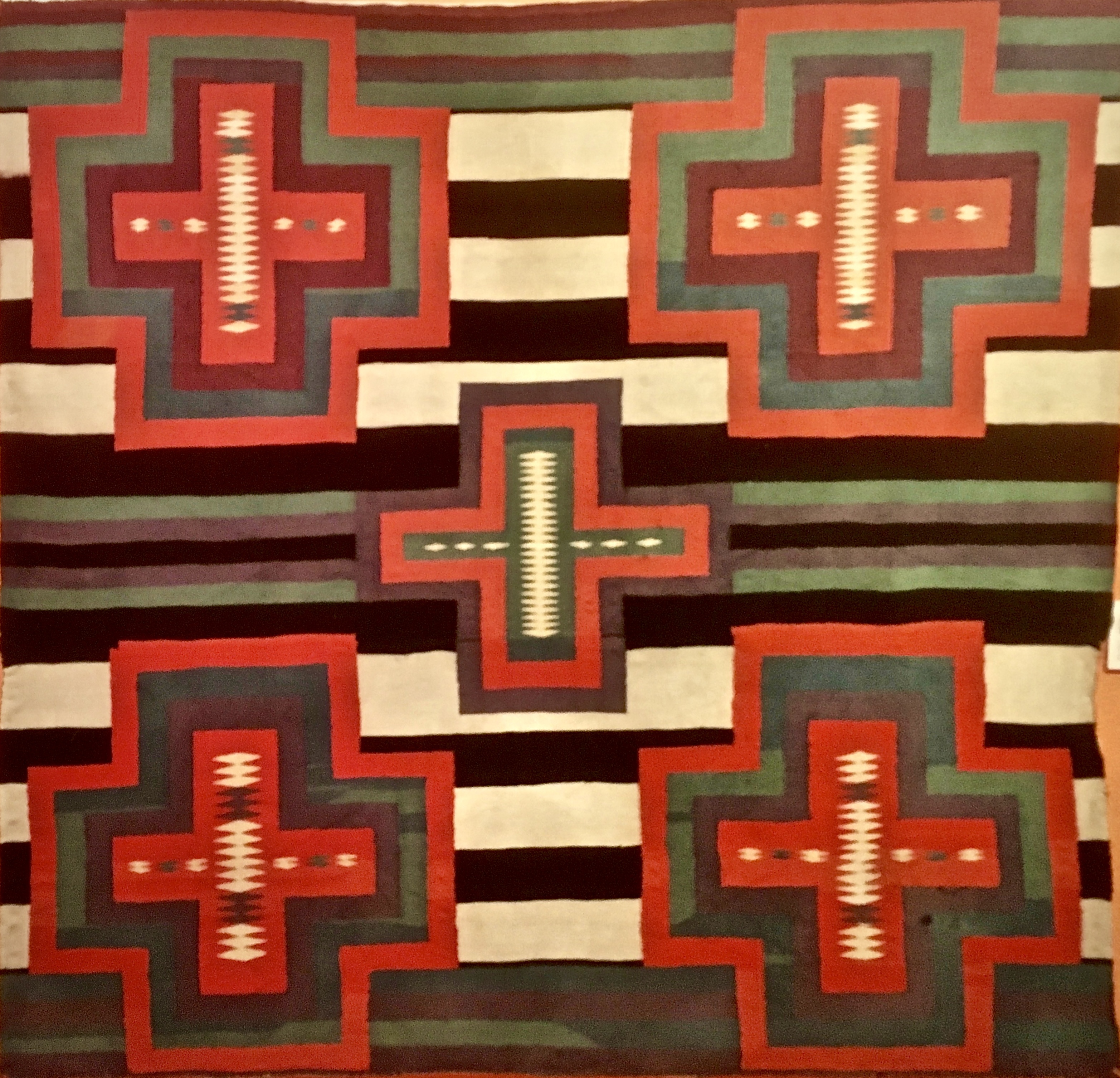
Millicent Rogers had everything Manhattan high society could offer -- wealth inherited from her grandfather, one of the original founders of Standard Oil, a career as a fashion designer, and the admiration of some of the most famous men in mid-century America. Then, in 1947, she arrived in Taos, New Mexico, and none of it mattered anymore. What captivated her was something no amount of money could manufacture: the turquoise-and-silver jewelry of Pueblo artisans, the geometric precision of Navajo chief blankets, the ancient glow of micaceous clay pottery shaped by hands that carried two thousand years of tradition. Rogers threw herself into collecting with the same intensity she had brought to everything else in her life, acquiring more than 1,200 pieces of Native American and Hispanic jewelry and over 50 textiles in just five years. She would not live to see what her passion became.
The Collector Who Changed the Rules
Rogers did not simply buy beautiful things. She understood that Native American art occupied a precarious position in mid-20th-century America, admired as craft but denied the status afforded to European fine art. Leveraging her considerable social connections, she campaigned to have Native American art classified as historic, a designation that provided both legal protection and cultural recognition. It was a quiet revolution fought in parlor rooms and government offices rather than on the streets, but its effects reshaped how the American art world regarded indigenous creative traditions. When Rogers died of an enlarged heart at age 50 in 1952, she left behind not just a collection but a precedent. Her family honored that legacy by opening a museum in a temporary Taos location in the mid-1950s, and in 1968 it moved to its permanent home -- a building originally constructed by Claude J. K. and Elizabeth Anderson.
Two Thousand Years on the Shelves
The museum's Native American holdings span an extraordinary timeline. Baskets and pottery in the collection represent craft traditions dating back roughly two thousand years. Mimbres pottery depicting fish dates to between 1000 and 1150 AD. Moving forward through the centuries, the collection includes ancient micaceous clay pottery from Taos Pueblo alongside 20th-century paintings by Pueblo artists Albert Looking Elk, Albert Lujan, Juan Mirabal, and Juanito Concha, whose works on paper documented the daily lives of Southwest Pueblo peoples. One of the museum's most distinctive holdings is a collection of artwork by 7th and 8th grade children from the Oo-oonah program, created between 1968 and 1972, capturing the creative voices of a generation growing up between tradition and modernity. Zuni and Hopi kachina figures -- representations of spiritual beings believed to bring rain and ensure prosperity -- round out a collection that treats indigenous art not as artifact but as living expression.
Santos, Tinware, and Self-Reliance
In the 1980s, the Millicent Rogers Museum became the first cultural organization in New Mexico to offer a comprehensive collection of Hispanic art, broadening its mission beyond Rogers's original Native American focus. The Hispanic holdings tell a story of resourcefulness and devotion. Santos -- religious icons painted on flat boards called retablos or carved from wood as bultos -- emerged in the late 17th century as isolated communities created their own sacred imagery. Tinware, likely introduced from Mexico and Spain, found new life in New Mexico as material for religious adornments, sconces, and mirrors, growing increasingly popular by the mid-19th century. Furniture, textiles, and leather goods in the collection reflect the self-sufficiency demanded of Hispanic settlers who turned woodworking, weaving, and tinsmithing into both survival skills and art forms. Together with the Native American galleries, these holdings make the museum a place where the two dominant cultural traditions of northern New Mexico stand side by side.
Where Taos Keeps Its Memory
The museum sits just north of Taos proper, sharing the high desert landscape with the Taos Pueblo community that inspired so much of its collection. Inside, a polychrome plate by the legendary potter Maria Martinez and her son Popovi Da, created in 1969 and depicting the Avanyu water serpent, exemplifies the caliber of work on display. The museum store extends the experience outward, offering jewelry, ceramics, textiles, woodwork, and photography by leading local artists -- a reminder that the artistic traditions Rogers championed are not relics but ongoing practices. Taos has no shortage of galleries and museums, including the nearby Harwood Museum of Art and the Taos Art Museum, but the Millicent Rogers Museum occupies a singular niche: it is the place where one woman's obsession became a bridge between cultures, and where two thousand years of Southwestern creativity found a permanent home.
From the Air
Located at 36.44N, 105.59W, the museum sits just north of Taos, New Mexico, in the Sangre de Cristo foothills. Approach from the south for views of the Taos Plateau and the distinctive adobe architecture of the town. Taos Regional Airport (KSKX) is approximately 10 miles to the northwest. At 5,000 feet AGL, the Taos Pueblo complex and the Rio Grande Gorge to the west provide excellent visual landmarks. Clear skies are common, though afternoon thunderstorms build over the mountains in summer months.