Milltown Cemetery
The graves number approximately 200,000, and the vast majority belong to people whose names mean nothing to history. Milltown Cemetery opened in 1869 to serve Belfast's growing Catholic population, a practical response to a city bursting its seams during the industrial boom. But over the decades that followed, events beyond the control of any bishop or burial committee turned this quiet patch of ground between the Falls Road and the M1 motorway into one of Northern Ireland's most charged landscapes. What was built as a place of rest became, through no design of its own, a place where the living kept returning to confront the dead and what they died for.
The Weight of Names
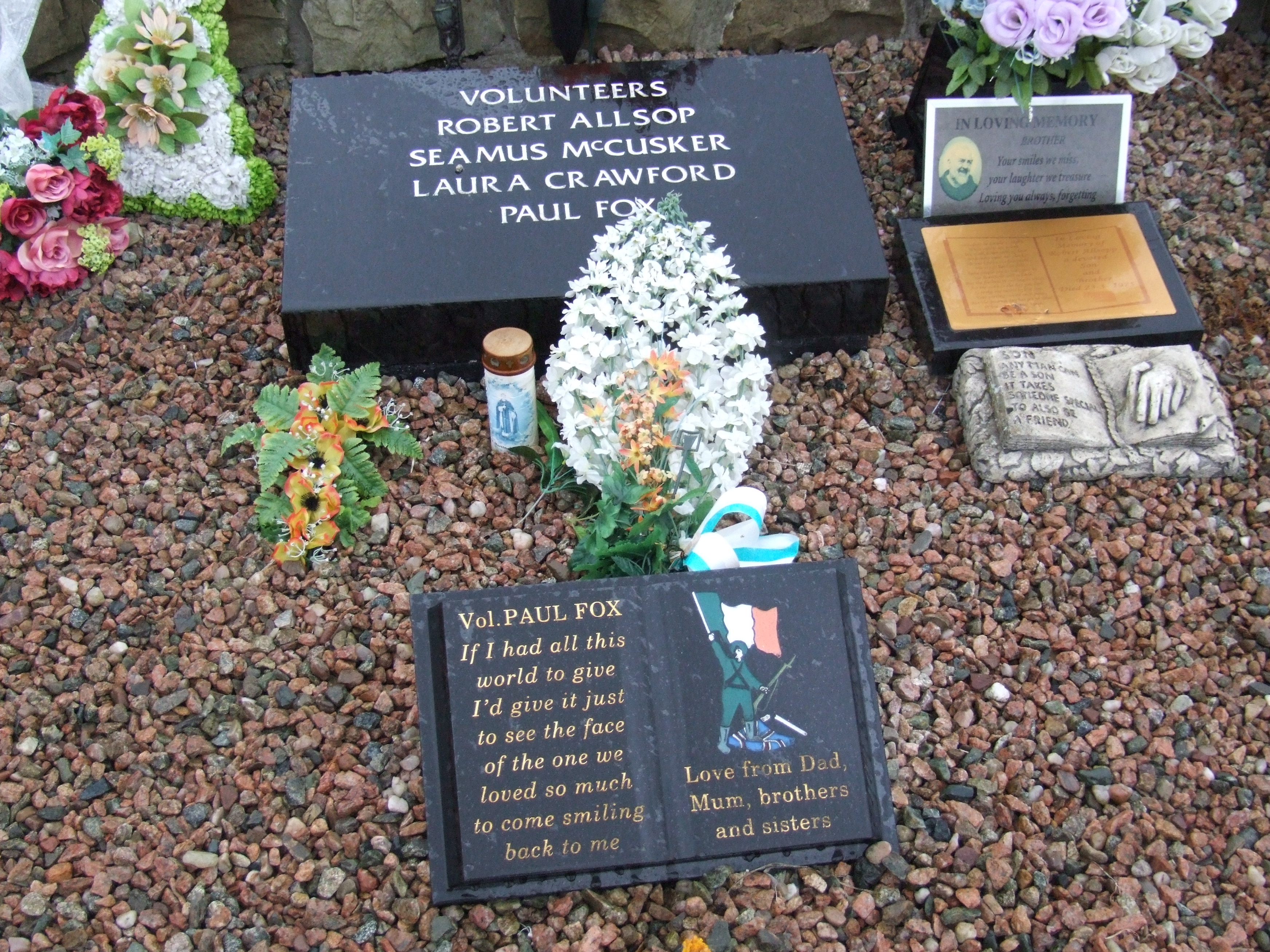
Bobby Sands died on hunger strike on 5 May 1981. He was twenty-seven years old and had been an elected Member of Parliament for twenty-six days. His grave in the New Republican Plot became a place of pilgrimage almost immediately. Beside him lie fellow hunger strikers Kieran Doherty, Joe McDonnell, and Pat McGeown. In total, seventy-seven IRA volunteers rest in this plot, purchased by the National Graves Association in 1972. Nearby, the County Antrim Memorial Plot holds thirty-four more, interred between 1969 and 1972. Among them are men killed as far away as Gibraltar. The cemetery holds republicans from every era: Tom Williams, executed in Crumlin Road Prison in 1942, lay in a prison grave for fifty-eight years before a campaign secured his reburial at Milltown in January 2000.
Sixteen Minutes in March
On 16 March 1988, three IRA volunteers killed by the SAS in Gibraltar during Operation Flavius were being buried at Milltown. Thousands of mourners filled the hillside. Then loyalist Michael Stone attacked the funeral procession with grenades and a handgun, killing three mourners before being chased and captured by the crowd. The attack was filmed by television cameras already present, and the footage became one of the defining images of the Troubles. It was followed three days later by the killing of two British Army corporals who drove into another funeral cortege, creating a spiral of violence that shocked even those long numbed to it. The cemetery, intended as a place apart from the conflict, had become its stage.
Other Wars, Other Dead
The Troubles did not write Milltown's only painful chapter. The Commonwealth War Graves Commission maintains 102 graves from the First World War and 52 from the Second, clustered around a Cross of Sacrifice erected after 1918. A Screen Wall lists those whose individual graves could not be marked. In April and May 1941, the Belfast Blitz killed approximately 1,000 residents when Luftwaffe bombers struck the poorly defended city. When the dead were recovered, not all could be identified. Thirty people whose effects marked them as Catholic were buried in a communal grave at Milltown. A separate mass burial took place at the City Cemetery. The Blitz memorial was restored in 2012, a quiet acknowledgment of civilians who died in a war that Belfast had imagined would pass it by.
Two Hundred Thousand Ordinary Lives
For all that history has made of its republican plots and wartime burials, Milltown Cemetery remains overwhelmingly what Bishop Patrick Dorrian of the Diocese of Down and Connor intended when he oversaw its creation: a resting place for Belfast's Catholic community. Many of the 200,000 interred here lie in unmarked graves, their stories unrecorded. Clergy, teachers, millworkers, mothers, children -- the great anonymous majority who lived and died in the streets radiating from the Falls Road. The cemetery also holds several prominent churchmen, including Canon Patrick McGouran, a chaplain to those interned on HMS Argenta in 1923, and Father Roibeard Fullerton, who led the Irish language revival across Ulster, his headstone inscribed entirely in Irish. Their graves sit alongside the famous and the forgotten, which is perhaps the only equality a cemetery can offer.
From the Air
Located at 54.58°N, 5.97°W in west Belfast, between the Falls Road and the M1 motorway. Visible as a large green space from lower altitudes. Belfast City Airport (EGAC) lies approximately 6 km to the northeast; Belfast International Airport (EGAA) is 20 km to the northwest. The cemetery sits in the heart of the republican heartland of west Belfast, with Black Mountain rising to the west.