Milwaukee: The Beer City That Sobered Up and Found Itself
Milwaukee was Beer City - home to Schlitz, Pabst, Miller, and Blatz, the German-founded breweries that made Milwaukee famous and made Americans drink lager instead of ale. The brewery consolidations that left Miller (now part of Molson Coors) as the only major survivor haven't changed the drinking culture: Milwaukee still drinks more per capita than most American cities, still fries its cheese curds, still gathers at festivals that revolve around beer, brats, and polka. The city that German immigrants built retained the culture after the breweries left or merged. Milwaukee is the Midwest at its most Midwestern - unpretentious, sociable, well-fed, and buzzed.
The Beer
Milwaukee's beer history began with German immigrants bringing brewing knowledge and taste for lager. By the 1880s, Pabst, Schlitz, Blatz, and Miller dominated American brewing - 'Made Famous by Milwaukee' was Schlitz's slogan. The consolidation that eliminated most American regional breweries hit Milwaukee hard: Pabst and Schlitz are now brand names owned by conglomerates; Miller merged into multinational corporations. The craft beer revival has brought brewing back - Lakefront, Sprecher, and dozens of others brew locally - but the era of Milwaukee dominating American beer is over. The drinking culture that the breweries created persists without them.
The Festivals
Milwaukee's summer is a continuous festival: Summerfest (the world's largest music festival, 11 days on the lakefront), ethnic festivals (Polish, Irish, German, Mexican, and more), and specialty gatherings (Pridefest, Bastille Days, State Fair). The festivals are organized around food and drink, with beer tents and food vendors providing the consistent elements. The lakefront festival grounds host most events; the infrastructure exists because Milwaukee expects to party all summer. The festival culture is genuinely communal - the crowds mix, the music varies, the food is consumed in staggering quantities.
Harley-Davidson
Harley-Davidson was founded in Milwaukee in 1903 and has maintained headquarters here through every economic cycle. The motorcycles - heavy, loud, American - are assembled in plants in the metropolitan area; the museum occupies the riverfront in downtown. Harley's brand is rebellion domesticated - the outlaw image sold to dentists and accountants who ride on weekends. The company's relationship with Milwaukee is symbiotic: the city provides blue-collar credibility; Harley provides manufacturing jobs and tourist draw. The motorcycle rallies bring riders from across the country; the museum brings year-round visitors.
The Fonz
The Bronze Fonz stands on the Milwaukee Riverwalk - a statue of Henry Winkler's 'Happy Days' character, thumbs up, leather jacket, frozen in 1970s cool. The statue's existence is ridiculous: 'Happy Days' was set in Milwaukee but filmed in Los Angeles; the Fonz is fictional; the tribute commemorates television fantasy rather than local history. Yet the statue is one of Milwaukee's most photographed objects, tourists lining up to pose with a bronze Arthur Fonzarelli. Milwaukee's relationship with its own image is complicated; sometimes the complication is embraced rather than resolved.
Visiting Milwaukee
Milwaukee is served by General Mitchell International Airport (MKE). The lakefront offers the Milwaukee Art Museum (Santiago Calatrava's dramatic addition), Discovery World, and Summerfest grounds. The Third Ward provides restaurants, galleries, and the Milwaukee Public Market. The Harley-Davidson Museum is essential for motorcycle appreciation. The Historic Third Street area preserves brewery architecture. Miller Brewery offers tours; craft breweries provide alternatives. The food is comfort-oriented: cheese curds (fried), bratwurst (everywhere), custard (Kopp's or Leon's). The experience rewards visitors who appreciate Midwestern hospitality - Milwaukee welcomes without pretense.
From the Air
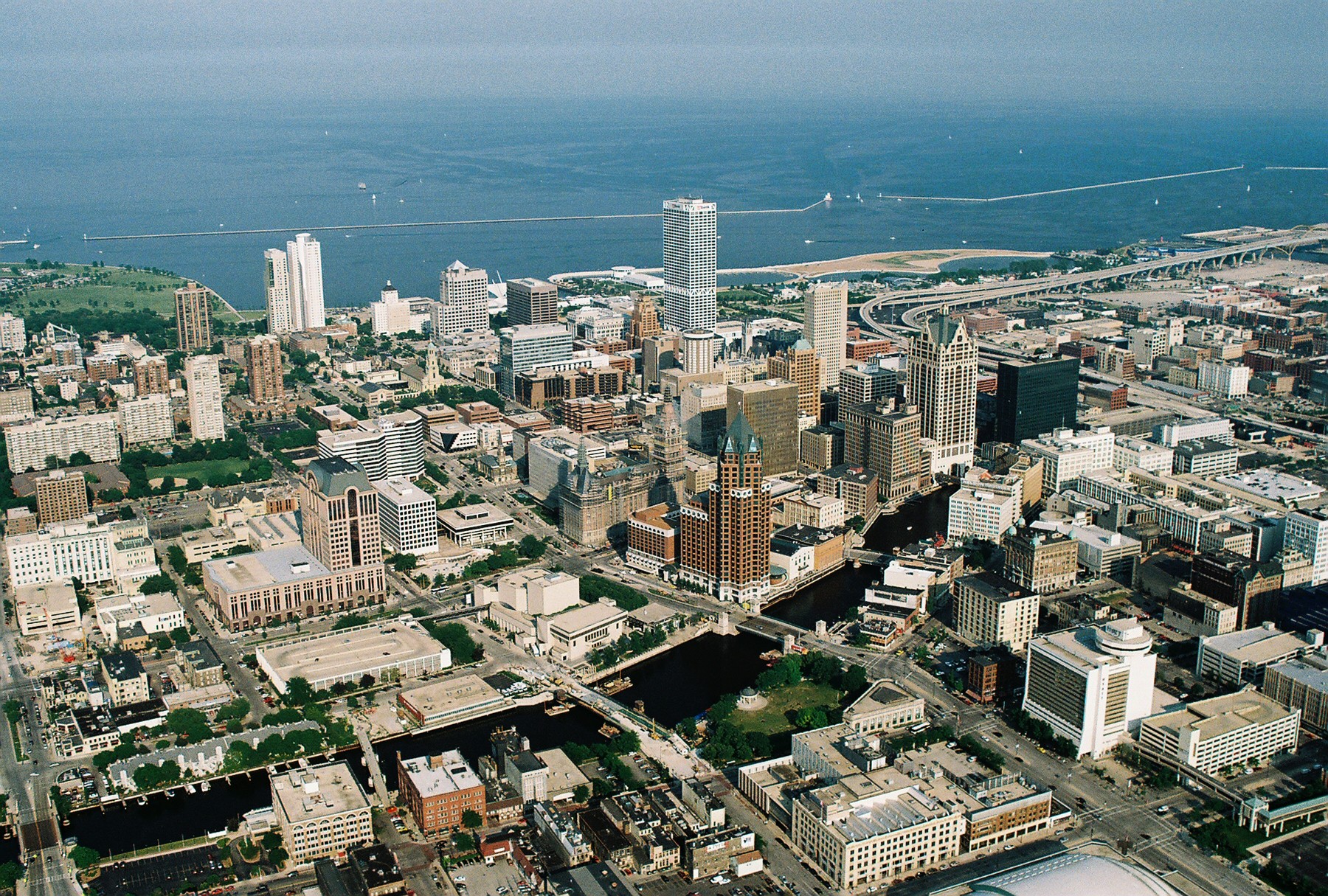
Located at 43.04°N, 87.91°W on the western shore of Lake Michigan. From altitude, Milwaukee appears as a city pressed against the lake - the downtown skyline visible along the lakefront, the Milwaukee, Menomonee, and Kinnickinnic Rivers converging at the harbor. The festival grounds on the lakefront are visible as open space along the water. The industrial heritage is visible in the brewery buildings and manufacturing zones. What appears from altitude as a lakefront Midwest city is Beer City USA - where German immigrants built brewing empires, where the drinking culture survived the empires' decline, and where summer is one continuous festival.