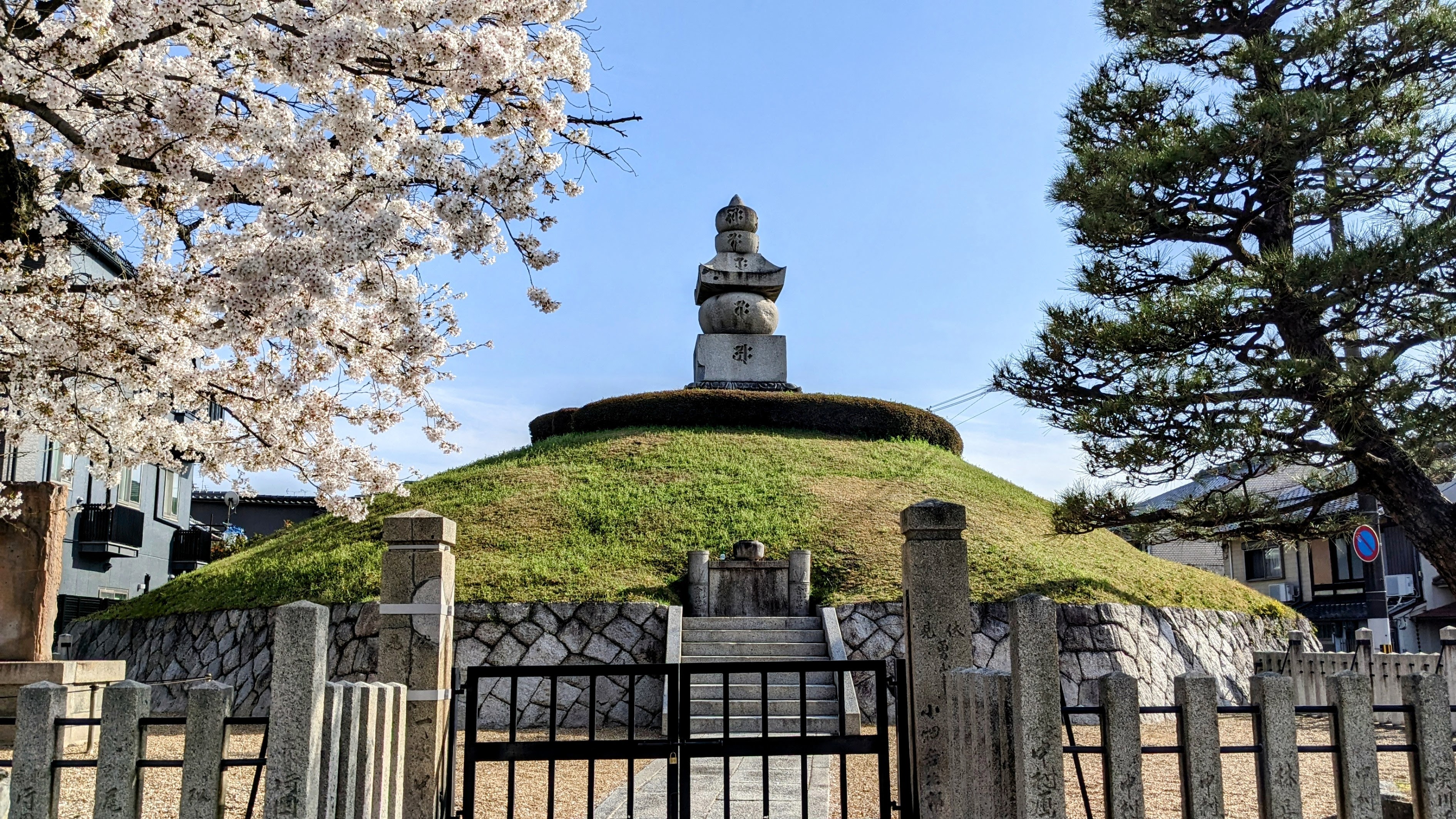
Mimizuka: The Mound of Ears That Holds No Ears
The name is a lie, and the lie is the point. Mimizuka means 'Mound of Ears,' but what lies beneath the grass and stone in this quiet Kyoto neighborhood are noses -- tens of thousands of them, sliced from the faces of Korean soldiers, civilians, and Chinese troops during Toyotomi Hideyoshi's invasions of Korea in the 1590s. The original name was Hanazuka, 'Mound of Noses,' but within decades that was deemed too gruesome, and the euphemism took hold. The mound still stands just west of Toyokuni Shrine, the Shinto shrine that honors Hideyoshi as a deity. The irony is difficult to miss: the architect of the slaughter and the evidence of his cruelty share the same neighborhood, separated by a few steps and four centuries of selective memory.
The Proof of Slaughter
Japanese samurai tradition demanded that warriors bring back the heads of enemies killed in battle as proof of their valor. During the Imjin War -- Hideyoshi's two invasions of Korea, launched in 1592 and 1597 -- the sheer scale of killing and the logistics of transporting severed heads across the sea made the old practice impractical. Noses became the substitute. They were lighter, easier to preserve in salt and lime, and could be packed by the barrel onto ships returning to Japan. Hideyoshi's orders during the second invasion were explicit and sweeping: mow down everyone, without distinction between soldiers and civilians, young and old, men and women. Japanese chroniclers recorded that the noses collected came not only from fallen warriors but from ordinary people caught in the path of the campaign. The monument was dedicated on September 28, 1597. At least 38,000 Korean noses and over 30,000 Chinese noses are believed to be interred here, though some accounts place the total far higher.
A Name Softened by Time
For its first decades, the site was called what it was: Hanazuka, the Mound of Noses. But the bluntness of that name proved uncomfortable. Several decades after the monument's construction, it was renamed Mimizuka -- Mound of Ears -- a softer word for the same brutal reality. The renaming is itself a small history lesson in how societies process atrocity. The noses did not become ears. The dead did not become less dead. But the language shifted, and with the language, some of the horror receded. Other nose tombs from the same period exist elsewhere in Japan, including one at Okayama, but the Kyoto Mimizuka is the largest and most well-known. Its proximity to Toyokuni Shrine -- where Hideyoshi was deified as a kami after his death in 1598 -- creates an uncomfortable juxtaposition that few visitors are invited to confront.
A Monument Without an Audience
The Mimizuka sits in central Kyoto, just west of the Kyoto National Museum, in a city that draws millions of tourists annually to its temples, shrines, and gardens. Yet the mound itself is little known and seldom visited. It is not well marked for tourists. There are no prominent signs in English or Korean directing visitors to the site. Funding from the Japanese government has been insufficient to maintain it properly, and the work of cutting the grass and tidying the grounds falls to local volunteers. In the 1990s, a Korean Buddhist monk sought permission to relocate the Mimizuka to Korea, arguing that the remains should rest in their homeland. The Japanese government declined, classifying the site as an officially designated national cultural asset that could not be moved. The mound stayed in Kyoto. It remains a place defined as much by what is not said about it as by what is.
Between Shrine and Mound
The few steps between Toyokuni Shrine and the Mimizuka trace one of history's sharpest moral boundaries. On one side, a shrine celebrates the man who unified Japan and is remembered as one of its three great unifiers. On the other, a mound holds the physical evidence of what that unification's ambitions cost people in another country. Hideyoshi's Korean campaigns failed in their strategic objective -- they did not conquer Korea or reach China -- but their human toll was devastating. The Imjin War left the Korean Peninsula scarred, its population decimated, its cultural treasures looted or destroyed. In Japan, the war's legacy is largely forgotten by the general public. The Mimizuka stands as one of the few physical acknowledgments that it happened at all. Local residents maintain the site not because they are told to, but because the grass grows and someone must cut it. That quiet, persistent act of care may be the most honest memorial the dead have received.
From the Air
Located at 34.99°N, 135.77°E in the Higashiyama district of central Kyoto, adjacent to Toyokuni Shrine and near the Kyoto National Museum. From altitude, the site is indistinguishable within Kyoto's dense urban fabric -- look for the green space of the museum grounds and temple complexes in the eastern part of the city, near the Kamo River. Best viewed at low altitude (1,500-3,000 feet AGL) in the context of Kyoto's broader temple district. Nearest airports: Osaka Itami Airport (RJOO) approximately 20 nm southwest, Kansai International Airport (RJBB) approximately 55 nm south-southwest. The grid of central Kyoto and the surrounding mountain ridges provide clear visual orientation.