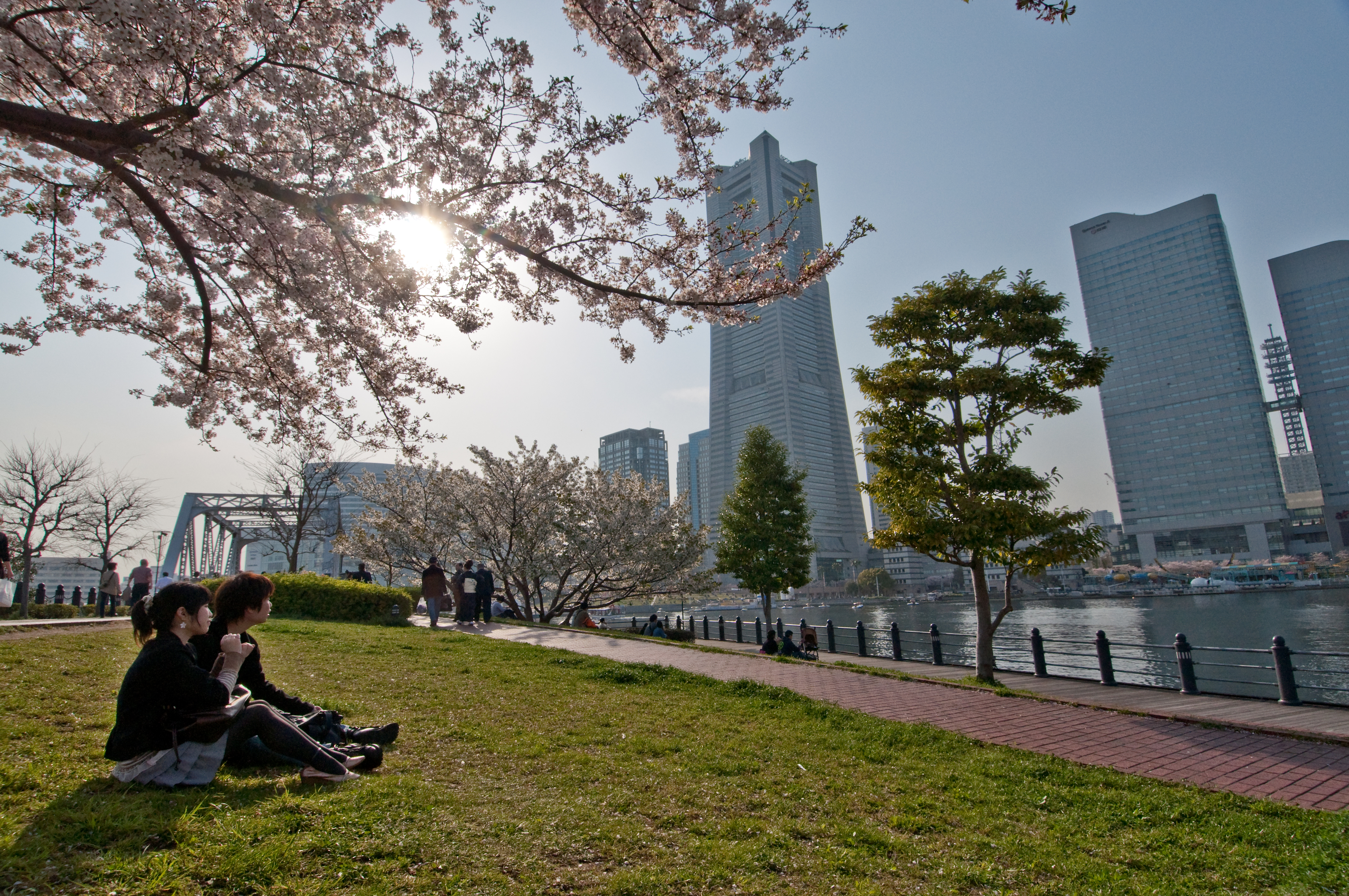
Minato Mirai 21: Yokohama's Port of the Future
The name was chosen by public vote. "Minato Mirai" translates to "Port of the Future," and the "21" pins it to the century Yokohama intended to own. In 1965, Mayor Ichio Asukata proposed the development as one of six major plans for the city, but the land it would occupy was still a working Mitsubishi Heavy Industries shipyard and a Japanese National Railways classification yard, with Takashima and Shinko wharves serving the Port of Yokohama. These industrial parcels physically divided Yokohama's two historic city centers -- the Kannai district and the area around Yokohama Station. Construction did not begin until 1983, and when it did, the project aimed to do something no other Japanese development had attempted at this scale: stitch a fractured city back together across reclaimed land while building a brand-new urban core from scratch.
Shipyard to Skyline
The transformation required both demolition and reclamation. The Mitsubishi shipyard that once launched vessels into Yokohama Bay gave way to tower cranes raising steel and glass. Rail yards where freight cars were sorted and coupled became pedestrian promenades. The Kishamichi Promenade, a walkway linking Sakuragicho Station to the waterfront, follows the original harbor railroad tracks, preserving the ghost of the rail corridor in its very route. By the time the first phase of development matured, the gap between Kannai and Yokohama Station had vanished. In its place stood a continuous urban fabric of office towers, convention halls, hotels, and public spaces. The district's anchor, Yokohama Landmark Tower, rises 296 meters -- Japan's third-tallest building and fifth-tallest structure -- with observation decks offering views of Tokyo to the north and Mount Fuji to the west on clear days.
A Clock That Kept Time for the World
Among the district's most recognizable features is the Cosmo Clock 21, a giant Ferris wheel that was once the tallest in the world. It stands at the center of Cosmo World, a compact amusement park squeezed between skyscrapers and the bay, its neon-lit rim visible for miles across the water at night. Nearby, the Nippon Maru, a four-masted sailing ship built in 1930, sits permanently docked as a floating museum -- a remnant of Yokohama's maritime past moored among the glass towers of its commercial future. The Yokohama Museum of Art occupies a prominent position next to Landmark Tower, and the Red Brick Warehouse, a pair of early 20th-century customs buildings on Shinko Pier, has been repurposed into a shopping and event complex. The contrast is the point: old brick and new glass, tall ships and taller towers, all compressed into a waterfront strip barely two kilometers long.
Boardroom on the Bay
Minato Mirai is not just spectacle. About 79,000 people commute here daily, filling the offices of major corporations that chose the district for their headquarters. Nissan Motors relocated its global headquarters to a waterfront tower here. JGC Corporation and Chiyoda Corporation, both major engineering firms, maintain significant presences. The Pacifico Yokohama convention center, one of the largest in Japan, hosts international conferences and trade shows year-round, anchoring the district's role as a business destination for the Greater Tokyo metropolitan area. Three major hotels with over 300 rooms each -- the InterContinental, the Royal Park, and the Sheraton -- serve the convention trade. The Queen's Square Yokohama complex combines three interconnected towers with a massive shopping mall at their base, blurring the line between corporate campus and consumer playground.
Fifty-Eight Million Visitors
In 2010, Minato Mirai 21 received approximately 58 million visitors, drawn by the skyline, the bay, and the proximity to Yokohama Chinatown, one of the largest in the world. The district has become inseparable from Yokohama's identity, its profile of towers reflected in the bay becoming the city's defining image. Cruise ships docking at Osanbashi Pier frame the view from the water, while the graceful sweep of the Yokohama Bay Bridge completes the panorama. More recently, the district has expanded its cultural footprint with music venues: Pia Arena MM opened in 2020 and K-Arena Yokohama followed in 2023, adding live performance spaces to a district originally conceived around commerce and convention. The Yokohama Air Cabin, an urban gondola, now carries visitors above the waterfront, offering aerial views of the skyline that Mayor Asukata imagined six decades ago.
From the Air
Coordinates: 35.458°N, 139.632°E, on Yokohama's central waterfront along the western shore of Tokyo Bay. From altitude, Minato Mirai 21 is immediately identifiable by the cluster of tall buildings anchored by the Yokohama Landmark Tower (296m), the distinctive circular outline of the Cosmo Clock 21 Ferris wheel, and the sail-shaped roof of the InterContinental Hotel. The Yokohama Bay Bridge arcs across the bay to the northeast. Best viewed at 3,000-5,000 feet AGL for skyline detail. Tokyo Haneda Airport (RJTT) lies approximately 15 nautical miles north. The rectilinear grid of the reclaimed land contrasts sharply with the organic street pattern of older Yokohama neighborhoods to the south and west.