Ōminesan-ji
At Nishi no Nozoki, the guide grips your safety rope while you lean backward over a sixty-meter cliff. Below is nothing but mist and treetops. This is not a thrill ride. It is a religious practice, more than a thousand years old, and it happens near the summit of Sanjōgatake in the Ōmine Mountain Range of Nara Prefecture, where Ōminesan-ji has stood since the end of the 7th century. The temple is the high-altitude half of what was once a single institution: the original Kinpusen-ji, a sprawling complex of halls and training grounds strung along eighty kilometers of mountain ridgeline from Mount Yoshino south to Kumano Hongū Taisha. Today the upper temple and its lowland sibling are separate, but the pilgrimage trail between them -- the Ōmine Okugake -- remains one of the most demanding spiritual walks in Japan.
Where the Founder Walked
Tradition credits En no Gyōja with founding Ōminesan-ji at the end of the 7th century. En no Gyōja was the originator of Shugendō, a syncretic practice blending Shinto reverence for sacred mountains with Buddhist esoteric ritual. He carved the deity Zaō Gongen from the wood of a mountain cherry tree, and that fierce, blue-skinned figure became the central object of worship both here and at Kinpusen-ji below. The main hall -- called "Yamagami no Zaō-dō," the Zaō Hall on the mountaintop -- sits at 1,719 meters, enshrining the deity that embodies past, present, and future Buddha in a single wrathful form. During the Tenpyō era of the 8th century, the monk Gyōki reportedly carried out major renovations. After a period of decline, the Shingon monk Shōbō revived the temple at the end of the 9th century, and by the 10th century, members of the imperial family and aristocrats like Fujiwara no Michinaga were making pilgrimages to the peak. Michinaga buried sutras in a gilt bronze container near the summit -- a cache that was excavated and designated a National Treasure in 2007.
Chains, Cliffs, and Teahouses
The standard approach begins at Dorogawa in Tenkawa Village, a three- to four-hour climb. The trail from Ōmine Ōhashi Bridge is well maintained, and several teahouses punctuate the ascent -- not optional rest stops, but structures built directly across the path so that every climber must pass through them. Past the ruins of Ichinose and Ipponmatsu teahouses, pilgrims reach a water source named for En no Gyōja himself. Further along, the Daranisuke teahouses were built by a pharmacy at the mountain's base that still manufactures a traditional medicine called Daranisukemaru. Beyond the teahouses, the trail transforms. Chain sections called "Abura Koboshi" and "Kanekakeiwa" demand hand-over-hand climbing on iron chains bolted into rock. Then comes Nishi no Nozoki, the most famous ascetic practice point: pilgrims are suspended over the edge of a sheer cliff, roughly sixty meters high, held only by a rope in a guide's hands. Safe detours exist at every difficult section, but behind the main hall waits the "Ura no Gyojo" -- a cliff with no chains and no safety ropes, accessible only with a guide's permission.
Empires and Edicts
The temple's history mirrors the tides of Japanese religious politics. During the Sengoku period, the main hall burned in a conflict with the Ikkō sect. It was rebuilt during the Edo period, and the current inner sanctuary dates to 1691, with the outer sanctuary expanded in 1706. The structure is a hipped-gabled building measuring roughly 23 by 19 meters, roofed in copper tiles. In 1614, Tokugawa Ieyasu placed both Ōminesan-ji and Kinpusen-ji under the administration of Tenkai, a powerful Tendai monk. Then came the Meiji Restoration: the government's Shinbutsu Bunri policy forced the separation of Buddhism and Shinto nationwide, and Shugendō was officially suppressed. From 1871 the temple was declared a Shinto shrine. Only in 1886 did it revert to Buddhism, and the two halves of the old Kinpusen-ji were formally split -- Ōminesan-ji at the summit and Kinpusen-ji at the foot of the mountains.
The Mountain That Bars the Gate
Since the early Heian period, women have been prohibited from entering the sacred mountain beyond four gates on the route to the peak. The ban remains in effect today, making Ōminesan-ji one of the last places in Japan to maintain this tradition. In 1959, the neighboring peak of Inamuragatake, at 1,726 meters, was opened as a training ground for female practitioners, offering a parallel path into mountain asceticism. The controversy has not faded -- but neither has the practice. In 2002, the temple precincts were designated a National Historic Site of Japan, and in 2004, Ōminesan-ji became part of the UNESCO World Heritage Site known as Sacred Sites and Pilgrimage Routes in the Kii Mountain Range. The eighty-kilometer Okugake Trail from Mount Yoshino through the Ōmine range to Kumano Hongū Taisha still draws ascetic practitioners who spend days walking, climbing, and meditating along the same ridgelines En no Gyōja is said to have opened thirteen centuries ago.
From the Air
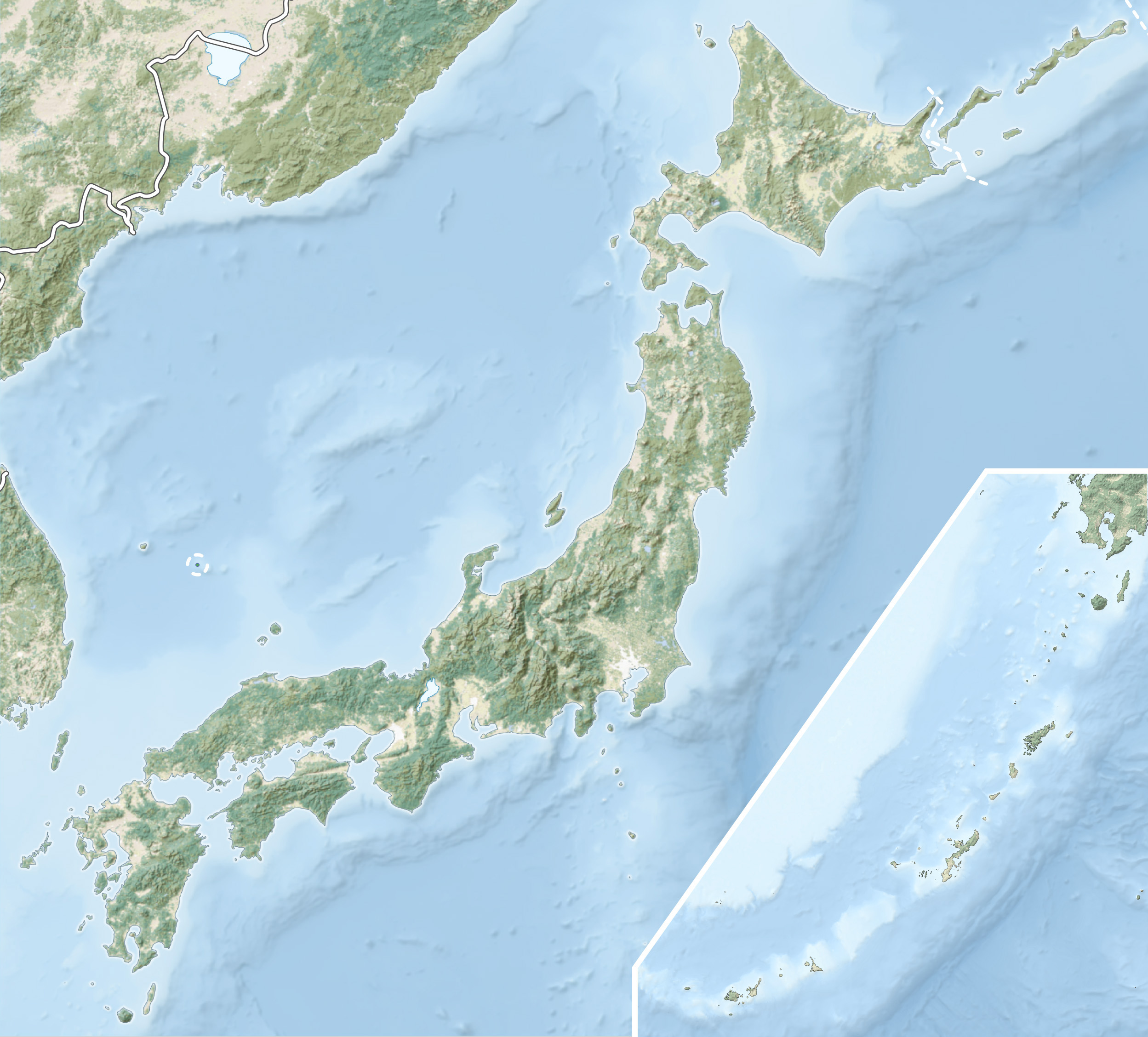
Located at 34.253°N, 135.941°E near the summit of Sanjōgatake (1,719m / 5,640ft) in the Ōmine Mountain Range, Nara Prefecture. The temple sits on a narrow ridgeline and is not individually visible from cruising altitude, but the rugged peaks of the Ōmine range are prominent against the surrounding forested terrain. Mount Yoshino lies approximately 20km to the north-northwest. Nearest major airports: Kansai International (RJBB) approximately 70nm northwest, Nanki-Shirahama (RJBD) approximately 40nm south-southwest. The Kii Peninsula interior is characterized by steep, heavily forested mountains with limited flat terrain. Cloud and mist frequently obscure the peaks, particularly in summer.