Mingun Pahtodawgyi
According to the prophecy, the kingdom would fall the moment the pagoda was finished. So it never was. The Mingun Pahtodawgyi sits on the western bank of the Irrawaddy River, ten kilometers northwest of Mandalay, a colossal ruin that reached only one-third of its intended height before construction halted forever. At 50 meters, it is still enormous -- the largest pile of bricks in the world, by some accounts. But the gap between what was built and what was planned tells the real story: a king whose ambition outran his people's endurance, and a prophecy that may have been less divine revelation than quiet political protest.
Bodawpaya's Obsession
King Bodawpaya began construction in 1790 with a vision that matched his reputation for eccentricity. The stupa was to rise 150 meters -- a height that would have made it the tallest Buddhist monument ever built. He established a personal observation post on an island in the Irrawaddy to supervise the work directly, watching as laborers hauled millions of bricks into position on the riverbank. A scale model, the Pon Daw Pagoda, was built nearby to show the intended design, following a tradition common to major Burmese pagoda projects like the Shwedagon and Thatbyinnyu Temple. The model still stands, a 15-foot preview of something that was never meant to stay small.
Built on Suffering
The labor force tells a darker story. After conquering Arakan, Bodawpaya deported roughly 20,000 prisoners of war to central Burma and put them to work on the stupa's construction. These forced laborers, along with conscripted subjects, bore the physical burden of the king's ambition. The project drained both people and treasury, taking a toll that extended well beyond the construction site. The scale of suffering was not lost on those around the king, even if direct criticism of the monarch was unthinkable. Instead, resistance took a subtler form -- one calibrated to the one weakness Bodawpaya could not easily dismiss.
The Prophecy That Stopped a Monument
Bodawpaya was deeply superstitious, and his subjects knew it. A prophecy emerged -- allegedly from spiritual authorities, more likely from advisors who had run out of other options -- declaring that "as soon as the building of the pagoda was over, the country would also be gone." A variation warned that the king himself would die upon the project's completion. Whether Bodawpaya believed the prophecy or simply chose not to test it, the effect was immediate: construction slowed to a crawl. When the king died in 1819, work stopped entirely. No successor saw reason to resume building a monument that came with a curse attached.
Earthquake and Afterlife
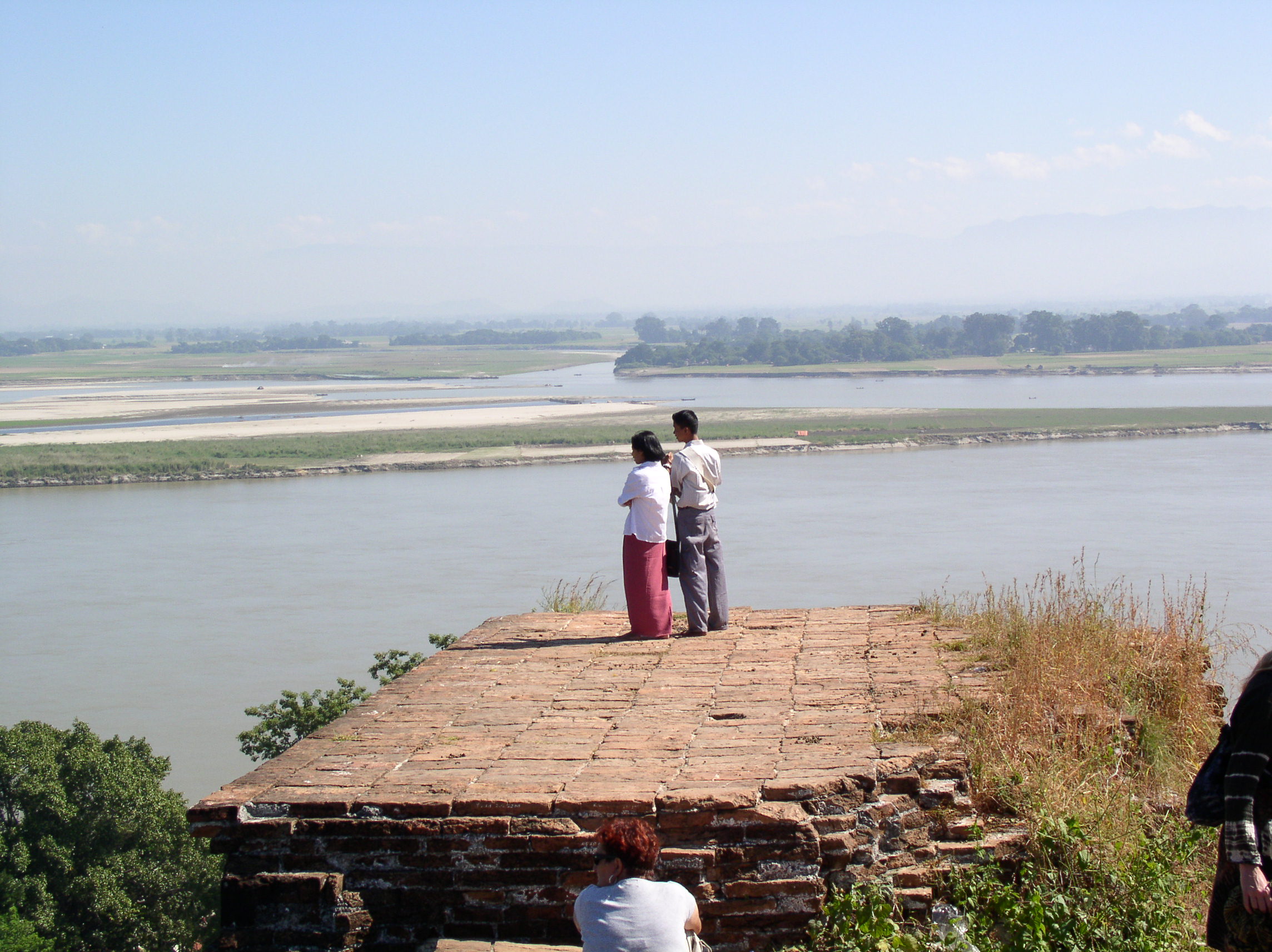
The abandoned stupa stood largely intact for two decades until March 23, 1839, when a powerful earthquake tore enormous cracks through its brick face. The damage was severe but not total -- the massive structure's sheer bulk held it together even as fissures opened across its surface. Today the Pahtodawgyi functions more as a tourist attraction than a religious site, though a small shrine with a Buddha image inside the east portal still serves worshippers and meditators. Visitors climb a path to the top, where a small platform offers sweeping views of the Irrawaddy and the surrounding countryside. The remains of giant chinthe guardian figures flank the base, their scale hinting at the proportions the finished monument would have achieved.
The River Road to Mingun
Reaching the Pahtodawgyi requires a ferry crossing from Mandalay, followed by a walk or bullock-cart ride from the river jetty -- a journey that filters out casual visitors and rewards those who make the effort. The stupa shares the village of Mingun with its companion project, the 90-ton Mingun Bell that Bodawpaya commissioned to accompany his grand temple. Together they form a portrait of ambition frozen in place: the bell that was finished, the temple that was not, and the king who poured a kingdom's resources into both. Seen from the river, the Pahtodawgyi's cracked bulk rises above the treeline like a broken tooth -- monumental, damaged, unfinished, and impossible to ignore.
From the Air
Located at 22.051N, 96.017E on the western bank of the Irrawaddy River, approximately 10 km northwest of Mandalay. The stupa is a massive brick structure visible from considerable altitude -- look for a large brown rectangular mass near the river's western bank. The Mingun Bell sits nearby. The Irrawaddy River serves as the primary navigation reference. Nearest major airport is Mandalay International (VYMD), roughly 45 km south. Recommended viewing altitude: 3,000-5,000 feet AGL to appreciate the scale against the surrounding village and river.