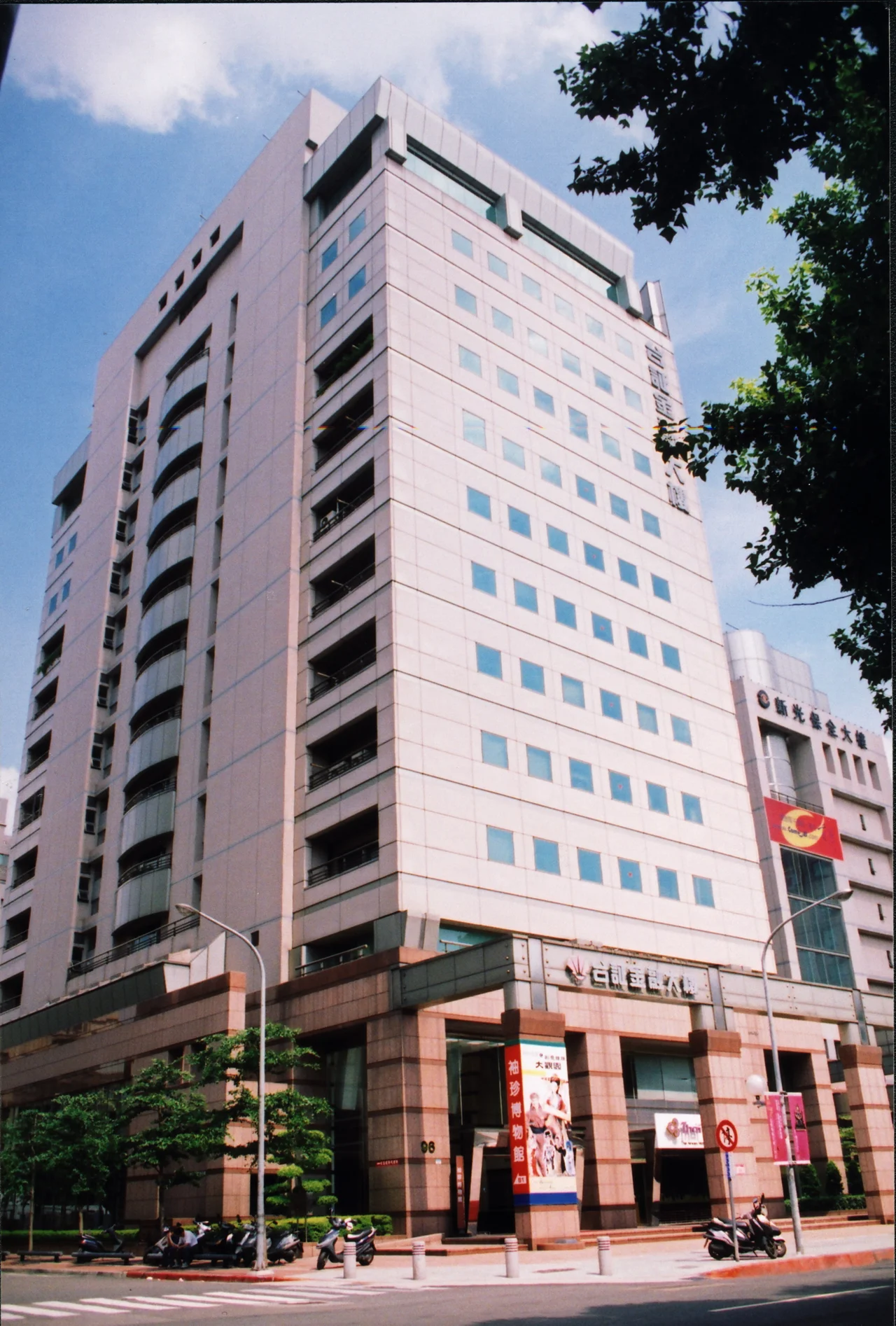

Miniatures Museum of Taiwan
Somewhere in the Netherlands, a Taiwanese businessman and his wife stopped at a display of miniature art and didn't leave for a long time. Lin Wen-ren and his wife had been traveling for business, picking up small houses and toy cars for their children along the way — the casual purchases of parents who notice delightful things. What they saw in the Netherlands was different: not toys, but art. Perfectly scaled rooms, hand-assembled furniture, tiny paintings on tiny walls. They began buying. Then they began attending auctions. Then they joined international miniature art associations. By 1993 they were planning a museum. On March 28, 1997, the Miniatures Museum of Taiwan opened in Zhongshan District, Taipei — the first institution in Asia dedicated to collecting miniatures. It was not built by institutions or governments. It was built by two people who couldn't stop looking.
An Art Form in Deep History
Miniature art traces its origins to German palaces of the sixteenth century, where scaled reproductions were used as teaching tools for aristocratic children — models of architecture, furnishings, and domestic life at a size that could be examined and rearranged. The aesthetic appeal of miniatures remained largely European for centuries, spreading through the continent and eventually to North America during the nineteenth century. The standard scale is 1:12, meaning one inch in the miniature represents one foot in reality; a half-scale variant at 1:24 also exists. By the twentieth century, miniature art had developed its own collector community, its own auction circuit, and its own set of masters. Lin Wen-ren and his wife entered that world as travelers who stumbled into it and then chose to stay.
Rose Mansion
The museum's most celebrated piece gives the institution its logo. Rose Mansion was created by Dr. Reginald Twigg, and the project consumed nearly four years of his life. It was chosen as one of the ten most significant miniature artworks produced in America over a twenty-five-year period. Twigg's approach was documentary as much as artistic: he researched the original architecture with care, then rebuilt it at miniature scale with the kind of accuracy that makes the piece feel less like a model and more like a preservation. The rose-covered Victorian mansion now stands in the museum's collection, its facade and interior rendered at 1:12 scale, the result of years of labor compressed into something you could carry — though no one would.
What the Rooms Hold
The collection runs to nearly 200 works sourced from across Europe and the United States. English manor houses, Roman castles, fairy-tale interiors from Alice in Wonderland, Pinocchio, and Jack and the Beanstalk — the range is deliberately broad, covering centuries and continents in scaled form. Two display formats are used throughout: the traditional dollhouse, viewed from the outside, and the room box, which removes one wall to reveal the interior in a kind of architectural cross-section. The museum also features the smallest working television in the world — a functional miniature that is not merely decorative — as well as miniature cakes and fully realized cubed-world scenes. The common thread is precision. These are not approximations.
Asia's First, World's Second
The Miniatures Museum of Taiwan holds a specific distinction: it specializes in contemporary miniatures, a focus that sets it apart from historical collections elsewhere. The museum describes itself as ranked second in the world, a claim that reflects both the scale of its collection and the seriousness of the curatorial project Lin and his wife undertook over decades. That ranking positions it in a global context — not a curiosity specific to Taiwan, but a major institution in a worldwide community of miniature art collectors and creators. Taiwan's relationship with craft precision and decorative arts runs deep; the museum fits within that tradition while also connecting it to an international conversation.
Visiting on a Human Scale
The museum sits in Zhongshan District and is accessible on foot from Songjiang Nanjing Station on the Taipei Metro. It opens Tuesday through Sunday, 10 a.m. to 6 p.m., and closes during the Chinese New Year period. Admission runs from NT$120 for children between six and twelve to NT$200 for adults; those under six enter free. The experience of the museum is fundamentally physical — standing before a room rendered at 1:12 scale, you become, briefly, enormous. The details that register — a tiny newspaper folded on a miniature settee, a chandelier the size of a grape — require close attention and patience. The museum rewards both. Bring children who notice small things, or adults who have not yet lost the habit.
From the Air
The Miniatures Museum of Taiwan is located at approximately 25.050°N, 121.536°E in Taipei's Zhongshan District, a few blocks from the Songjiang Nanjing metro station. From the air, the district appears as dense mid-rise urban fabric north of the old Taipei Main Station area. The Keelung River curves to the northeast, and the towers of the Xinyi commercial district are visible several kilometers to the southeast. Taipei Songshan Airport (RCSS) lies approximately 2 km to the northeast and is the nearest in-city airfield; Taiwan Taoyuan International (RCTP) is about 35 km to the west. At 3,000 feet, the urban grid of Zhongshan District is clearly distinguishable from the more commercial patterns of the Xinyi and Zhongzheng districts to the south.
Nearby Stories
- Dapu Incident 9.3 km away
- Shuanglianpi Wetland 18 km away
- Toufen 41 km away
- North Jiangsu Main Irrigation Canal 980 km away
- General Cliff Rock Paintings 1050 km away
- Sinking of MV Sewol 1061 km away
- Yellow Sea 1111 km away
- Twin Forts of Romblon 1358 km away