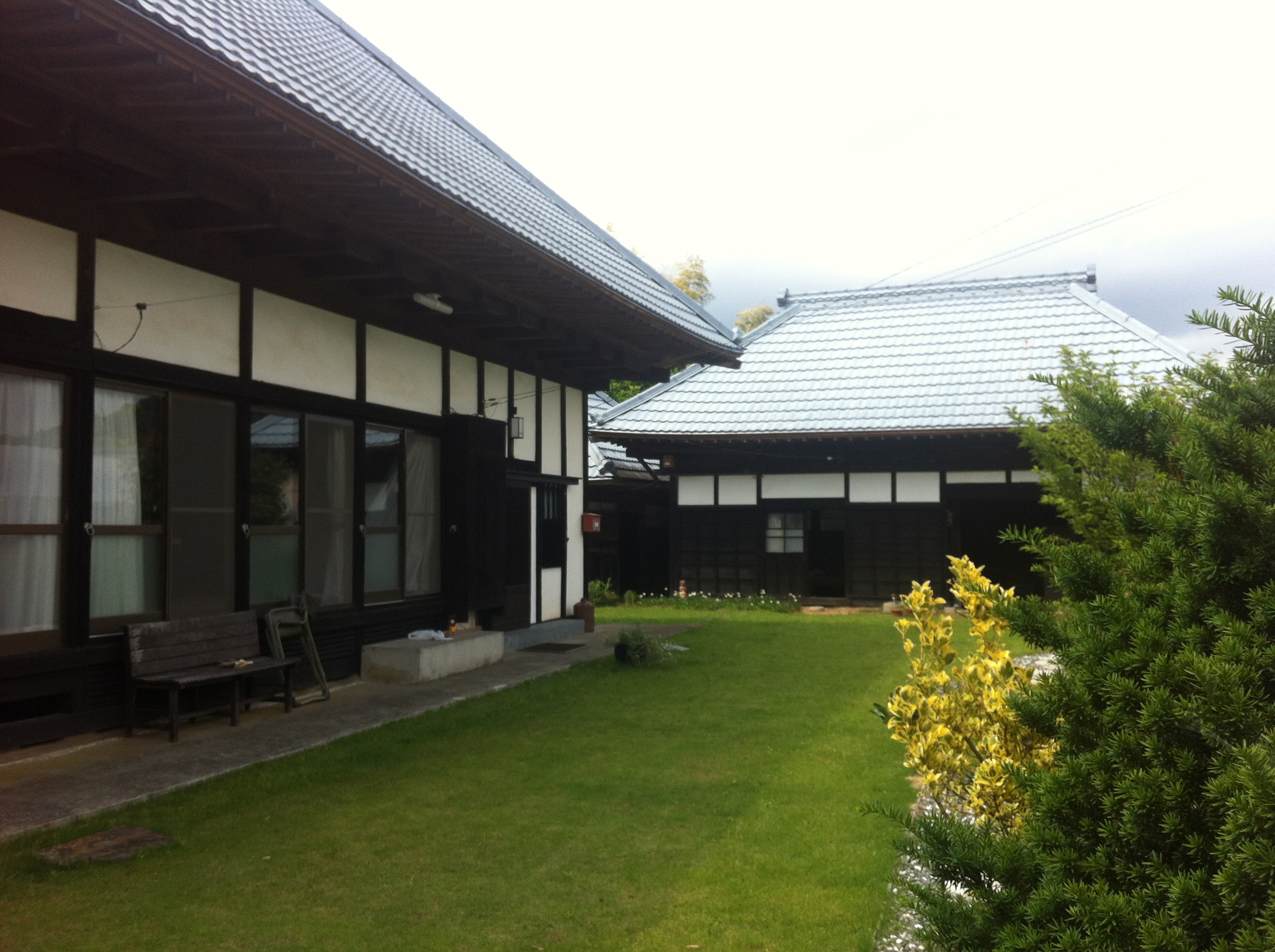
Minka
Not a single nail holds the roof together, and yet some of these houses have stood for 400 years. Minka -- literally "folk houses" -- are the vernacular dwellings that sheltered everyone in Japan who was not a samurai. Farmers, fishermen, merchants, and mountain villagers all lived in minka, and the staggering variety of their designs maps directly onto the geography and climate of the Japanese archipelago. From the bamboo-walled homes of Shizuoka to the towering gasshō-zukuri farmhouses of Gifu, where 60-degree thatched roofs shed meters of snow, minka are less a single building type than an encyclopedia of solutions to the question of how to live on these volcanic, rain-soaked, earthquake-prone islands.
Eight Ways to Frame a Home
Japanese architectural scholars classify minka into eight fundamental structural forms, each a different answer to the engineering challenge of spanning an interior space with timber. The simplest is the "inverted U" -- two posts bridged by a horizontal beam, joined with side girders. On the island of Shikoku, these beams are often secured with mortise-and-tenon joints of remarkable precision. The "umbrella" form radiates four beams from a single central post, found primarily in Shiga Prefecture. The "cross" places two beams at right angles, common in Shiga and Fukui. In Toyama and Ishikawa, the "box" structure connects four or more post-and-beam units into a rigid cage. The most dramatic variant is the "rising beam" system, which angles beams upward to create usable upper stories -- the structural basis for the gasshō-zukuri farmhouses that became a UNESCO World Heritage designation.
Earth Floor, Raised Floor
Step through the entrance of a minka farmhouse and your feet land on compacted earth -- the doma, a working space that preceded the modern genkan entryway. Rise about 50 centimeters onto the hiroma, the raised timber floor, and you enter the living quarters. In wealthier homes, inner rooms were laid with tatami mats and called the zashiki. The transition from earth to wood to tatami was not merely architectural; it encoded social hierarchy. Visitors of the lowest rank sat on the doma. Family members occupied the raised floor. Honored guests sat in the zashiki with their backs to the tokonoma alcove. At the center of family life burned the irori, an open hearth sunk into the floor. A kettle hung from the ceiling on an adjustable hook, often carved into the shape of a fish or blade. There was no chimney. Smoke curled upward through the rafters, blackening the wood, drying the thatch, and driving out insects -- a practical system so effective it preserved roofing material for decades.
Climate Written in Timber
Every minka carries the signature of its local weather. In Shizuoka, where bamboo grows abundantly, builders used it for roofs, eaves, doors, and floors. In volcanic regions where clay was scarce, rushes or wooden boards replaced plaster walls. In Kyoto during the Heian and Muromachi periods, thin wooden roof shingles were weighted with stones to prevent them from flying off in wind. The steeply peaked thatched roofs found across snowbound prefectures exist for one reason: to shed precipitation before it accumulates enough to collapse the structure. Where miscanthus reeds for thatching were difficult to harvest, builders substituted shingles. The social status of the owner was readable from the exterior. On thatched-roof minka, the number of crossed wooden members or bundled reeds along the ridge indicated the family's standing in the village. On townhouses, the elaborateness of the udatsu -- a firebreak wall projecting above the roofline -- served the same purpose.
From Thatch to Tile
Minka were never static. Over centuries, townhouse variants called machiya evolved away from flammable materials toward more durable construction. Thatched roofs gave way to ceramic tiles. Exposed timber frames disappeared behind layers of clay plaster. Wealthier owners incorporated elements of the aristocratic shoin style -- decorative alcoves, staggered shelves, writing desks -- into their living rooms, though sumptuary laws strictly limited how far non-samurai families could push these borrowings. The result was an architectural arms race conducted within rigid class boundaries: each family expressed as much status as the law allowed, using the approved vocabulary of beams, thatch, and restrained ornament.
Saved, Shipped, and Reassembled
Today, minka are treated as historic landmarks across Japan. Municipalities and the national government have designated hundreds for preservation, while open-air museums like Nihon Minka-en in Kawasaki gather relocated examples from around the country. The gasshō-zukuri farmhouses of Shirakawa in Gifu and Gokayama in Toyama earned UNESCO World Heritage status in 1995. In 1997, the Japan Minka Reuse and Recycle Association was founded to promote conservation. One minka belonging to the Yonezu family was dismantled, shipped to England, and reassembled at Kew Gardens in London as part of the Japan 2001 Festival, complete with new walls and a fresh thatched roof. The fact that a centuries-old timber house can be taken apart, moved across an ocean, and rebuilt speaks to the genius of the joinery: no nails to rust, no glue to fail -- just wood meeting wood with the precision of a prayer.
From the Air
Minka are found across all of Japan, but the best-preserved concentrations are in the Shō River valley of central Honshu at approximately 36.40°N, 136.88°E, where the gasshō-zukuri villages of Shirakawa-go and Gokayama form a UNESCO World Heritage Site. The area sits at about 500 meters elevation in the Japanese Alps. The nearest airport is Toyama Airport (RJNT). Open-air museums with relocated minka include Nihon Minka-en in Kawasaki (near Tokyo, RJTT). From the air, the steep triangular thatched roofs are distinctive against surrounding forest and rice paddies. Best viewed at 2,000-4,000 feet AGL in the Shō River valley.