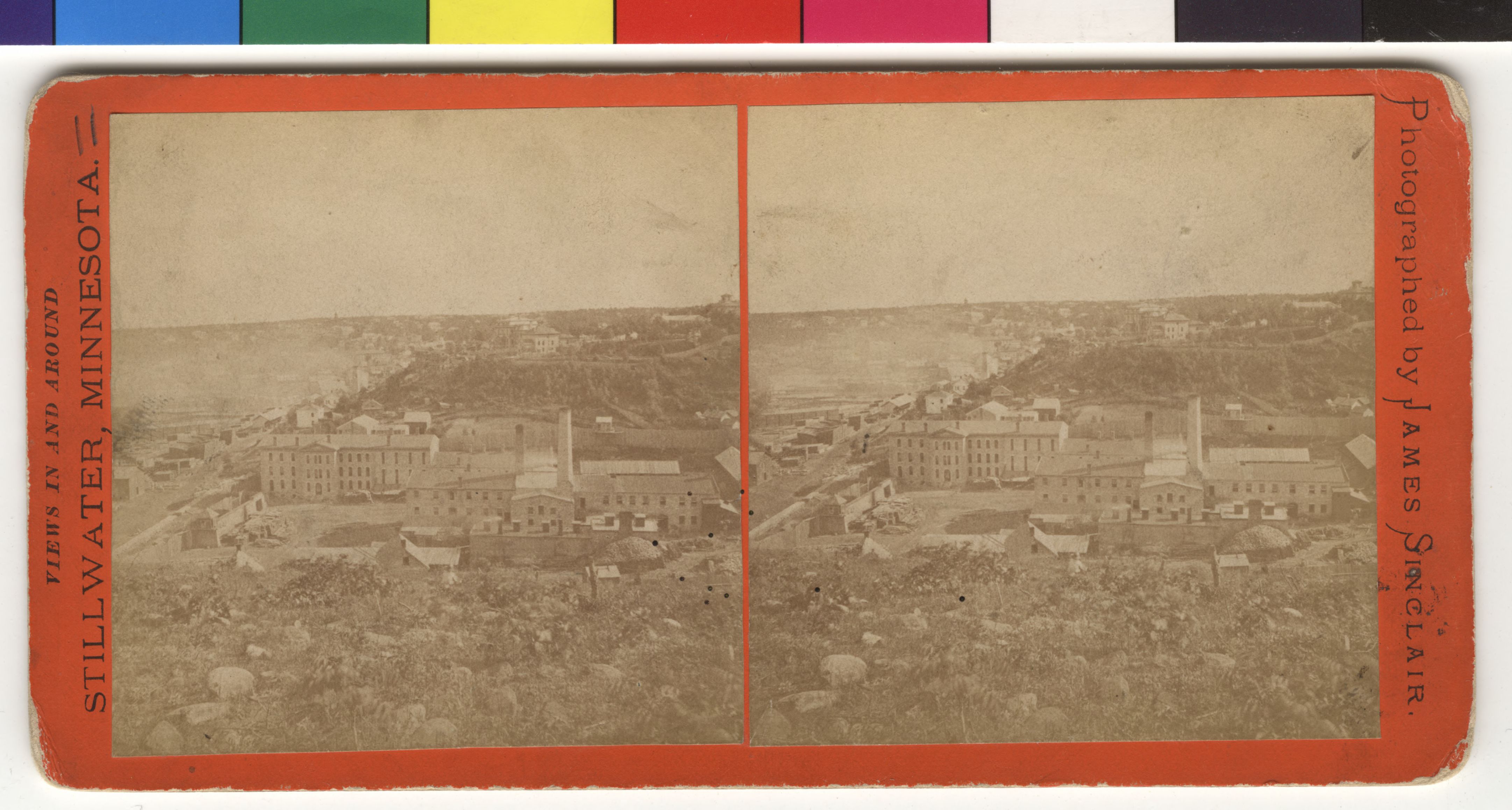
Minnesota Territorial Prison
In 1887, inmates at the Minnesota Territorial Prison in Stillwater did something no convicts in the state had done before: they launched a newspaper. The Prison Mirror gave voice to men behind walls at a time when most Americans considered prisoners invisible. That small act of self-expression captures the paradox of this institution, which over six decades oscillated between harshness and reform, between striped uniforms and professional penology, between leased convict labor and state-run manufacturing. Built in 1853, just four years after Minnesota became a territory, the prison on the bluffs above the St. Croix River would hold some of the most notorious outlaws of the American frontier. It would also become a laboratory for progressive corrections policy. And in the end, a bored teenager with a piece of cardboard and a lighter would erase most of what remained.
Frontier Justice on the St. Croix
Construction began in 1851, and the prison received its first inmates two years later. Francis R. Delano, who had helped build the place through the Jesse Taylor Company, served as the first warden. Under Delano the prison established a library -- an unusually progressive step for the era. By 1858 a physician and chaplain were on staff. But reform had its limits. In 1859 the prison began leasing convict labor to private businesses, giving companies access to both property on the prison grounds and a workforce that could not quit. The classic black-and-white striped prison uniform appeared in 1860. Good conduct time, allowing sentence reductions for cooperative behavior, followed in 1862. The institution was evolving, caught between the punitive instincts of frontier justice and the emerging science of penology.
The Younger Brothers Behind Bars
The prison's most famous residents arrived in chains. Cole, Bob, and Jim Younger -- accomplices of Jesse James in the James-Younger Gang -- were sentenced to the Stillwater facility after their disastrous 1876 raid on the First National Bank in Northfield, Minnesota. The botched robbery left two townspeople and two gang members dead, and the Younger brothers were captured within two weeks. Their presence turned the prison into something of a tourist attraction, a place where the mythology of the Wild West collided with the mundane reality of incarceration. The Youngers would spend a quarter-century within these walls, their story woven into the fabric of the institution and of Stillwater itself.
From Twine to Reform
By 1890 the contract labor system had become entangled in political favoritism and corruption. The prison responded by launching its own manufacturing program, beginning with twine production. It was a pivot that transformed the institution's economy and culture. The following years brought Minnesota's first appointment of professional penologists as wardens, replacing the political appointees who had run the facility since its founding. New wardens introduced a convict grading system that classified inmates by behavior and risk, and established a school for prison education. These were early steps in a national movement toward treating incarceration as rehabilitation rather than mere punishment. Prisoners continued making twine at the Stillwater site long after the main prison closed -- well into the 1970s, in fact -- a thread of continuity spanning more than eight decades.
Fire, Ash, and What Remains
The prison closed in 1914 when operations moved to a new facility in nearby Bayport. Most of the complex was demolished in 1936, but the manual labor buildings and the 1853 warden's house survived. A dairy company operated out of the old factory buildings for decades, eventually selling them back to the city of Stillwater in 1996. Plans for a hotel and conference center fell through. A new set of developers was preparing to convert the site into apartments and condominiums when, on September 3, 2002, a young man named Weyandt set a piece of cardboard on fire out of boredom. The resulting blaze destroyed the historic factory buildings. Weyandt pleaded guilty and received 180 days in jail. The National Register of Historic Places, which had listed the buildings since 1982, formally delisted the site in 2005.
The Warden's House Still Stands
Despite the fire, redevelopment proceeded. In 2003 the site sold for $2.1 million, and the Terra Springs condominium complex rose where prisoners once made twine. The one structure that survived every phase of demolition, neglect, and arson is the 1853 Warden's House, now operated by the Washington County Historical Society as the Warden's House Museum. Inside, period decor from the wardens' tenancy sits alongside exhibits on prison life, the Younger brothers, and Stillwater's broader history. It is a modest building with an outsized story -- the last physical remnant of a place where Minnesota first grappled with questions of crime, punishment, and redemption that remain unresolved today.
From the Air
Located at 45.0625°N, 92.808°W in Stillwater, Minnesota, on the bluffs above the St. Croix River. The prison site is now the Terra Springs condominium development; the adjacent Warden's House Museum is the only surviving original structure. Lake St. Croix (the widened lower portion of the St. Croix River) is visible as a prominent north-south water feature. Stillwater Lift Bridge crosses the river into Wisconsin just south of the site. Nearest airports: Lake Elmo Airport (21D) approximately 8 nm southwest; St. Paul Downtown Airport (KSTP) approximately 15 nm west. The town of Stillwater itself is recognizable from the air by its position at the narrows where Lake St. Croix begins. Best viewed at 3,000-5,000 feet AGL.
Sources
- Wikipedia - Minnesota Territorial Prison
- MNopedia / Minnesota Historical Society - Minnesota Territorial Prison
- Minnesota Historical Society - Northfield Bank Raid
- Library of Congress - The Prison Mirror newspaper
- MPR News / Brainerd Dispatch - 2002 prison arson
- Washington County Historical Society - Wardens House Museum