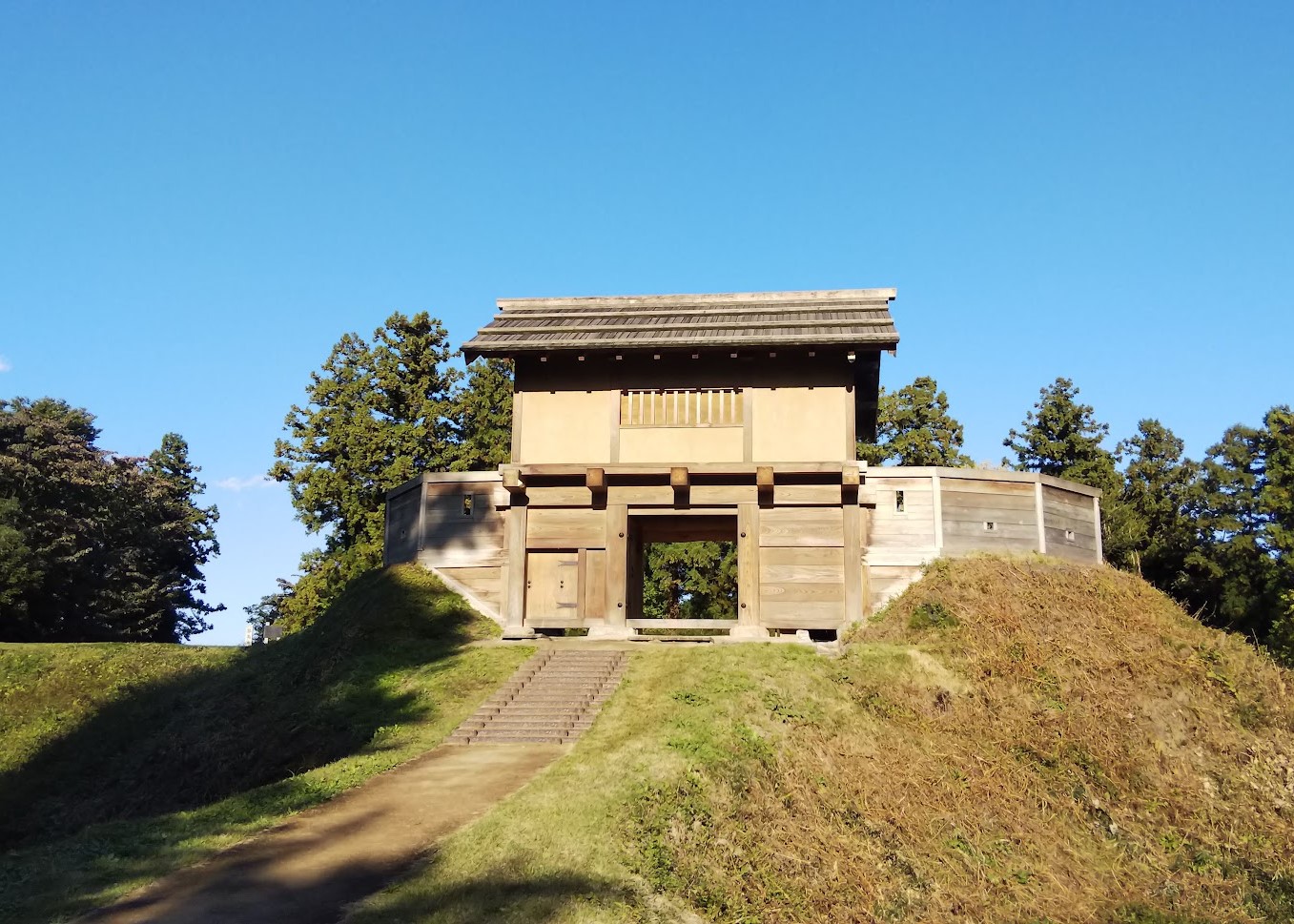
Minowa Castle: Where a Sword Saint Walked Away from War
In 1566, twenty thousand soldiers poured across the Shirakawa River valley toward a long, narrow hilltop bristling with earthworks and wooden palisades. Inside Minowa Castle, the Nagano clan prepared to die. Their lord, Nagano Narimori, had been fighting the armies of Takeda Shingen for five years, honoring his dying father's command to resist to the last man. But the real story of that siege belongs to someone else entirely -- a warrior named Kamiizumi Nobutsuna, one of the Sixteen Spears of the Nagano House, who fought his way out of the collapsing fortress and walked away from large-scale warfare forever. He would spend the rest of his life teaching swordsmanship rather than practicing slaughter, founding the Shinkage-ryu school of combat that would shape Japanese martial arts for centuries. The castle where he made that choice still stretches across its hilltop in Takasaki, Gunma Prefecture -- 1,200 meters long, one of the largest castle ruins in the region, its deep dry moats and crumbling stone walls a monument to an era when allegiance shifted as fast as the seasons.
A Ridge Between Two Roads
Minowa Castle sits on a thirty-meter-high hill at the southwestern end of a long ridge descending from Mount Haruna. The position was no accident. Two of medieval Japan's most critical highways passed beneath this ridge: the Nakasendo, running west toward Shinano Province, and the Mikuni Kaido, heading north toward Echigo Province. Whoever held this hill controlled the traffic of armies, merchants, and messengers through western Kozuke Province. The Shirakawa River carved a deep valley along one flank, providing a natural moat. The castle itself stretched across the hilltop in three concentric rings of enclosures, with two small ridges anchoring its southern end. At its peak, the complex measured 1,200 meters long by 400 meters wide -- a fortress built not for a single battle but for the long game of territorial control.
A Poet's Bloodline, A Warlord's World
The Nagano clan claimed descent from Ariwara no Narihira, the celebrated Heian period nobleman and poet whose verses still fill Japanese anthologies. By the Muromachi period, poetry had given way to politics. The Nagano were minor warlords governing western Kozuke Province, and in 1512 they built Minowa Castle as their seat of power. The castle's story then became a mirror of the Sengoku era's savage complexity. When Uesugi Norimasa was crushed by the Hojo at the Battle of Kawagoe in 1546, the Nagano switched allegiance to the victors. When Uesugi Kenshin rose to challenge the Hojo, the Nagano switched back. Takeda Shingen attacked in support of the Hojo, and suddenly the descendants of a poet found themselves the primary target of one of Japan's most feared warlords.
The Siege and the Sword Saint
Nagano Narimasa died in 1561 with a deathbed command: his son Narimori must fight Takeda Shingen to the end. For five years Narimori held Minowa against mounting pressure, but allies fell away one by one. In 1566, Shingen arrived with twenty thousand troops. During the siege, Kamiizumi Nobutsuna -- already renowned as the finest spearman in Kozuke -- led a desperate sortie from the castle walls. The counterattack failed. The fortress fell. Narimori committed suicide in the inner bailey, fulfilling his father's last wish. But Nobutsuna fought on from a remaining pocket of resistance, and his skill so impressed Takeda Shingen that the conquering general allowed him to leave unharmed, even inviting Nobutsuna to join his service. Nobutsuna declined. He walked away from Minowa Castle and never fought in another large-scale battle, devoting his remaining years to founding the Shinkage-ryu school of swordsmanship -- a discipline that would eventually be adopted by the Yagyu clan and taught to shoguns.
Every Warlord's Prize
After the siege, Takeda Shingen made Minowa his regional headquarters in Kozuke, appointing renowned generals like Sanada Yukitaka and Naito Masatoyo as castellans. The Takeda added a Maru Umadashi -- a half-round buffer area protected by a crescent-shaped dry moat -- to shield the castle's vulnerable northeastern approach. When Oda Nobunaga annihilated the Takeda clan in 1582, the castle passed to Takigawa Kazumasa. Three months later, Nobunaga himself was assassinated in the Honno-ji Incident, and the Hojo clan seized Minowa overnight, upgrading its defenses with contemporary fortification techniques. In 1590, Toyotomi Hideyoshi's army marched up the Nakasendo, and the garrison surrendered without a fight. Tokugawa Ieyasu then awarded the Kanto region to his trusted general Ii Naomasa, who added stone walls and deep, wide dry moats before ultimately building a new castle at Takasaki in 1598. Minowa was abandoned.
The Silence on the Hill
Today Minowa Castle is a National Historic Site, designated in 1987, and listed among the 100 Fine Castles of Japan. The wooden structures are long gone, but the earthworks remain remarkably intact -- deep moats cutting through the ridge, stone wall foundations marking where Ii Naomasa's masons once labored, and the faint outlines of three concentric enclosure rings still readable in the landscape. The sheer scale of the site, one of the largest castle ruins in Gunma Prefecture, conveys what no reconstruction could: the strategic weight of this hilltop across centuries of conflict. Visitors walk paths that Takeda Shingen, Uesugi Kenshin's allies, Hojo defenders, and Tokugawa retainers all once trod. Cherry trees bloom along the old ramparts in spring. The Shirakawa River still carves its valley below, and Mount Haruna still rises beyond the ridge to the northeast, exactly as it did when a sword saint walked out of a burning fortress and chose a different path.
From the Air
Located at 36.405°N, 138.951°E on a prominent ridgeline extending southwest from Mount Haruna in northwestern Takasaki, Gunma Prefecture. The castle ruins occupy a long, narrow hilltop approximately 1,200 meters in length, flanked by the Shirakawa River valley. From 3,000-5,000 feet AGL, the linear earthwork patterns and deep dry moats are visible against the forested ridge. Mount Haruna (1,449m) provides a major visual landmark to the northeast. The nearest significant airport is Matsumoto Airport (RJAF) approximately 60 nautical miles to the west. Tokyo Haneda (RJTT) lies roughly 75 nautical miles to the southeast. The Kanto Plain extends to the south and east.