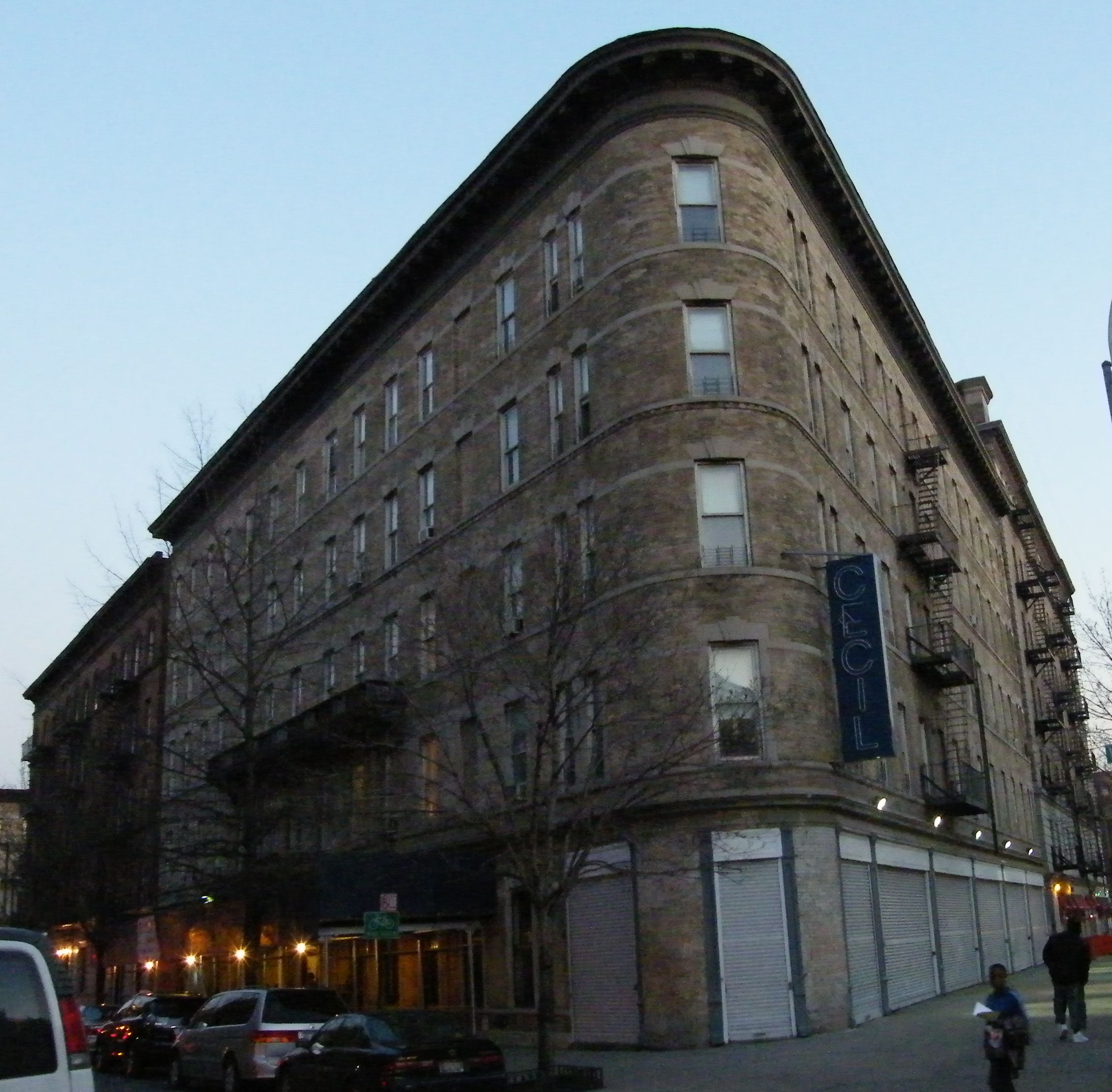
Minton's Playhouse
To play at Minton's, you couldn't just walk in and grab a bass. Charles Mingus remembered being sent to a back room, quizzed on standards before anyone would let him near the stage. This was the price of admission at 210 West 118th Street in Harlem, a small club on the first floor of the Cecil Hotel where, beginning in the early 1940s, the most gifted jazz musicians in America gathered on Monday nights to push each other toward something no one had heard before. What emerged from those sessions -- bebop -- would transform jazz from dance music into an art form, and Minton's Playhouse was the crucible where that transformation happened.
A Sanctuary with Union Protection
Henry Minton, a tenor saxophonist who became the first Black delegate to the American Federation of Musicians Local 802, opened his club in 1938. His union background gave him a quiet but essential advantage: musicians' unions at the time prohibited jam sessions, sending "walking delegates" to follow players and fine them hundreds of dollars for sitting in. At Minton's, musicians were immune from these penalties. The novelist Ralph Ellison described the club as "a retreat, a homogeneous community where a collectivity of common experience could find continuity and meaningful expression." Before Minton opened his own place, he had managed the Rhythm Club in Harlem, where Louis Armstrong, Fats Waller, and Earl Hines held court. He understood what musicians needed -- not just a stage, but a space free from economic and institutional pressure.
Saxophones Like Dogs in the Road
In late 1940, Minton hired former bandleader Teddy Hill to manage the club. Hill introduced Monday Celebrity Nights, sponsored by the Schiffman family who owned the nearby Apollo Theater. The result was a combustible mix of established swing masters and hungry young experimenters. A young Sonny Stitt watched in awe as Lester Young, Coleman Hawkins, Chu Berry, Don Byas, and Ben Webster all played the same jam session. Bartender Herman Pritchard had a front-row seat to the battles, watching Webster and Young "fight on those saxophones like dogs in the road." Don Byas, Stitt recalled, "walked off with everything" -- and Byas became one of the first tenor players to absorb bebop into his style while his elders stayed rooted in swing. The cutting sessions weren't cruelty; they were evolution, played out in real time on a tiny Harlem stage.
Bird, Dizzy, and the Monday Night Revolution
After guitarist Charlie Christian's early death, alto saxophonist Charlie Parker emerged as bebop's new standard-bearer. His collaboration with Dizzy Gillespie, Thelonious Monk, and Kenny Clarke at Minton's built on Christian's experiments with harmonic complexity and rhythmic invention. Miles Davis, then a teenager searching New York for Parker, found his way to Minton's and "cut his teeth" at the sessions. The protocol was unforgiving. "You brought your horn and hoped that Bird and Dizzy would invite you to play with them," Davis remembered. "And when this happened you better not blow it." If they smiled at the end of your solo, you were in. Clarke and Monk so valued Parker's presence that when Teddy Hill refused to hire him for the house band, they paid Parker out of their own salaries. Gillespie, meanwhile, devised his own filter: he would call tunes in obscure keys to chase away anyone who hadn't done their homework.
The Long Fade
By the 1950s, Minton's had traded its open jam policy for booked acts with marquee names. The spontaneity that had fueled the revolution gave way to professionalism, and the cutting edge moved elsewhere. Writer Amiri Baraka visited in the 1960s and found "stand-up replicas of what was a highly experimental twenty-five years ago." The club closed in 1974 after three decades, its best years already receding into legend. More than thirty years of silence followed before a 2006 reopening as the Uptown Lounge at Minton's Playhouse, which itself shuttered by 2010. In 2013, Richard Parsons revived the space as an upscale jazz club and restaurant. The New York City Landmarks Preservation Commission designated the Hotel Cecil and Minton's Playhouse as a city landmark in June 2023 -- official recognition of a room that had already earned its place in American cultural history long before any plaque was hung.
From the Air
Located at 40.8047°N, 73.9533°W in Harlem, Manhattan. The Cecil Hotel building at 210 West 118th Street sits between Frederick Douglass Boulevard and St. Nicholas Avenue. Best viewed at low altitude when following the Harlem grid north of Central Park. Nearest airports: KLGA (LaGuardia, 6 nm east), KTEB (Teterboro, 8 nm west). The Apollo Theater is visible three blocks south on 125th Street.