Mission Bay (San Francisco)
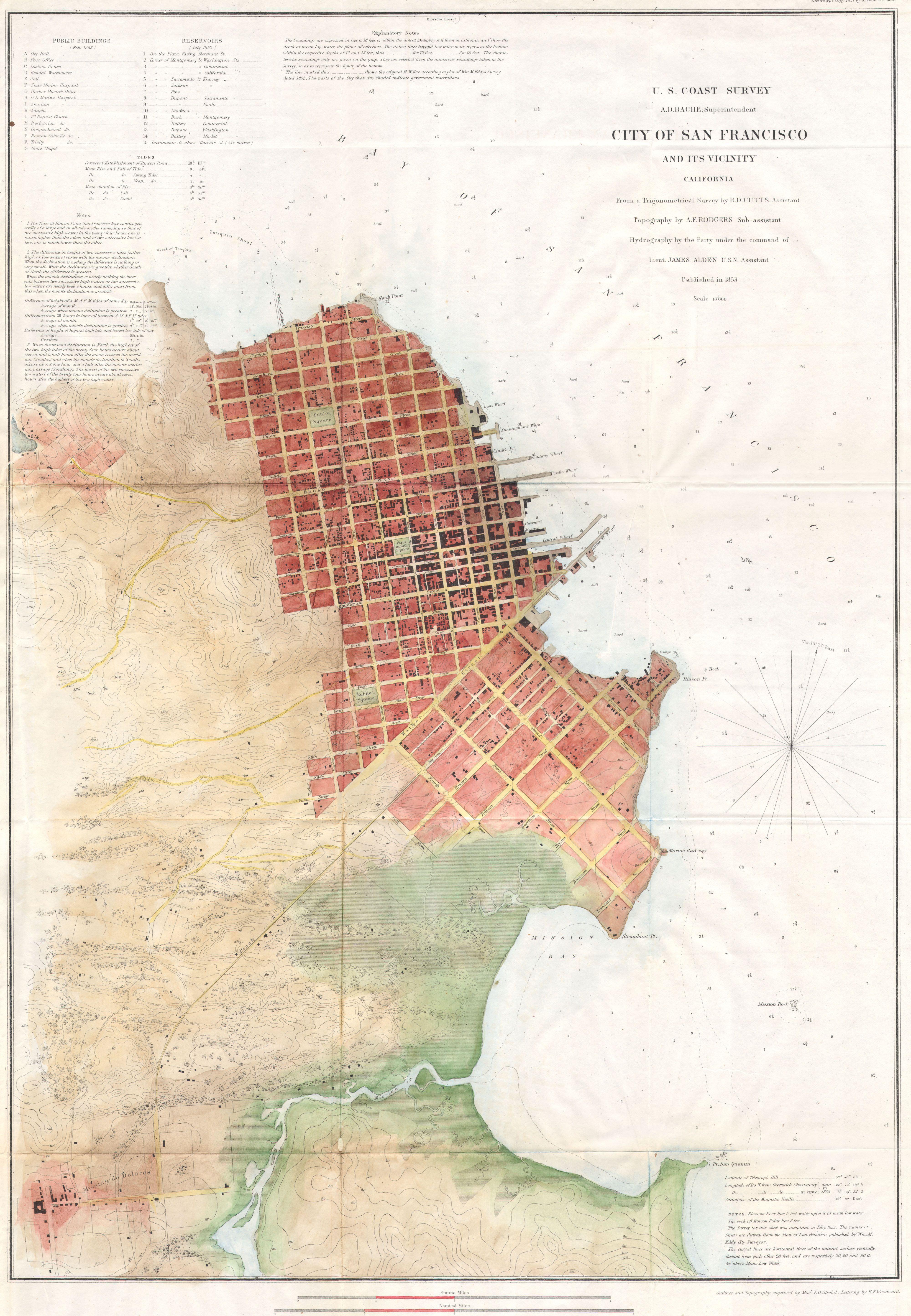
Mission Bay no longer exists. The bay, that is. The neighborhood that bears its name sits on top of what was once a 500-acre salt marsh and lagoon on the west shore of San Francisco Bay, between Steamboat Point and Potrero Point. The Yelamu people, who spoke the Ramaytush dialect of Ohlone, lived here among populations of ducks, geese, herons, egrets, ospreys, and gulls. After the founding of Mission Dolores in 1776, European diseases decimated the indigenous population. Within a century, the bay itself was gone too, buried under refuse, earthquake debris, and ambition.
Filling In the Bay
From the 1850s, Mission Bay served the city's industrial needs: shipbuilding, meat processing, oyster fishing. Beginning in the mid-1800s, like most of San Francisco's original shoreline, Mission Bay became a dumping ground for construction refuse and debris. After the 1906 earthquake, the rubble of the destroyed city was hauled here and dumped. As the marsh stabilized under the weight of the fill, the area became an industrial district. The railroad arrived, and Mission Bay became home to shipyards, canneries, a sugar refinery, and warehouses. The bay that gave the area its name disappeared entirely beneath layers of fill and infrastructure.
From Railyards to Research
For most of the twentieth century, Mission Bay was railyard territory, owned largely by the Southern Pacific Railroad and later by Catellus Development. The transformation began in the 1990s when the University of California, San Francisco secured the site for a major medical and research campus. The UCSF Mission Bay campus opened its first buildings in 2003, anchoring a redevelopment that has since filled the former railyards with biotech offices, hospitals, research labs, residential towers, and parks. The neighborhood is now one of the most intensely developed areas in San Francisco, a landscape of glass and steel where salt marshes once stretched to the bay.
What Lies Beneath
Walk through Mission Bay today and nothing suggests that water once covered the ground beneath your feet. The streets are level, the buildings modern, the parks manicured. But the fill that created this land is unstable by geological standards. The neighborhood's buildings are engineered for the soft soil, their foundations driven deep into bedrock below the artificial ground. An 1852 coastal survey map shows the original bay and marsh in detail, a landscape so different from the current one that they share nothing but coordinates. The Yelamu would not recognize it. Neither would the herons.
From the Air
Located at 37.77°N, 122.39°W on San Francisco's eastern waterfront, south of the Bay Bridge. The UCSF campus and Oracle Park are visible landmarks in the neighborhood. Nearest airports: SFO (KSFO, 9 nm south), Oakland (KOAK, 8 nm east).