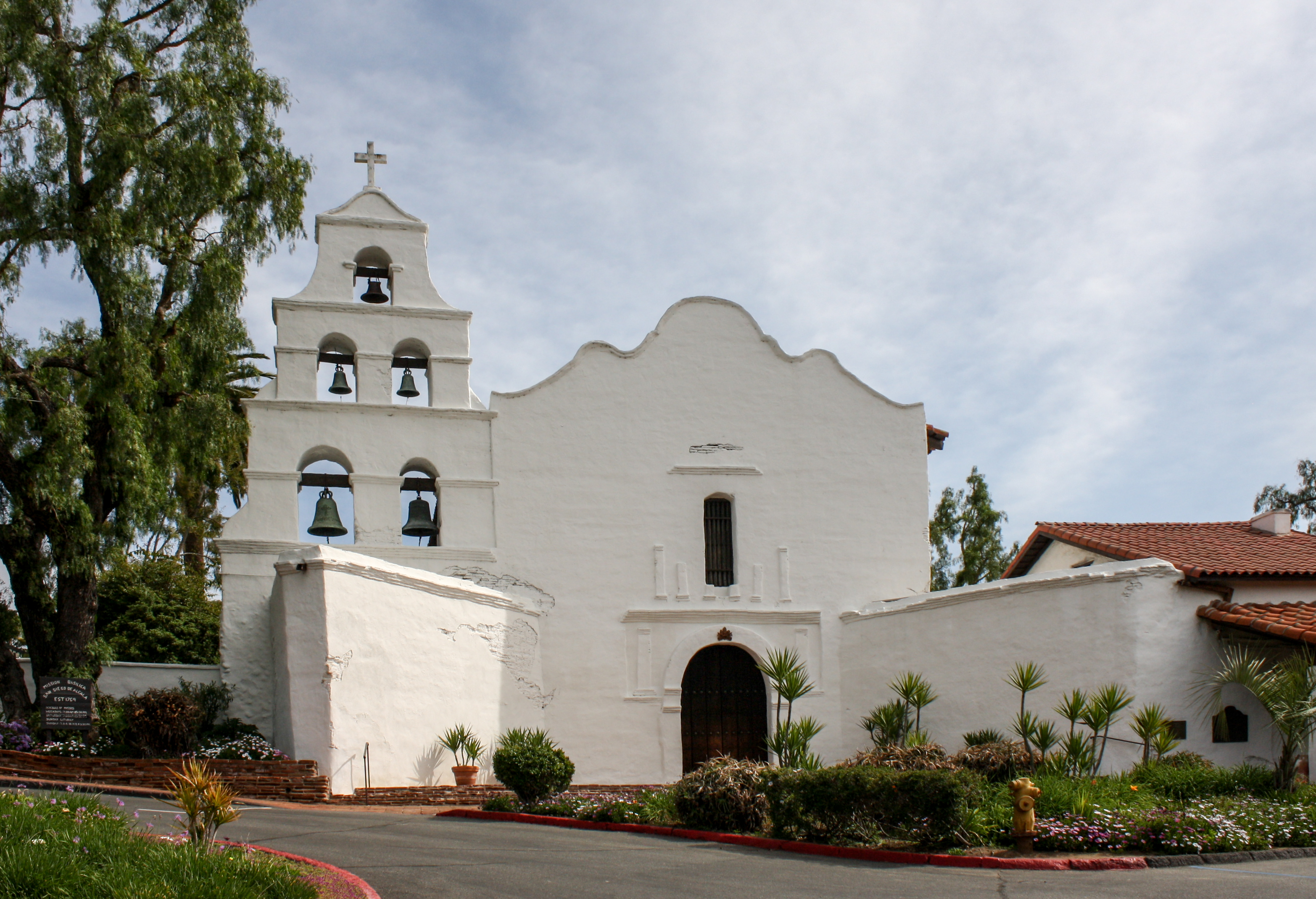
The First and the Furthest
Junípero Serra had walked most of the way from Baja California when he reached the hilltop above San Diego Bay in the summer of 1769. His feet were infected, painful enough that the journey should have been impossible. He founded the first Franciscan mission in Alta California here on July 16, 1769, and the site would become the origin point of a chain of missions that would eventually stretch up the California coast — and the origin point, as well, of a history that cannot be told without acknowledging the profound suffering it contained.
A Difficult Beginning
The first years at Mission San Diego de Alcalá were marked by hardship. The indigenous Kumeyaay people of the region were skeptical of the Spanish presence and resistant to the missionaries' attempts to convert them and reorganize their way of life. Relations were tense from the start.
In 1775, that tension broke into open violence. A coalition of Kumeyaay villages staged an organized uprising against the mission. Father Luis Jayme and two companions were killed in the attack — Jayme becoming, in Catholic tradition, California's first Christian martyr. The mission was burned. The Spanish rebuilt it, as they always rebuilt, but the uprising signaled something the missionaries may not have fully understood: that the people they had come to convert had their own understanding of what the mission system meant to their lives.
Five Buildings on the Same Ground
The church that stands today is the fifth structure built on or near the original mission site. Fire, earthquake, flood, and abandonment claimed each of its predecessors. The current church, rebuilt in 1931 in a reconstruction of the 1813 adobe structure, gives the site its visual identity — the white walls, the bell tower, the campanario with its five bells, the long corridor of the convento stretching alongside.
In 1862, President Abraham Lincoln signed the patent returning the mission property to the Catholic Church. The land had passed through various hands during the Mexican period and American annexation; Lincoln's action restored it to its religious purpose. The mission had been largely abandoned since the secularization of California's missions by the Mexican government in 1833, and the returned property was in poor condition. What stands today reflects both the original structure and the twentieth-century restoration work that made it a functioning parish.
California's First Vineyards
Among the many things the Franciscans introduced to California, viticulture was among the most consequential. The padres made among the earliest attempts at viticulture in California at Mission San Diego de Alcalá, planting vines in the mission's early years. The wine they sought to produce served liturgical purposes; the Mission grape variety spread through the California mission system and formed the foundation of California's wine industry for more than a century.
The connection between the mission system and California wine is often overlooked in the contemporary history of Napa and Sonoma, but the agricultural transformation the missions initiated — introducing European crops and farming practices to the California landscape — was fundamental to what California became economically and culturally.
What Remains and What It Means
Mission San Diego de Alcalá functions today as an active Catholic parish and a historic landmark that receives visitors from around the world. The museum on the grounds documents the mission's history with the care of an institution that has had time to grapple with complexity — the missionary project was genuinely devout and also genuinely destructive, and the evidence for both is part of the record.
The Kumeyaay people are still here. Their nation maintains a tribal government, operates enterprises, and has engaged in ongoing conversations with the Catholic Church about the history that connects them. The bells of the campanario ring over a San Diego that contains both the legacy of the Spanish colonial project and the persistence of the people who were there before it arrived.
From the Air
Mission San Diego de Alcalá sits on a hill in Mission Valley, its white church and bell tower visible from the air against the surrounding urban development.