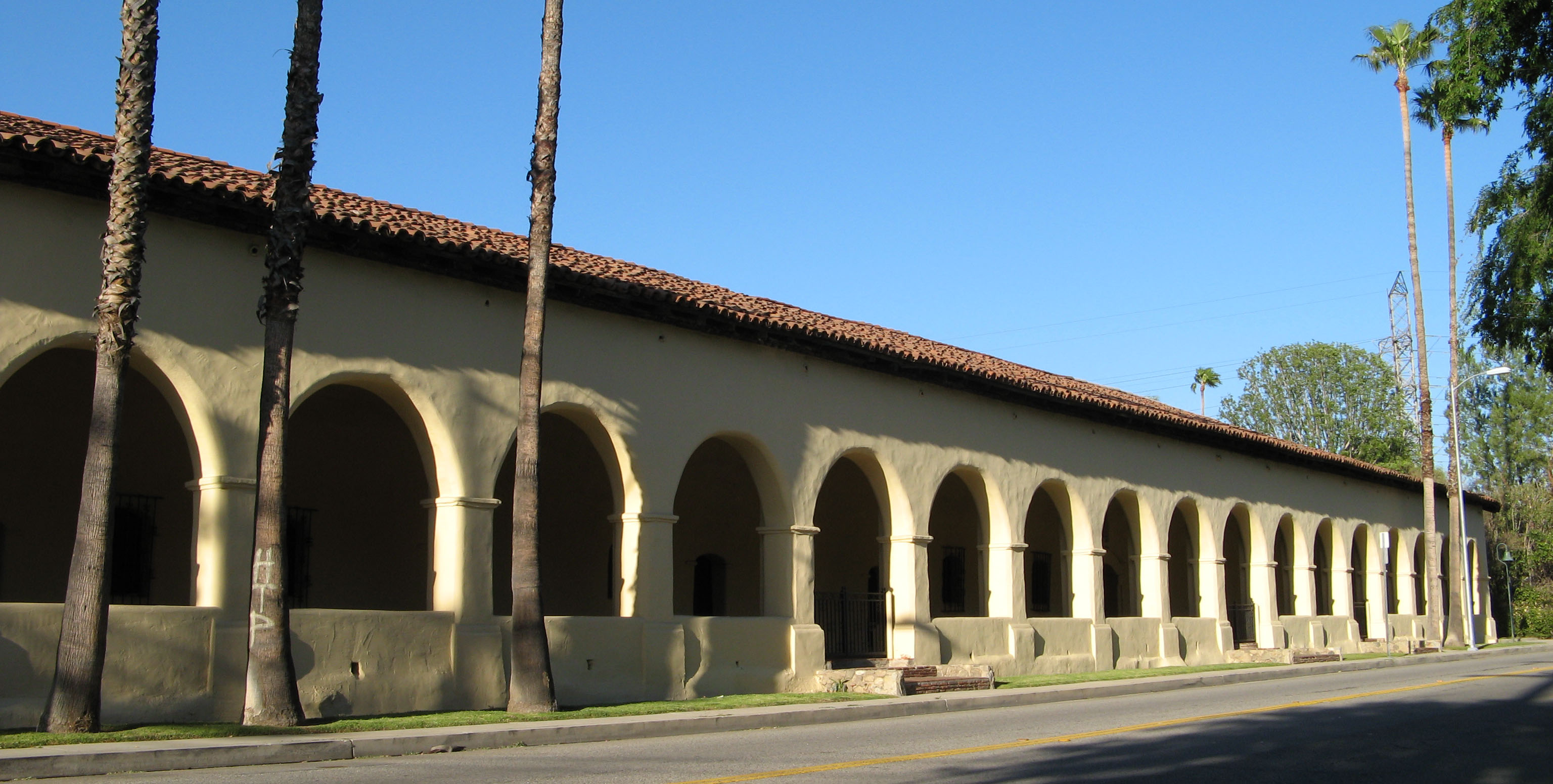
Mission San Fernando Rey de Espana
A hundred-pound bell unearthed in an orange grove near the mission in 1920 bore an inscription in Russian: cast in January 1796 on Kodiak Island, Alaska, by blessing of Archimandrite Joaseph. How a Russian Orthodox bell from Alaska ended up buried near a Spanish Catholic mission in Southern California remains a mystery. Mission San Fernando Rey de Espana has accumulated such mysteries since its founding on September 8, 1797, the seventeenth of twenty-one Franciscan missions established in Alta California. Ten children were baptized on that first day. The mission would grow to hold over a thousand neophytes, produce 2,000 gallons of wine annually, and give its name to an entire valley.
Before the Mission Walls
The Spanish Portola expedition passed through the San Fernando Valley in 1769 - the first Europeans to see inland California. On August 7, they camped at a watering place near where the mission would later rise. Fray Juan Crespi noted in his diary that they were at the foot of the mountains. Nearly three decades later, Father Fermin Lasuen chose the Rancho of Francisco Reyes for the mission site, a place already worked by Ventureno Chumash, Fernandeno, and Tataviam laborers at an agricultural settlement called Achooykomenga. Mission records list Reyes as godfather to the first infant baptized at San Fernando, suggesting the land transfer was amicable enough.
The Growing Mission
The first church was a modest 22-foot adobe structure. Within two years it proved too small, replaced by a larger building that served five more years before construction began on a third church in 1804. Spanish carpenter Manuel Gutierrez is considered its architect. By 1819, the neophyte population reached its peak at 1,080. The mission workshops produced wine and aguardiente from over 32,000 grapevines surrounding the walls. Seventy acres of olive trees provided oil. The men tended cattle, horses, and sheep while growing wheat, barley, corn, and peaches. The women wove cloth in the workrooms. Bells rang for meals, for religious services, for births, for funerals, and to signal approaching ships. Five bells served the mission from 1769 to 1931.
Secularization and Decay
The Mexican War of Independence and conflict with France in Spain cut off support for the missions by the 1810s. Soldiers' wages went unpaid, forcing the missions to feed and supply the presidios. In 1825, Fray Ibarra declared that the presidio was a curse rather than a help to the mission, that the soldiers should go to work and raise grain, and not live on the toil of the Indigenous people, whom they robbed and deceived with talk of liberty while in reality they treated them as enslaved people. Governor Jose Figueroa officially secularized the mission in October 1834. Many former neophytes returned to their lands; others stayed to work nearby ranches for low wages and shelter.
From Hog Farm to Historic Site
The mission buildings saw many uses after secularization. The Butterfield Stage Lines operated Lopez Station just north of the mission. The Porter Land and Water Company used the buildings as a warehouse. In 1896, the quadrangle became a hog farm. Settlers stripped beams, tiles, and nails from the disintegrating church. Charles Fletcher Lummis fought for preservation, and in 1861 the buildings and 75 acres were returned to the Catholic Church. Oblate priests arrived in 1923, making San Fernando a working church again. The Hearst Foundation finally funded a full restoration in the 1940s. The museum became a repository for heirlooms from the Mexican church evacuated during the Cristero revolt.
The First California Gold
Six years before the famous 1848 discovery at Sutter's Mill, a brother of the mission mayordomo found gold in the foothills near San Fernando. The place was named Placerita Canyon to commemorate the discovery, though only small quantities of gold were ever found there. The 1971 San Fernando earthquake extensively damaged the church, which had been listed on the National Register of Historic Places that same year. It was completely rebuilt by 1974. In 2003, comedian Bob Hope - a late-life convert to Catholicism - was interred in the Bob Hope Memorial Gardens at the mission, followed by his widow Dolores in 2011. The mission continues as a chapel of ease of the Archdiocese of Los Angeles.
From the Air
Located at 34.27N, 118.46W in the Mission Hills community of Los Angeles. The mission complex with its distinctive Spanish colonial architecture and red tile roofs is visible from the air. Van Nuys Airport (KVNY) lies 5 nautical miles south. Whiteman Airport (KWHP) is 4 nautical miles east. The mission sits at the northern edge of the San Fernando Valley with the San Gabriel Mountains visible beyond. The 118 freeway passes nearby. Best viewed from 2,500-3,500 feet AGL on clear days. The historic convento building, fountains, and courtyard layout are identifiable from low altitude.