Mission San Francisco Solano
On July 4, 1823, soldiers planted a large redwood cross in the Sonoma Valley, marking the spot where California's last mission would rise. Mission San Francisco Solano was an anomaly from its founding: the only mission built after Mexico declared independence from Spain, established not by royal decree but through the ambitions of a young friar and a governor worried about Russians. It lasted just eleven years before secularization, but in that brief span it grew to nearly 1,000 converts and became the northernmost outpost of Spanish colonial faith in the Americas.
A Friar's Ambition
Father Jose Altimira arrived from Barcelona at age 33 to serve at San Francisco's fog-shrouded mission, where the damp climate was killing its Native American converts. He proposed a bold solution: close the struggling San Francisco mission and its San Rafael medical station, and consolidate everything at a new site north of the bay. California Governor Luis Arguello saw different possibilities. Russians had established Fort Ross on the coast and Bodega Bay to the northwest; a new mission could block their expansion inland. The legislature approved the plan, but church authorities in Mexico never responded. Altimira, impatient and headstrong, began exploring for a site anyway. When Father-President Sarria finally ordered him to stop building in September 1823, a compromise emerged: the new mission could proceed, but the old ones would remain open.
Building in Borrowed Time
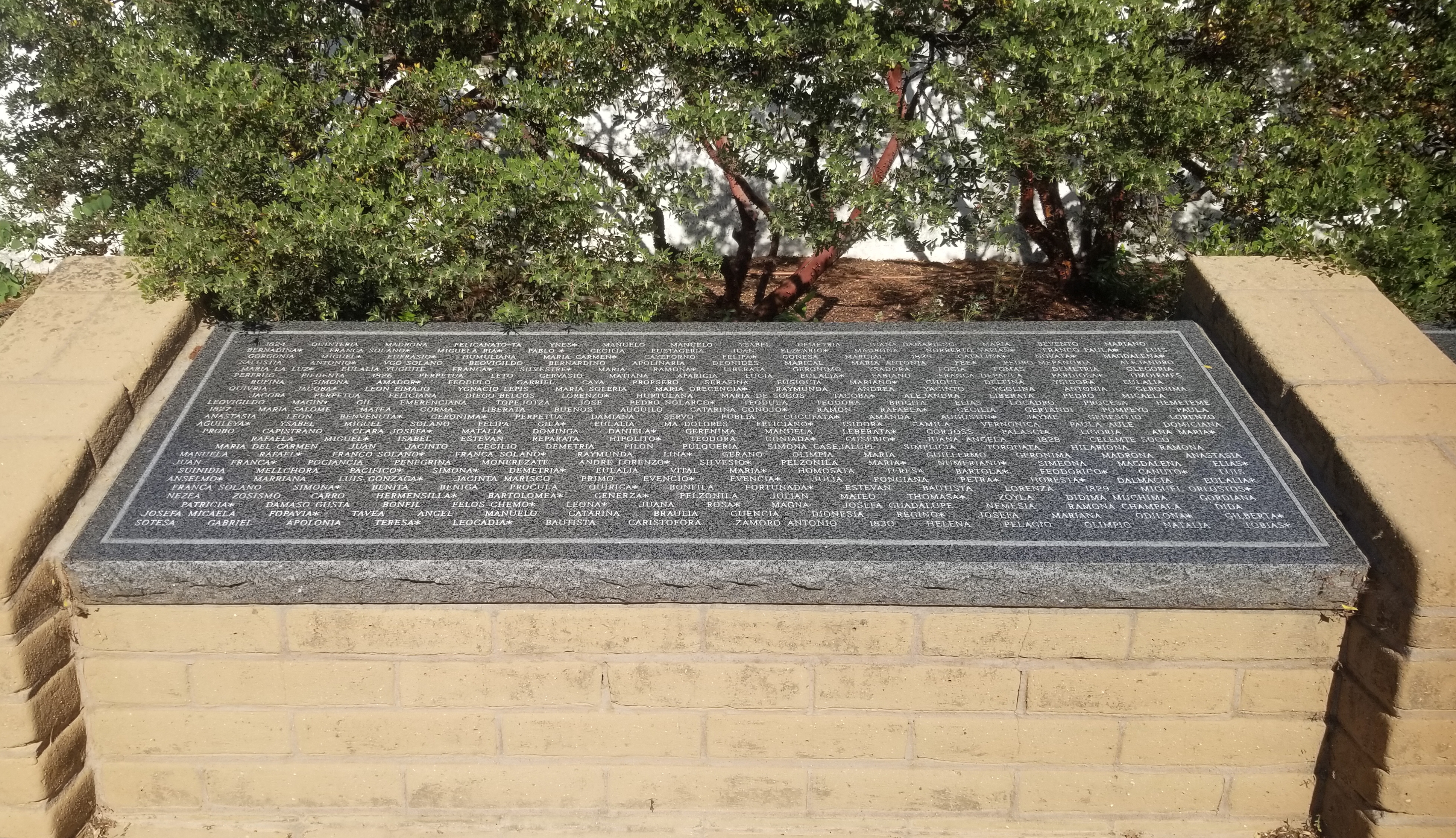
Since San Francisco's mission would stay open, Altimira needed a new patron saint. He chose Francis Solanus, a 17th-century Franciscan who had ministered to indigenous peoples in South America. Construction began in October 1824 with soldiers, neophytes from other missions, and workers from five surrounding tribes: Coast Miwok, Southern Pomo, Wappo, Suisunes, and Patwin. On Passion Sunday, April 4, 1825, Altimira dedicated his church: a crude structure of whitewashed boards, furnished with gifts from the Russians at Fort Ross and a canvas painting of the patron saint from the Father-President. The mission grew quickly. By its peak year of 1832, it counted 996 neophytes from 35 villages, 6,000 sheep and goats, 3,500 cattle, and harvests measured in hundreds of fanegas of wheat, barley, and corn.
Violence and Flight
Success bred conflict. After the bountiful 1826 harvest, Indians working outside the mission demanded a larger share. When negotiations failed, they burned several wooden buildings. Father Altimira fled with a few faithful neophytes to Mission San Rafael Arcangel, never to return. His replacement, the 58-year-old Father Buenaventura Fortuni, restored order and expanded the complex into a full quadrangle. The main buildings formed a square enclosure: 27 rooms in the convento, a great adobe church at the east end, workshops where neophytes learned blacksmithing and carpentry, living quarters for young Indian women along the courtyard's back wall. Beyond the quadrangle lay orchards, vineyards, grain fields, a gristmill, a jail, a cemetery, and an infirmary.
The End Comes Quickly
In 1833, the Mexican Congress ordered all California missions closed. Governor Figueroa's secularization decree promised each neophyte family a plot of land and a share of livestock, but implementation proved corrupt and chaotic. Lieutenant Mariano Vallejo, commandant of San Francisco's presidio, was assigned to oversee the closure. He delegated the work to his majordomo, Guadalupe Antonio Ortega, whom contemporary accounts describe as "uneducated, coarse and licentious." Padre Lorenzo Quijas, the mission's first parish priest, complained of Ortega's "abominable deeds" before fleeing back to San Rafael. On November 3, 1834, Mission San Francisco Solano officially ceased to exist. Most neophytes returned to their home villages or found work on nearby ranchos, including Vallejo's own Petaluma Adobe.
Resurrection
The mission buildings fell into ruin. Growing Sonoma scavenged roof tiles, timbers, and adobe bricks for new construction. The old chapel became a warehouse; the convento may have served as a winery. In 1863, President Abraham Lincoln transferred California's mission churches to the Roman Catholic Church, but the Sonoma property was sold to a private owner in 1881. Revival came through civic pride. In 1910, local women's club members leased the property and raised $800 for repairs. The Native Sons of the Golden West joined the effort. By 1913, the mission had been reconstructed, and in 1926 the Native Sons of the Golden West dedicated it as California Historical Landmark Number 3. Today the restored chapel and convento stand within Sonoma State Historic Park, the final link in a chain of 21 missions that once stretched from San Diego to the wine country.
From the Air
Located at 38.29N, 122.46W in downtown Sonoma, California. The mission's white-walled chapel and courtyard are visible from low altitude, fronting the historic Sonoma Plaza. Nearby airports include Sonoma Skypark (0Q9) approximately 3nm northwest and Napa County Airport (KAPC) approximately 12nm northeast. Best viewed at 1,500-2,500 feet AGL. The surrounding Sonoma Valley wine country provides excellent visual references.