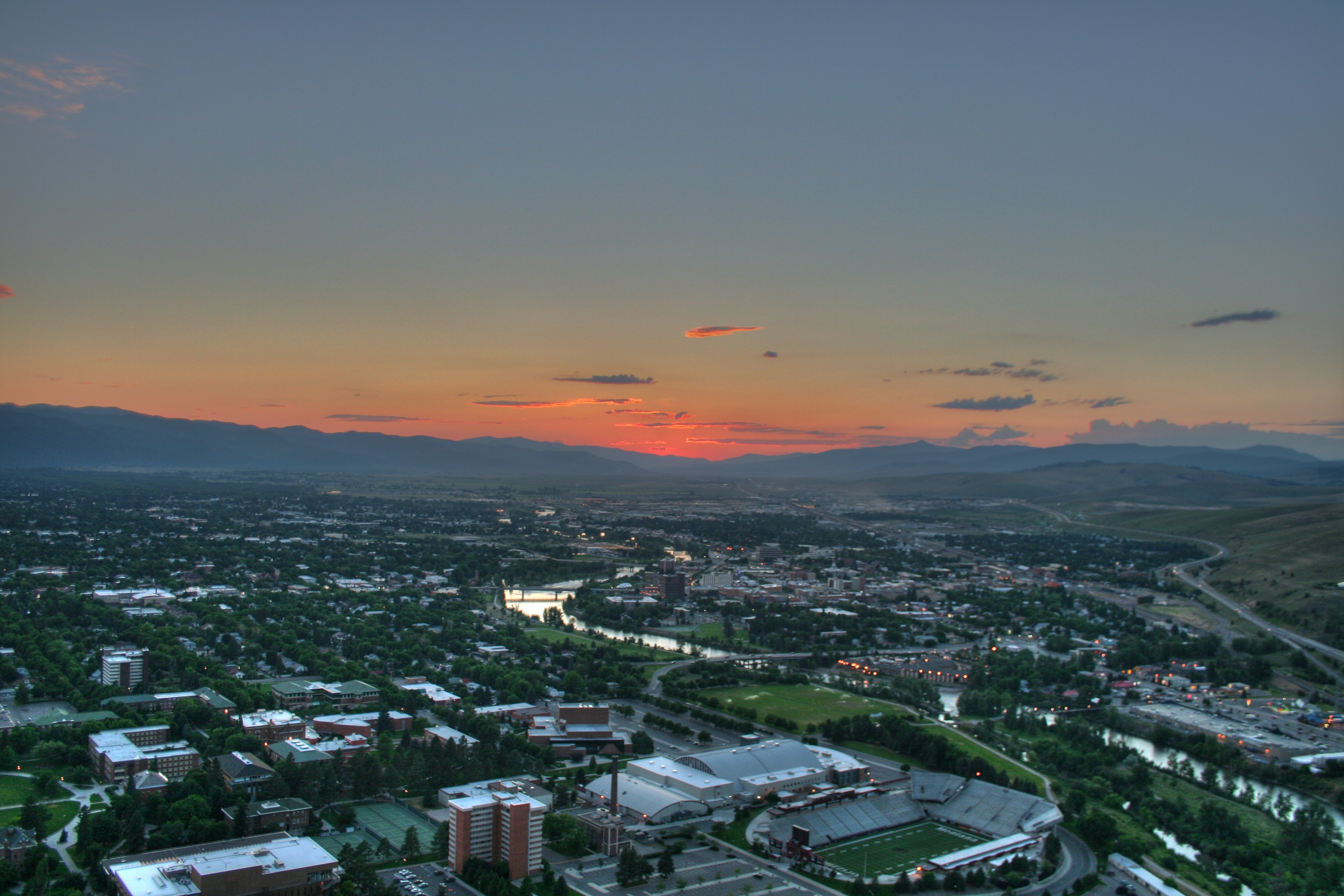
Missoula
The Clark Fork River winds through downtown, the mountains rise in every direction, and somewhere a barista with a master's degree is pulling espresso shots. This is Missoula, Montana's most liberal city, the hub of five valleys in the state's northwestern corner. Home to the University of Montana, Missoula attracts artists, athletes, writers, and outdoor enthusiasts who arrive for school and never quite leave, creating an overqualified workforce that gives even the most modest jobs an educated twist. The city is physically part of the Rocky Mountains but culturally identifies with the Pacific Northwest - close enough to Portland in spirit if not in miles.
City Bus to Wilderness
In Missoula, you can take a city bus to within walking distance of federally designated wilderness. This is not hyperbole - the Rattlesnake Wilderness Area begins at the north edge of town, 33,000 acres of protected land accessible from the transit system. Few American cities can make this claim.
Mount Sentinel rises on the east side, offering views from the enormous 'M' painted on its slope. A trail from the University of Montana campus climbs 700 feet to the letter, then continues another 1,400 feet to the summit. From the top, you can see across the city to Mount Jumbo, where careful observers with binoculars can still trace the ancient shoreline of glacial Lake Missoula - the ice age lake whose catastrophic drainages carved the Columbia Gorge and Channeled Scablands.
River Running Through
The Clark Fork River defines Missoula's geography, flowing through downtown past Caras Park, under historic bridges, and out toward the Idaho border. In summer, Missoulians take to the water - tubing the gentle current, kayaking the rapids, rafting with guides who know every rock and eddy.
The Kim Williams Trail follows the riverbank, connecting downtown to the university and beyond. It's part of Missoula's extensive trail network, which includes the riverfront, the mountain slopes, and the converted railbeds that reach into surrounding valleys. Bicycling is a way of life here, the mild months from April to October seeing throngs of commuters on two wheels, many employers offering showers and changing rooms to encourage the habit.
Microbreweries and Murals
Missoula punches above its weight in culture. The downtown hosts galleries that open their doors on First Fridays, offering free art viewing, music, and refreshments. The historic courthouse displays eight original murals by Western artist E.S. Paxson. Two preserved railroad stations, one Milwaukee Road, one Northern Pacific, anchor the city's architectural heritage.
Microbreweries have proliferated - Montana's tasting room regulations limit servers to three pints per customer, but there are enough breweries that dedicated visitors can tour all day. The Farmers Markets fill downtown on summer Saturdays, the food scene reflecting both local bounty and the city's educated, well-traveled population. International choral festivals and river music festivals draw performers from around the world.
Hot Springs and Ghost Towns
Within an hour's drive, Missoula opens onto adventures that feel centuries removed from the university town. The Lolo Hot Springs offer geothermal pools southwest of town, including clothing-optional hours for the adventurous. Across the Idaho border, Jerry Johnson and Weir hot springs require short hikes to natural pools where clothing is optional anytime.
For history, Garnet Ghost Town sits an hour east, maintained by the Bureau of Land Management in a state of suspended decay. The gold rush settlement offers an open-air museum of frontier life, accessible by car in summer or by ski and snowmobile in winter when two cabins are available for overnight rental. And three hours north, Glacier National Park waits - close enough for day trips, though most visitors stay longer once they see what awaits.
From the Air
Located at 46.87N, 114.00W in western Montana where five valleys converge. The Clark Fork River runs through downtown. I-90 passes through town, connecting to Butte 120 miles east and Coeur d'Alene/Spokane 200 miles west. Missoula International Airport (KMSO) offers good commercial service. Mountains surround the city in every direction. Mount Sentinel and its prominent 'M' are visible on the east side of town; the Rattlesnake Wilderness rises to the north. Climate is four-season with significant winter snow. Smoke from wildfires can impact visibility in late summer. Glacier National Park is 150 miles north via US-93.