Missouri State Penitentiary
On April 23, 1967, prisoner #00416J vanished from the Missouri State Penitentiary inside a bread box. The box was supposed to contain loaves being transported to another prison. Somewhere en route, the man inside slipped away. His name was James Earl Ray, and less than a year later he would assassinate Martin Luther King Jr. in Memphis. Ray's escape is just one thread in the 168-year fabric of a prison that opened when Andrew Jackson was recently out of office, survived the Civil War, witnessed riots and executions, and finally closed its gates in 2004 as the oldest operating penal facility west of the Mississippi River.
A Prison to Save a Capital
The Missouri State Penitentiary exists because of civic anxiety. When Governor John Miller proposed building the state's main prison in Jefferson City in the early 1830s, his reasoning was partly political: the young capital needed institutions to solidify its status against rival towns competing for the seat of government. Architect John Haviland designed the facility, and master stonemason James Dunnica -- the same man who built Jefferson City's first Capitol building in 1826 -- was appointed to oversee construction. The legislature allotted $25,000. When the prison opened in 1836, Missouri had been a state for just fifteen years. The prison would outlast almost every other institution built in that era, operating continuously for 168 years.
The Infamous Roster
The penitentiary's inmate register is a catalog of American notoriety. Charles 'Sonny' Liston arrived in 1950 on charges including armed robbery; he learned to box behind the walls and was paroled in 1953, going on to become heavyweight champion of the world. Lee Shelton -- better known as 'Stagger Lee' or 'Stagolee' -- the man who killed Billy Lyons on Christmas 1895 and became an American folk icon immortalized in song, served time here. Carl Austin Hall and Bonnie Heady, who kidnapped and murdered six-year-old Bobby Greenlease, were incarcerated here before their execution by gas chamber in 1953. Serial killer Charles Ray Hatcher, responsible for 16 murders, hanged himself in the penitentiary in 1984. And then there was Harry M. Snodgrass, who in the mid-1920s performed piano concerts over radio station WOS from inside the prison, billed as 'The King of the Ivories.'
The Night the Walls Burned
On the evening of September 22, 1954, two inmates faked illness to lure guards into an ambush. They seized the guards' keys and raced through cell blocks, releasing prisoners as they went. The riot that erupted required the Missouri State Highway Patrol, the Missouri National Guard, and police departments from Jefferson City, St. Louis, and Kansas City to suppress it. When order was restored, four inmates were dead, 29 injured, and one had attempted suicide. Four guards were seriously injured. Several buildings were set ablaze, with damages estimated at $5 million. The scars of the riot -- burned buildings and structural damage -- remained visible on the grounds for a decade afterward.
Death Row Below Ground
From 1938 to 1965, thirty-nine prisoners were executed in the penitentiary's gas chamber. Death row inmates were held in a below-ground unit, isolated from the general population, receiving all services within their confined space. Each prisoner was allowed one hour of exercise per day in a fenced area adjacent to the death row facility. On January 6, 1989, George 'Tiny' Mercer became the last person executed at the Missouri State Penitentiary -- and the first to die by lethal injection, administered in the disused gas chamber. Three months later, the state's 70 death row inmates were transferred to the Potosi Correctional Center, closing a grim chapter in the prison's history.
The Tourists Arrive
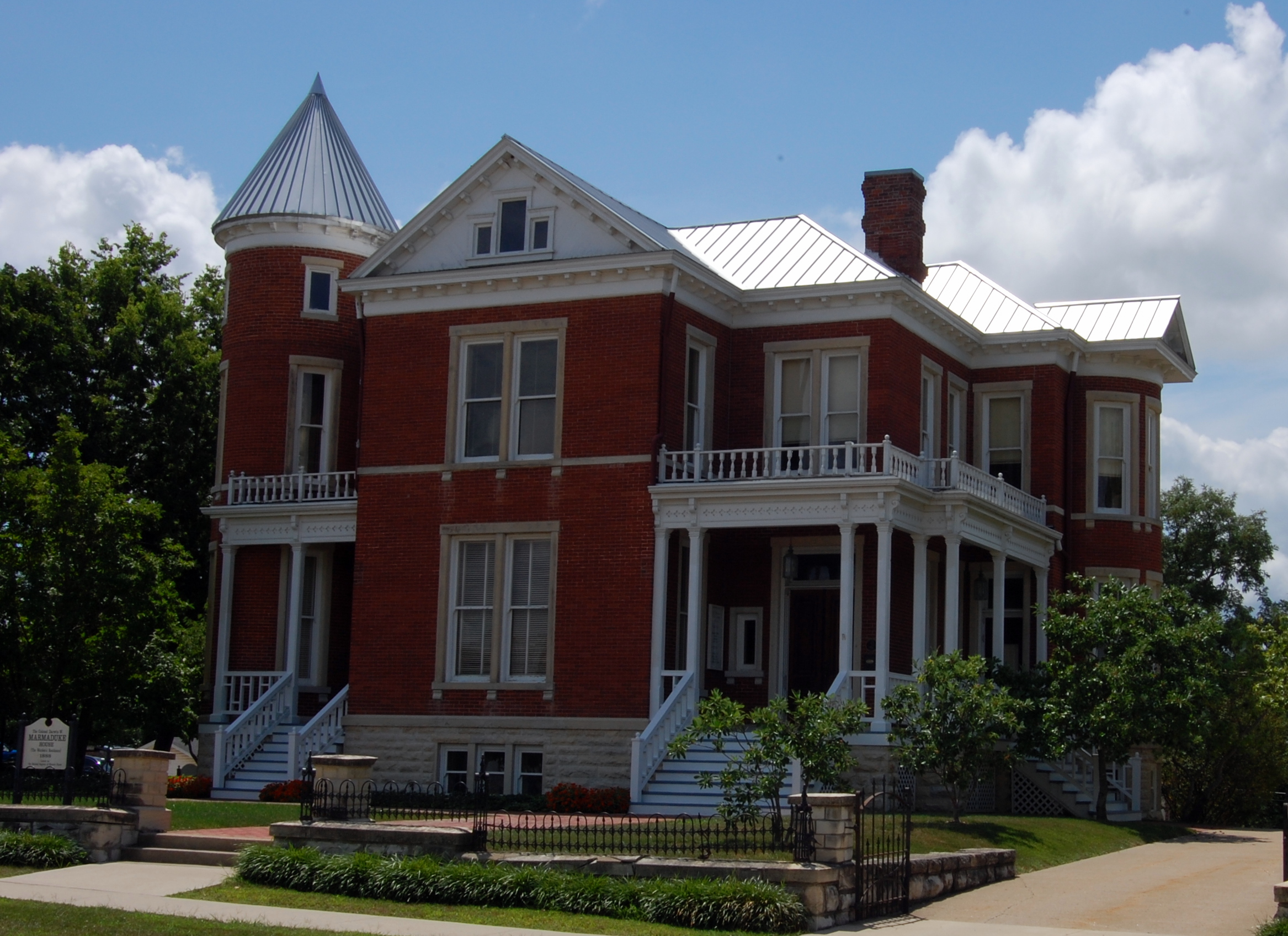
The Missouri State Penitentiary closed on October 14, 2004, replaced by the new Jefferson City Correctional Center. The old prison's stone walls, which had contained so much violence and notoriety, found a second life as a tourist attraction. The Missouri State Penitentiary Museum, housed in the Col. Darwin W. Marmaduke House across Capitol Avenue, features artifacts, photographs, and a replica cell. Guided tours take visitors through the historic cellblocks and corridors. Television shows including Ghost Hunters, Ghost Adventures, and Destination Fear have filmed at the location, drawn by the prison's reputation for paranormal activity. The old penitentiary now stands in ironic proximity to the state capitol building, two monuments to different forms of Missouri authority separated by a few city blocks.
From the Air
Located at 38.5734°N, 92.1606°W in Jefferson City, Missouri, at approximately 700 feet MSL on the south bank of the Missouri River. The prison complex is visible as a distinctive walled compound near the Missouri State Capitol dome. Jefferson City Memorial Airport (KJEF) serves general aviation north of the city. Columbia Regional Airport (KCOU) is approximately 25 nm north. The Missouri River traces the city's northern boundary. Best viewed at 2,000-4,000 feet AGL to see the prison complex in context with the adjacent capitol grounds.