Mito Castle
Most Japanese castles announce themselves with soaring tower keeps and sweeping stone walls. Mito Castle announces itself with an absence. Where fortress buildings once stood on a bluff between two rivers, modern schools now occupy the grounds, their gates and fences styled to echo the castle architecture that preceded them. It is a peculiar memorial -- a place where the shape of power persists even after the power itself has dissolved -- and understanding why requires tracing eight centuries of ownership changes, political maneuvering, and the rise of one of Japan's most influential feudal families.
A Fortress Between Two Rivers
In 1214, a warrior named Baba Sukemoto chose a natural stronghold -- a plateau flanked by water and commanding views of the surrounding plains of Hitachi Province -- and built a fortification that would bear his family name for two centuries. Baba Castle, as it was then known, served the clan through generations of regional conflict until 1416, when Edo Michifusa seized the site. The Edo clan expanded the fortifications, renamed it Mito Castle, and transformed it from a regional outpost into a seat of genuine authority. The strategic logic of Sukemoto's original choice proved durable: the natural terrain, with steep drops on multiple sides, made the castle difficult to approach and easy to defend.
The Gosanke and the Weight of Lineage
Mito Castle's most consequential era began when Tokugawa Yorifusa arrived. The eleventh son of Tokugawa Ieyasu -- the shogun who unified Japan and founded the dynasty that would rule for over 250 years -- Yorifusa established the Mito branch of the Tokugawa clan. This made Mito one of the Gosanke, the three most prestigious branch families authorized to provide an heir to the shogunate if the main line failed. The proximity of Mito to Edo, the shogunal capital, gave the Mito branch outsized political influence throughout the era. From this castle, the Tokugawa lords of Mito shaped national policy, intellectual life, and eventually the very idea of what it meant to be Japanese.
Nariaki's Classroom Revolution
The ninth lord, Tokugawa Nariaki, may have done more from Mito Castle than any of his predecessors. In 1841, he established the Kodokan directly in front of the castle gates -- and it became the largest domain school in all of Japan. Students studied Confucianism, astronomy, medicine, and martial arts within sight of the fortress walls. Tokugawa Yoshinobu, who would become Japan's last shogun, spent five formative years at the Kodokan beginning at age six. The following year, Nariaki opened Kairaku-en, the public garden conceived as a complement to the school's intellectual rigor. Together, the castle, the school, and the garden formed a triangle of governance, education, and public life that was unique among feudal domains.
Fire, Reform, and Disappearance
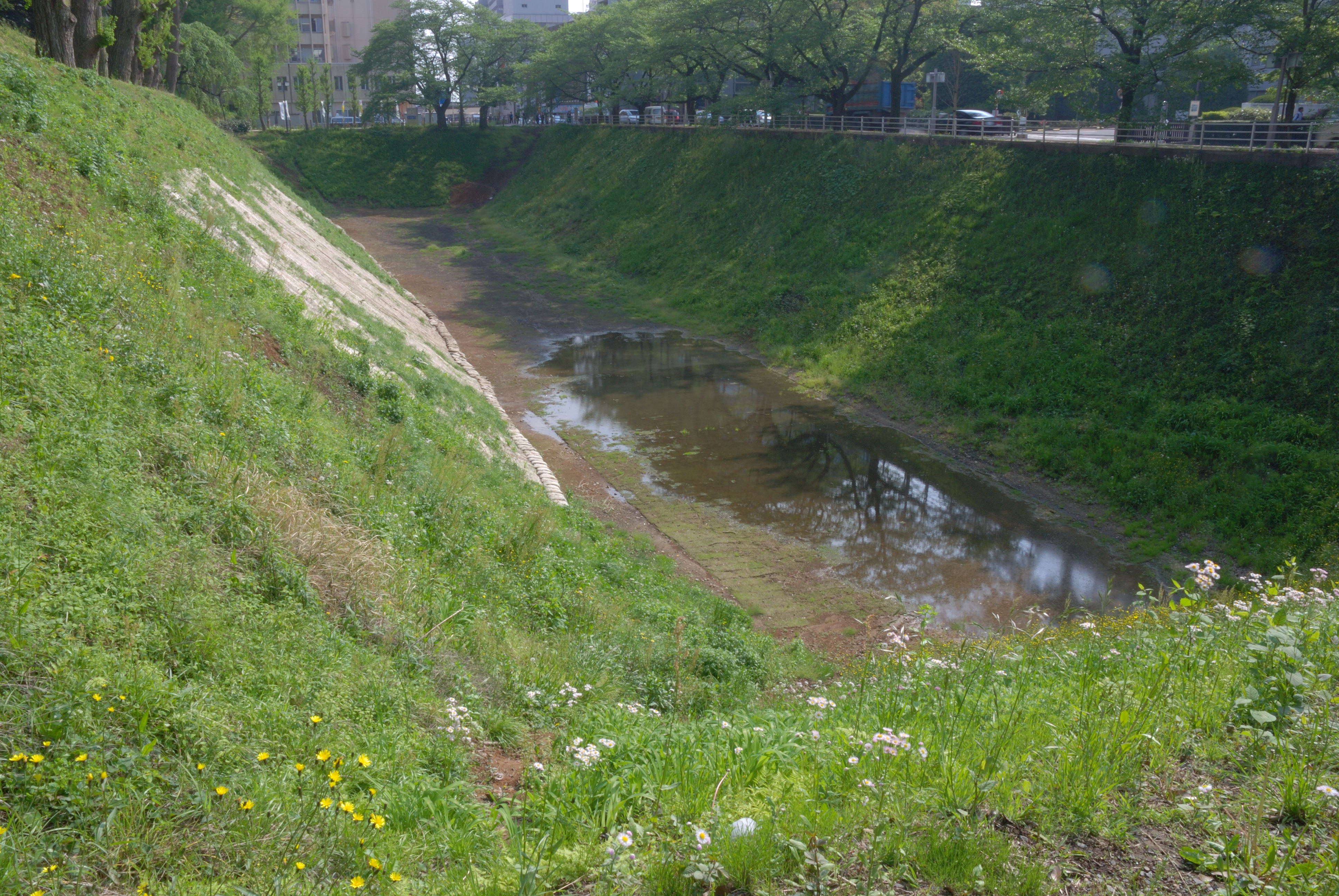
Destruction came to Mito Castle in stages. A large fire in 1764 consumed many of the principal buildings, and while some were rebuilt, the castle never fully recovered its former scale. When the Meiji Restoration swept away the feudal order in the late 1860s, Mito Castle was decommissioned along with hundreds of other fortifications across Japan. The deliberate dismantling of castles was both practical and symbolic: the new government wanted to signal that the age of samurai strongholds was over. At Mito, the moats survived because they followed the natural topography, and one gate endured as a physical link to the feudal past. But the most significant survivor was the Kodokan, which still stands in front of where the castle gates once opened.
What the Moats Remember
Walking the castle grounds today is an exercise in reading landscape. The deep moats still trace the outline of the original defenses, filled with water that reflects the surrounding trees. Modern school buildings sit where barracks and armories once stood, their castle-styled gates a conscious nod to the site's history. The Kodokan remains open to visitors, its wooden halls and study rooms preserved as a window into Tokugawa-era education. From above, the fortress footprint is still legible -- the plateau, the moats, the approach roads -- a castle written into the land itself, visible long after the walls came down.
From the Air
Mito Castle ruins are located at 36.3728N, 140.4783E in central Mito, Ibaraki Prefecture, on an elevated plateau between the Naka and Senba rivers. The moat system and green grounds contrast with surrounding urban development and are identifiable from altitude. The Kodokan school is visible just to the south of the castle site. Nearest airport is Ibaraki Airport (RJAH), approximately 30 km south. Narita International Airport (RJAA) lies about 80 km southwest. The castle site is roughly 1 km east of Kairaku-en garden and Lake Senba.