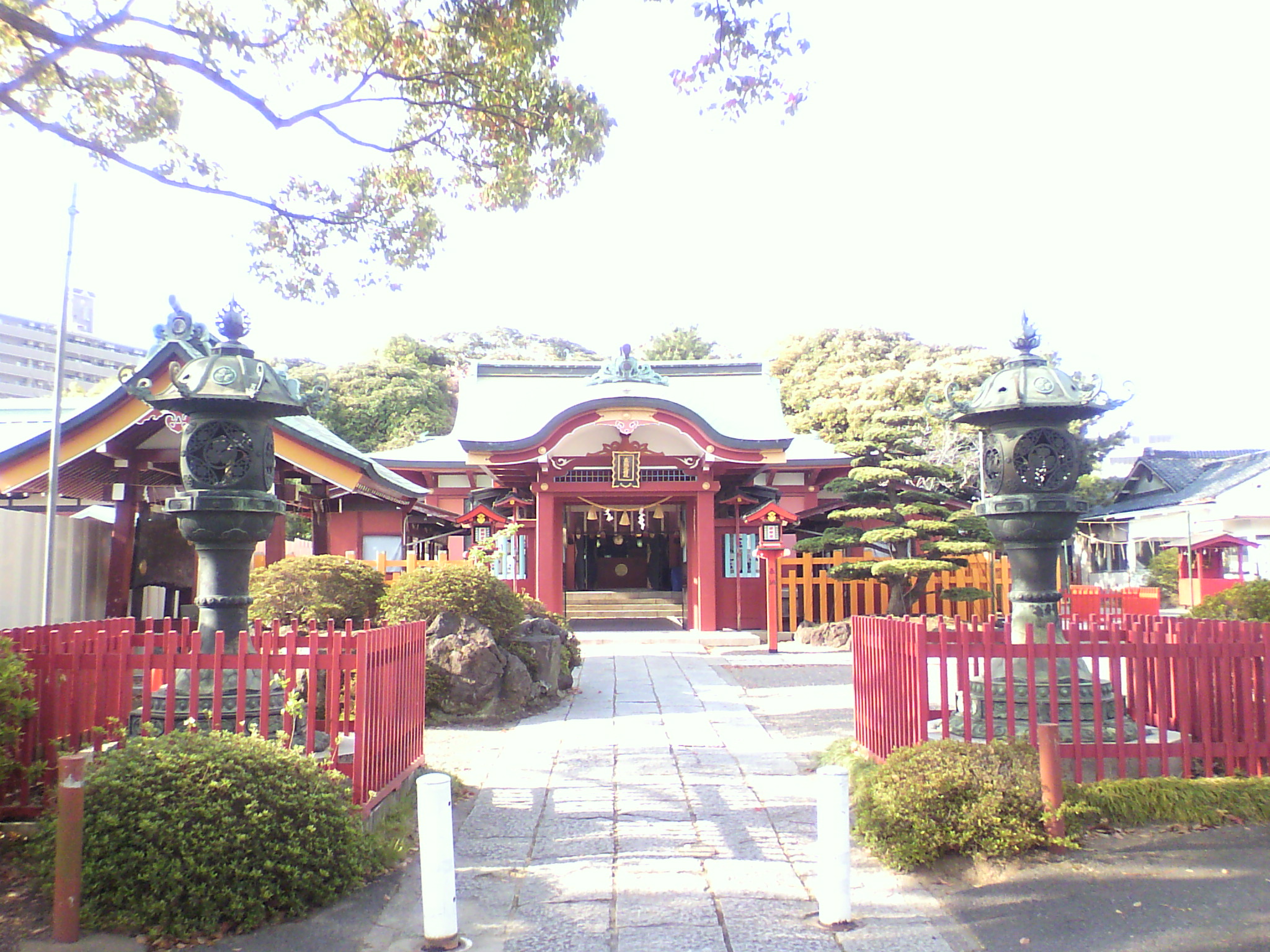
Mito Tosho-gu
In the hierarchy of Tokugawa memorial shrines scattered across Japan, the famous Tosho-gu at Nikko draws millions of tourists with its extravagant gold leaf and carved dragons. Mito Tosho-gu makes no such spectacle. Tucked into the grounds near Mito Castle, this shrine tells a quieter but more politically charged story -- one in which honoring the dead became entangled with questions of national identity, religious purity, and the limits of a feudal lord's authority. The shrine that Tokugawa Yorifusa built in 1621 to honor his father, the great shogun Ieyasu, would eventually become the stage for an ideological confrontation that got a future lord placed under house arrest.
A Son's Devotion, Built in Wood and Stone
Tokugawa Yorifusa was the eleventh son of Tokugawa Ieyasu, the man who unified Japan and founded the Tokugawa shogunate. After Ieyasu's death in 1616, shrines were erected across the country to honor him as a divine protector of the nation. Yorifusa, who had been granted the Mito Domain as the founder of one of the three Gosanke branch families, built his own Tosho-gu in 1621. The shrine placed Ieyasu's deified spirit at the center, flanked by two protective figures: Sanno Gongen on the left and Matajin on the right. A Buddhist temple called Daisho-ji administered the complex, reflecting the era's common blending of Buddhist and Shinto practice. In 1624, a chapel honoring the second shogun, Tokugawa Hidetada, was added, and from that point forward, each successive shogun's spirit was enshrined at Mito Tosho-gu.
The Most Famous Lord of Mito
The shrine's setting was renamed Tokiwayama in 1699 by Tokugawa Mitsukuni, the second lord of Mito Domain and one of the most celebrated figures in Japanese history. Known to later generations as Mito Komon, Mitsukuni became the subject of a long-running television drama -- Mito Komon aired from 1969 to 2011, making it the longest-running period drama in Japanese television history. But the historical Mitsukuni was far more than a folk hero. He commissioned the Dai Nihon-shi, a massive compilation of Japanese history that took over two centuries to complete and helped establish what became known as the Mito School of thought -- an intellectual movement that would profoundly influence Japan's trajectory toward the Meiji Restoration.
When Purification Became Rebellion
The most dramatic chapter in the shrine's history belongs to Tokugawa Nariaki, the ninth lord of Mito Domain. Nariaki was a reformer steeped in the Mito School's nativist doctrines, which emphasized Japan's unique spiritual identity and the primacy of Shinto over foreign-imported Buddhism. He ordered that Daisho-ji be separated from the shrine and that Mito Tosho-gu be reformed along purely Shinto lines -- stripping away centuries of Buddhist influence. This was not merely a theological adjustment. In the politically sensitive world of the Tokugawa shogunate, where religious institutions served as instruments of social control, Nariaki's unilateral action was seen as a provocation. It was cited as one of the reasons for his dismissal from his official posts and his confinement under house arrest at Mito.
Ashes and Reconstruction
The shrine's Honden -- its innermost sanctuary -- had been designated an Important Cultural Property since 1917, a recognition of both its architectural significance and its historical weight. That designation could not protect it from the American firebombing that struck Mito in August 1945. The Honden was destroyed along with much of the city's built heritage. For seventeen years, the shrine existed without its spiritual core, until a rebuilt Honden was completed in 1962. The spirit of Tokugawa Nariaki -- the same lord whose reforms had once cost him his freedom -- was enshrined alongside Ieyasu in 1936, a posthumous reconciliation that the living Nariaki might have appreciated. In 1875, the shrine had been designated a prefectural shrine under the State Shinto ranking system, a status it maintained through the upheavals of the twentieth century.
Layers of Reverence
Mito Tosho-gu stands today as one of dozens of Tosho-gu shrines across Japan, all dedicated to the memory of Ieyasu. But few carry the political complexity of this one. Within its grounds, the tensions that defined Tokugawa-era Japan -- between Buddhism and Shinto, between central authority and domain autonomy, between tradition and reform -- played out in decisions about what prayers to say and who should say them. The shrine is small enough to walk through in minutes, but the history compressed into its precincts spans the full arc of the Tokugawa period, from Yorifusa's filial devotion in 1621 to Nariaki's defiant purification two centuries later.
From the Air
Mito Tosho-gu is located at 36.3725N, 140.4733E within the grounds adjacent to Mito Castle in central Mito, Ibaraki Prefecture. The shrine sits in a wooded area near the castle ruins and is not easily distinguished individually from altitude, but the broader castle and garden complex is identifiable. Nearest airport is Ibaraki Airport (RJAH), approximately 30 km south, sharing facilities with JASDF Hyakuri Air Base. Narita International Airport (RJAA) is about 80 km to the southwest. The shrine is part of a cluster with Mito Castle and Kairaku-en garden, all within about 1 km of each other.