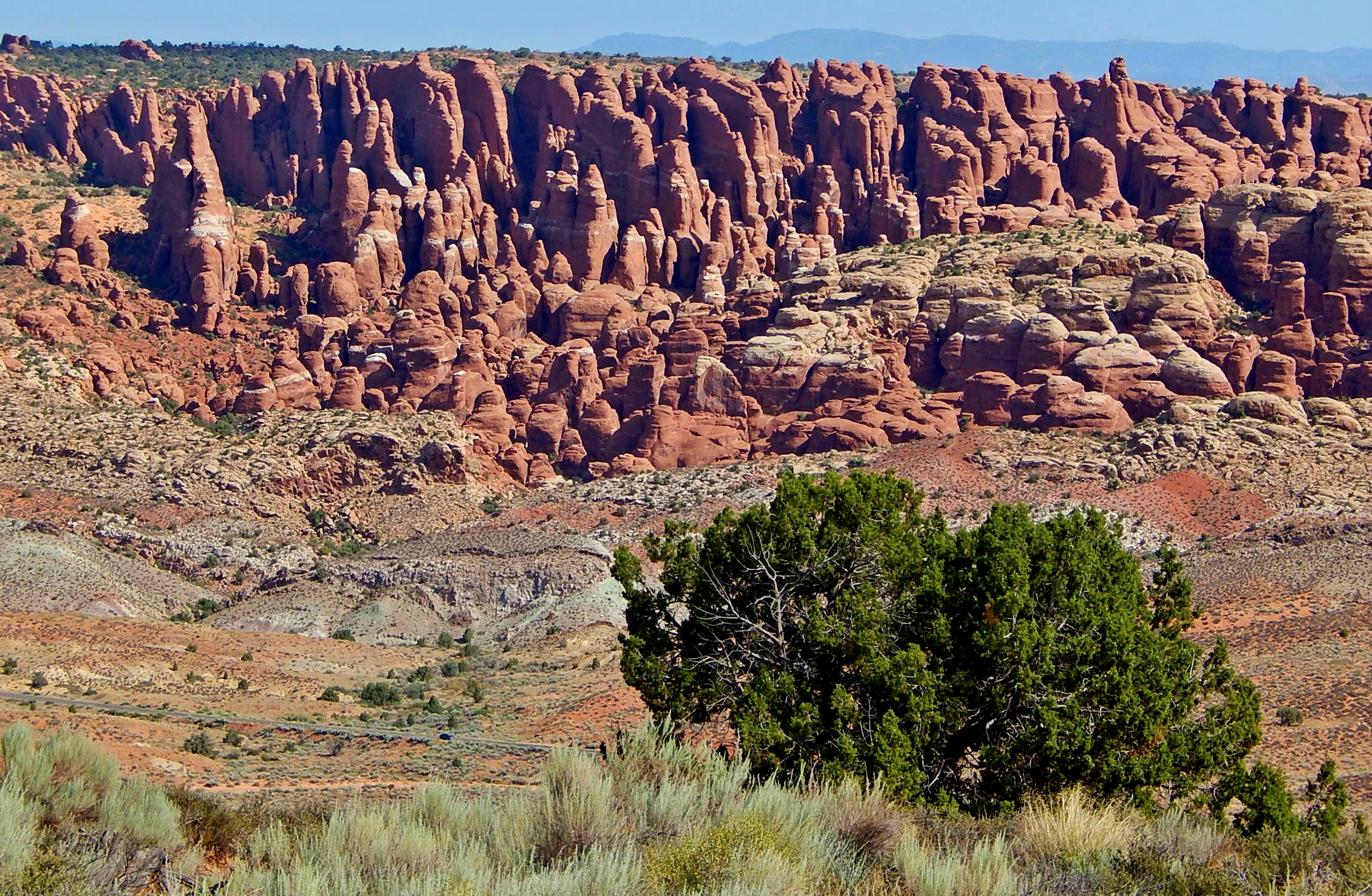
Arches National Park
In the red rock desert of southeastern Utah, erosion has created architecture. Arches National Park contains over 2,000 documented natural stone arches - the highest concentration in the world. The arches formed as water infiltrated cracks in the Entrada Sandstone, froze and expanded, widened the openings, and eventually carved window-like openings through solid rock. The process takes millions of years; the arches we see are moments in geological time - some newly formed, others collapsing, all temporary. Delicate Arch, standing alone above a slickrock bowl, has become Utah's symbol, appearing on license plates and postage stamps. It's not the largest arch (that's Landscape Arch at 306 feet span), but it's the most perfectly framed - a portal to red rock desert and distant mountains.
The Geology
Arches National Park sits on an ancient salt bed deposited 300 million years ago. Overlying sandstone, compressed and folded over the salt, cracked into long parallel fins. Water entered the cracks, froze, expanded, and slowly eroded the rock. Where rock was softer or more fractured, erosion created windows that enlarged into arches. The process requires specific conditions - not too hard (won't erode), not too soft (collapses before arching). The Entrada Sandstone here met those conditions perfectly, creating the world's highest arch concentration. Arches continue forming; old arches continue collapsing. Wall Arch fell in 2008; others will follow.
Delicate Arch
Delicate Arch stands 52 feet tall, a freestanding arch on the edge of a slickrock bowl overlooking the La Sal Mountains. The arch has become Utah's unofficial symbol - perhaps America's most recognizable natural formation after the Grand Canyon. Reaching it requires a 3-mile round-trip hike gaining 480 feet, mostly on exposed slickrock. The final approach reveals the arch suddenly as hikers round a corner - the first view is always emotional. Sunset brings photographers in numbers that require patience and positioning. The arch was nearly commercialized in the 1960s (plans included an aerial tramway); it remains undeveloped and unchanged, accessible only by foot.
The Other Arches
Beyond Delicate Arch, the park contains multitudes. Landscape Arch, at 306 feet span, is the longest natural arch in North America - so thin now that sections have fallen and hiking beneath is prohibited. Double Arch is two arches sharing a foundation. Windows Section features massive North and South Windows and Turret Arch visible together. Sand Dune Arch hides in a sandy alcove. Fiery Furnace is a maze of narrow sandstone fins requiring permits or guided tours. Each arch has character; many have stories. The arches documented in 1929 when the park was established continue evolving - some growing, some failing, all temporary.
The Experience
Arches can be overwhelming - over 2,000 arches, dozens of viewpoints, numerous hikes, all competing for attention. A single day allows only highlights; proper exploration takes multiple visits. The park is extremely popular; summer brings intense heat and crowds. Spring and fall offer better weather and (slightly) fewer visitors. Entry now requires timed reservations during peak seasons. The red rock transforms with light; sunrise and sunset colors are extraordinary. Night skies are designated for their darkness - the Milky Way arches over stone arches. The park is best experienced slowly, allowing the geological time that created this landscape to inform your human time within it.
Visiting Arches National Park
Arches National Park is located 5 miles north of Moab, Utah, along Highway 191. Timed entry reservations are required during peak season (April through October); book online in advance. The park has no lodging, food, or gas; Moab provides all services. The 18-mile scenic drive accesses major viewpoints; allow 2-3 hours without stops. The Delicate Arch hike (3 miles round-trip) takes 2-3 hours. Devils Garden contains Landscape Arch and several other formations along a longer trail. Fiery Furnace requires permits or guided ranger tours. Summer temperatures exceed 100°F; carry water, wear sun protection. Grand Junction, Colorado, has the nearest commercial airport (110 miles). Moab is the gateway for both Arches and Canyonlands National Parks.
From the Air
Located at 38.73°N, 109.59°W in southeastern Utah. From altitude, Arches National Park is visible as red rock terrain on the Colorado River's west side. The parallel sandstone fins that create arch conditions are visible as dark lines in the rock. The La Sal Mountains rise to the southeast - snow-capped peaks above red desert. Moab is visible south of the park. The Colorado River winds through canyon country. Canyonlands National Park is visible to the south. The terrain is classic Colorado Plateau - red rock, canyons, mesas, and the occasional green ribbon of a river. The arches themselves are too small to see from altitude, but the landscape that creates them is unmistakable.