Mobile Bay Jubilee
The phone rings at three in the morning. A voice on the other end says one word: Jubilee. Within minutes, porch lights snap on along the eastern shore of Mobile Bay. Screen doors bang. Families pour onto the sand carrying washtubs, gigs, and cast nets, barefoot children running ahead into the warm Alabama darkness. Something extraordinary is happening in the shallows -- crabs, flounder, shrimp, and eels are crowding into ankle-deep water by the thousands, so thick you can scoop them up by hand. This is a Mobile Bay jubilee, and it has been drawing coastal Alabamians out of bed on summer nights for at least 160 years.
The Bay Gives Up Its Bounty
A jubilee is a natural phenomenon in which bottom-dwelling sea creatures abandon the deeper waters of Mobile Bay and surge toward shore in extraordinary density. Crabs, shrimp, flounder, eels, and stingrays pile into the shallows along the bay's eastern shore, behaving as if the water behind them has become uninhabitable -- because it has. Author Archie Carr captured the abundance plainly: "At a good jubilee you can quickly fill a washtub with shrimp. You can gig a hundred flounders and fill the back of your pickup truck a foot deep in crabs." The animals arrive sluggish and disoriented, their behavior described by researchers as "depressed and moribund," which makes harvesting them startlingly easy. Although similar oxygen-depletion events occur elsewhere, Mobile Bay and Tokyo Bay in Japan are the only two locations on Earth where the phenomenon has been regularly documented.
Suffocation in the Deep
The mechanism behind a jubilee is elegant and merciless. Mobile Bay is shallow -- averaging about ten feet deep -- and receives enormous volumes of fresh water from the Mobile River system. During calm summer conditions, a layer of heavier, saltier Gulf water settles beneath the lighter fresh water and stagnates. Organic material washed in from upstream marshes and swamps accumulates on the bay floor, feeding a population explosion of microorganisms that consume tremendous quantities of dissolved oxygen. When an easterly wind pushes this oxygen-depleted bottom water toward the eastern shore, bottom-dwelling creatures are driven before it like refugees. Fish that swim higher in the water column can escape over the advancing dead zone, but crabs, flounder, and eels cannot. They pile up against the shoreline, trapped between poisoned water and dry land.
Reading the Signs
Jubilees follow a pattern that local fishermen have recognized for generations. In 1960, a fishing captain named Frank Phillips reported that he had observed jubilees for the previous 60 years and that neither their frequency nor intensity had changed. His father, he said, had seen them throughout his own lifetime, pushing the oral record back well into the 1860s. The conditions are specific: a warm summer night, an overcast or cloudy preceding day, a gentle easterly wind, a calm bay surface, and a rising tide. If the wind shifts or the tide turns, the jubilee ends abruptly. Most jubilees happen in the pre-dawn hours and occur at least once per year, sometimes several times. Years without a single jubilee are exceedingly rare.
Three A.M. Beach Party
The stretch of coast that serves as prime jubilee ground runs along the densely populated eastern shore of Mobile Bay, near the town of Fairhope. When someone spots the first signs -- crabs crawling onto the sand, flounder lying listless in the shallows -- the alarm spreads fast. People ring bells, shout to neighbors, and make phone calls up and down the shore. Because jubilees happen only on warm summer nights, the event takes on the character of a spontaneous community beach party. Flashlights and lanterns sweep across the water. Washtubs fill. Children wade in with buckets. The mood is celebratory and communal, a kind of harvest festival that no one can schedule. The word "jubilee" itself -- borrowed from the biblical tradition of abundance and release -- captures the spirit perfectly: the bay has given up its bounty, and the community gathers to receive it.
From the Air
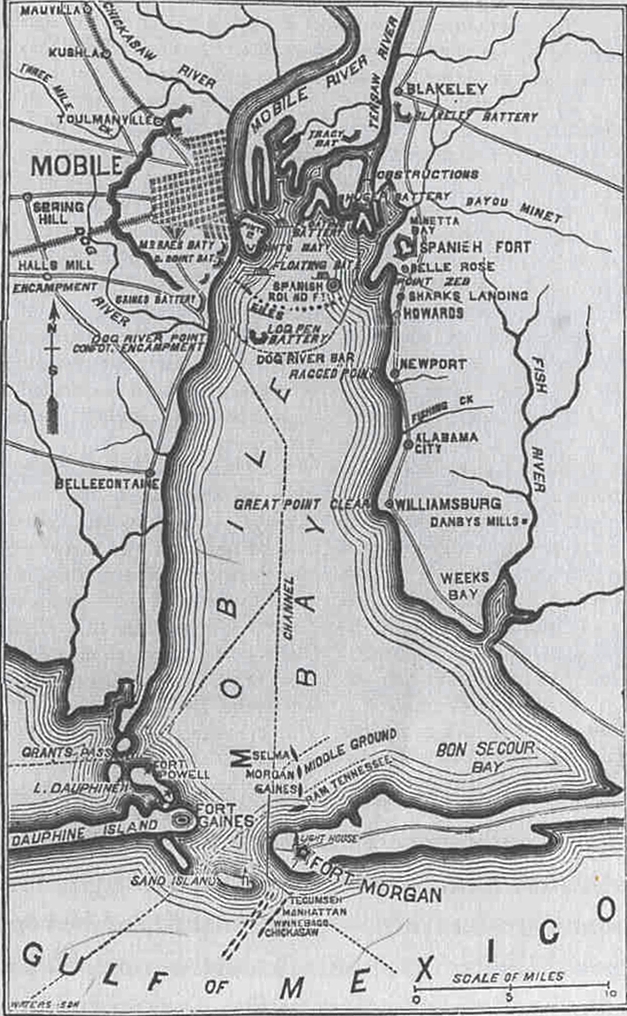
Mobile Bay lies at approximately 30.57N, 87.93W, stretching roughly 31 miles from the Mobile River delta to the Gulf of Mexico. The bay is easily identifiable from altitude as a large, shallow body of water flanked by Mobile to the west and Fairhope/Daphne to the east. The eastern shore near Fairhope is where jubilees typically occur. Nearest airports are Mobile Regional Airport (KMOB) to the west and Jack Edwards National Airport (KJKA) in Gulf Shores to the south. At 3,000-5,000 feet AGL, the bay's shallow waters, river sediment plumes, and shoreline development are all clearly visible.