Mobility Resort Motegi
In 2008, on a low-banked, egg-shaped oval carved into the wooded hills of Tochigi Prefecture, Danica Patrick beat Helio Castroneves to the finish line and became the first woman to win an IndyCar race. The track where it happened was never supposed to be famous for that. Honda had built Twin Ring Motegi in 1997 for a single, practical purpose: to study American oval racing up close, on home soil, so the company could win at Indianapolis. They spent six years losing on their own track before Dan Wheldon finally delivered Honda's first oval victory there in 2004. The irony ran deeper still -- the 2011 Tohoku earthquake damaged the oval so badly that IndyCar's final race at Motegi had to be run on the road course instead, and the oval has sat silent ever since, sometimes used as a parking lot during MotoGP weekends.
Two Rings, One Ambition
The name said it all. Twin Ring Motegi -- two complete racing circuits sharing garage and grandstand facilities but otherwise entirely separate. The oval, Japan's only one used for competitive racing, runs counter-clockwise in the American tradition, with turns three and four pinched tighter than one and two, giving the course its distinctive egg shape. The road course, built inside and around the oval, runs clockwise, in the opposite direction. The two tracks cannot host races simultaneously because the pit lane for one crosses the front straight of the other. This peculiar arrangement was a deliberate choice by Honda, who wanted both an American-style speedway for their IndyCar program and a proper road course for Japan's domestic series. On March 28, 1998, CART held the inaugural Indy Japan 300, won by Mexican driver Adrian Fernandez. That same year, Mike Skinner won the Coca-Cola 500, an exhibition NASCAR race notable as the first oval NASCAR event in Japan and the first time Dale Earnhardt and Dale Earnhardt Jr. competed against each other.
The Road Course Takes Over
After IndyCar departed in 2011, the road course became the heart of Motegi. The circuit is built in a distinctive stop-start, straight-and-hairpin style that feels unlike many tracks of similar length. By Japanese standards it is exceptionally flat, with only a slight rise toward the hairpin. That layout keeps the racing tight and technical. Super Formula visits twice a year. Super GT, Super Taikyu, and Formula 4 all take turns on the tarmac. Local events fill nearly every remaining weekend. The road course can be split into two shorter configurations using connecting roadways, which host junior formula races. But the headline act is the Japanese motorcycle Grand Prix, the MotoGP round that draws international attention every October. The circuit previously hosted the Pacific motorcycle Grand Prix from 2000 to 2003 before the Japanese Grand Prix designation moved there in 2004. Even the spectating challenges -- grandstands set far back, sightlines blocked by the oval banking -- have not dampened the road course's popularity.
Beyond the Racetrack
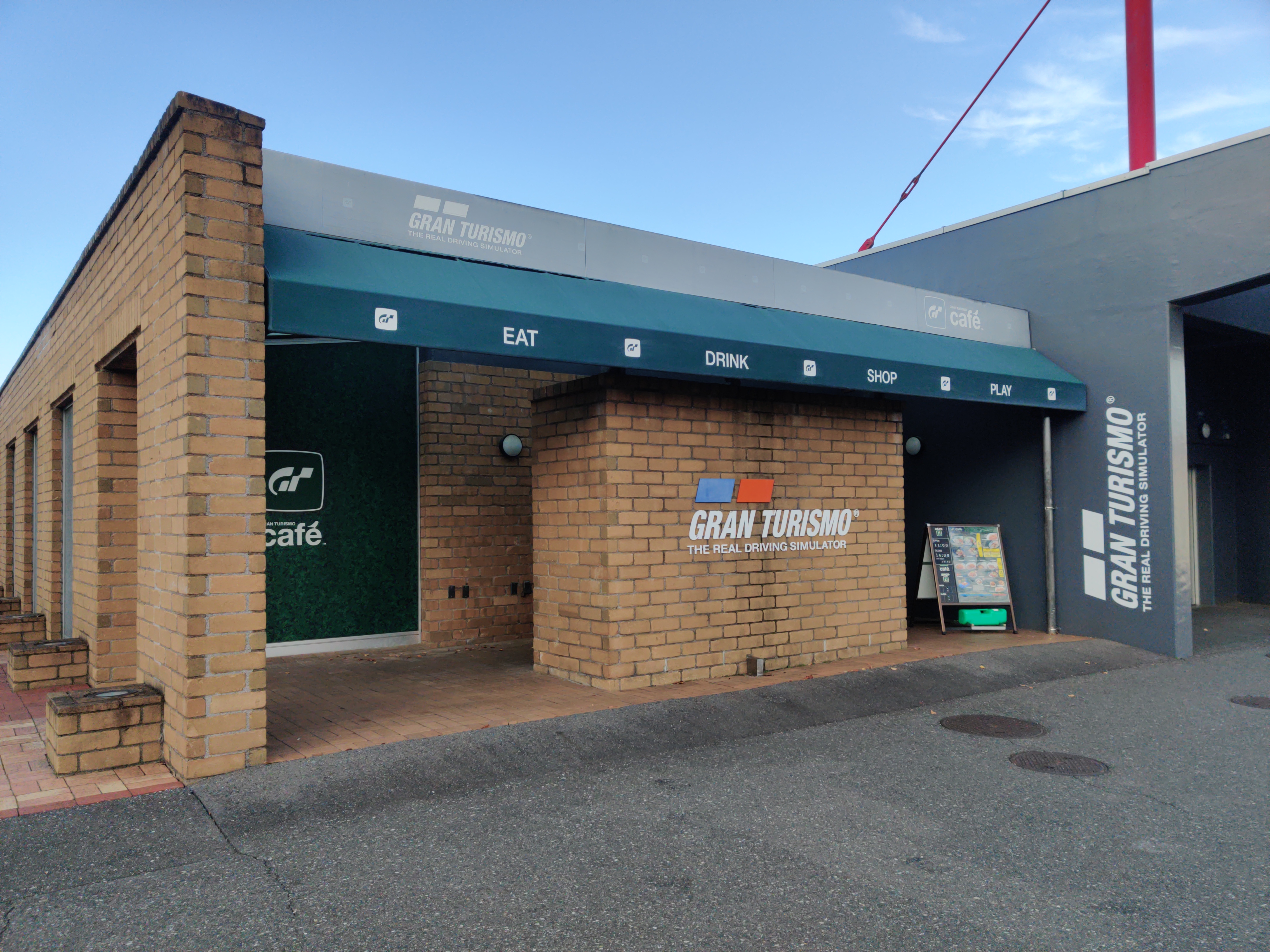
Motegi is as much a Honda theme park as a racing venue. The Honda Collection Hall displays decades of racing and production cars and motorcycles, from Grand Prix machines to everyday models that defined Japanese motoring. The Honda Fan Fun Lab showcases the company's forays into robotics, fuel-cell vehicles, and aviation. A karting course, a dirt track for sprint car and saloon racing, and an outdoor trials course for the FIM World Trials Championship round out the motorsport offerings. In 2009, a cafe named after the Gran Turismo video game series opened on site. Honda also operates educational centers and a technology demonstration facility, making the complex a destination that extends well beyond race day. Each year, the annual Honda Thanks Day brings out historic machines for demonstration runs, and in 2017, Takuma Sato ran a lap of the dormant oval in his Indianapolis 500-winning car -- seven years since the last competitive IndyCar lap there.
A Remote Cathedral of Speed
Reaching Motegi remains an adventure in itself. The town sits deep in rural Tochigi Prefecture, served only by a two-lane public road with just two entry and exit points. Major rail lines from JR East and Tobu Railway do not extend here, and a planned superhighway has never been completed. Accommodation near the track is virtually nonexistent beyond the on-site hotel. The official capacity of about 65,000 is dictated not by seats -- which could hold closer to 100,000 for road course events -- but by how many cars can flow through those narrow roads. This remoteness gives Motegi a character all its own: a world-class facility dropped into quiet Japanese countryside, where the scream of a MotoGP engine carries across forested hills and rice paddies. It is an unlikely monument to Honda's ambition, built to master American racing and ultimately finding its identity as one of Japan's premier motorcycle circuits.
From the Air
Located at 36.533N, 140.228E in the hills of Tochigi Prefecture, roughly 120 kilometers northeast of Tokyo. From the air, the distinctive dual-track layout is clearly visible: the egg-shaped oval wrapping around the angular road course. The surrounding terrain is hilly and forested with scattered agricultural fields. Nearest major airport: Ibaraki Airport (RJAH) approximately 40km southeast. Narita International (RJAA) is roughly 100km south. The area sits in a mountainous region with variable weather; expect terrain-induced turbulence at lower altitudes and reduced visibility during rainy seasons.