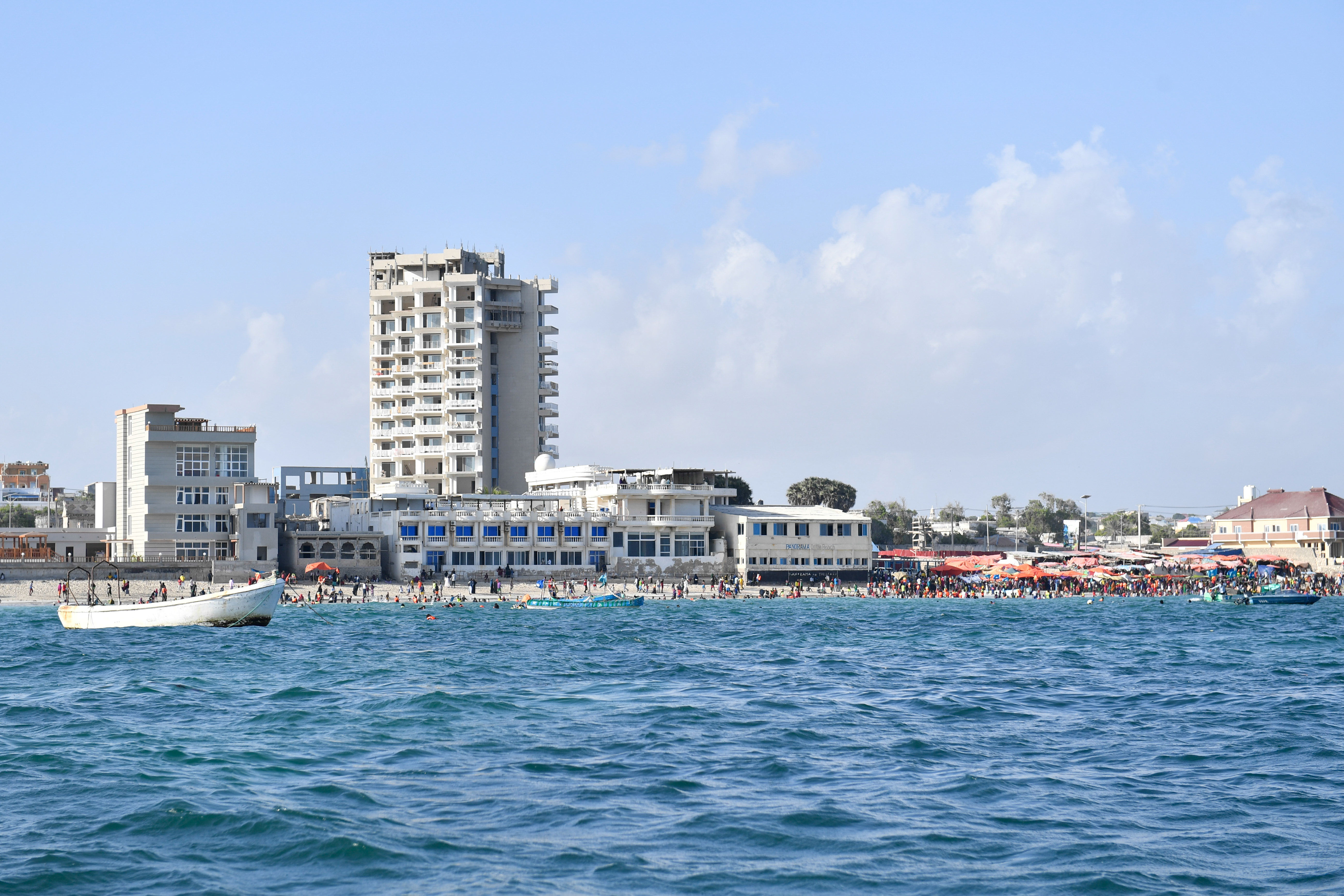
Mogadishu: Four Thousand Years on the Horn of Africa
Ibn Battuta arrived in 1331 and called it "an exceedingly large city" with rich merchants and fabric so fine it was exported to Egypt. Vasco da Gama passed through in the fifteenth century and saw houses four and five storeys high, palaces at the center, mosques with cylindrical minarets. Duarte Barbosa came a century later and described ships from the Kingdom of Cambay arriving with cloths and spices, departing with gold, wax, and ivory. Mogadishu's story stretches back four thousand years - archaeological evidence of settled life predates Arab trade by millennia - but its identity has always been shaped by the sea. The Indian Ocean brought prosperity, brought conquerors, brought colonizers. It also brought, eventually, the isolation that comes when the world looks away.
The Sultanate and the Merchants
During the medieval period, Mogadishu was the seat of the Mogadishu Sultanate, a trading power that linked the Horn of Africa to Arabia, India, and beyond. Control of the city passed to the Muzaffarids from Zanzibar in the late fourteenth century, but the commercial networks endured. The coastal markets overflowed with meat, wheat, barley, horses, and tropical fruit. The wealth generated by this trade built the multi-storey houses that astonished European visitors - coral-white structures in an Arab architectural tradition that would persist for centuries, layered alongside the Somali cultural patterns that preceded and outlasted every foreign influence. The fifteenth-century Almnara tower, still standing in some form today, dates from this era of mercantile confidence.
Mogadiscio: The Colonial Imprint
Italy colonized Somalia in the late 1800s and made Mogadishu its capital in 1905, renaming it Mogadiscio. Thousands of Italian settlers arrived, and the transformation was immediate and deliberate. The old city walls came down. Suburbs were laid out along new, broad roads. The seafront was reconstructed. Fascism was in vogue in Rome, and the city was intended as an imperial showcase - planned neighborhoods and wide boulevards in the stripped-down modernist aesthetic of the era. The Mogadishu Cathedral was completed in 1928. Yet something unexpected emerged from the collision: a genuinely hybrid culture. Somali architecture - the coral-white houses, the Arab quarters - blended with Italian urbanism. A cafe culture took root. Pasta became a staple food. After Italy lost its colonial hold following World War II, Mogadishu carried this Italo-Somali character forward, a city unlike any other in Africa.
The Switzerland of Africa
Somalia gained independence in 1960, and for a time the country earned a nickname that now sounds like bitter irony: the Switzerland of Africa. Grand hotels overlooked the oceanfront. Tourism thrived. The old Shangani quarter, with its mix of Islamic and Italian colonial architecture, drew visitors to its narrow streets. But by the 1980s, the government had taken a totalitarian turn. Popular unrest grew. In 1989, riots drove most foreigners from the city, and civil war erupted in 1991. What followed was devastating. Much of the architecture that had survived centuries of change was destroyed in months. The Islamic Courts Union brought brief stability in 2006 before splintering into factions, including al-Shabaab, which has since carried out attacks that have killed hundreds of civilians - over 500 in a single truck bombing in 2017, and over 120 in a double car bombing in October 2022.
A City Still Building
Despite the violence - and it remains severe - Mogadishu has not stopped. The city holds over 2.6 million people, and a construction boom is reshaping its skyline. Foreign direct investment has increased. At least twenty foreign embassies have reopened. Efforts are underway to restore landmarks, including the cathedral. The Bakaara Market, despite periodic fires and ongoing security concerns, remains a center of commerce. International cuisine can be found in the fortified hotels where diplomats and aid workers stay behind armed guards. The roads are being paved, slowly. Basic services like water and electricity remain unreliable, and the security situation still requires armored vehicles and hired guards for movement through the city. Mogadishu is not a place that offers easy answers or comfortable narratives. It is a city where four millennia of human habitation, medieval grandeur, colonial imposition, and modern conflict exist in the same frame - a place that is neither the doomed ruin some imagine nor the resurgent success story others wish it to be. It is, as it has always been, a city on the Indian Ocean, defined by its refusal to disappear.
From the Air
Located at 2.04N, 45.34E on the Indian Ocean coast of the Horn of Africa. Mogadishu's coastline and urban sprawl are visible from altitude. The old Shangani quarter and the port area are along the eastern seafront. Aden Adde International Airport (HCMM) serves the city with connections to Djibouti, Nairobi, Istanbul, Addis Ababa, and the Gulf states. The airport is located south of the city center. Overfly with caution - this remains an active conflict zone. NOTAM advisories should be checked before any approach. The Indian Ocean coastline stretching north and south is largely undeveloped outside the city. Best viewed from high altitude; low-level flight is inadvisable.