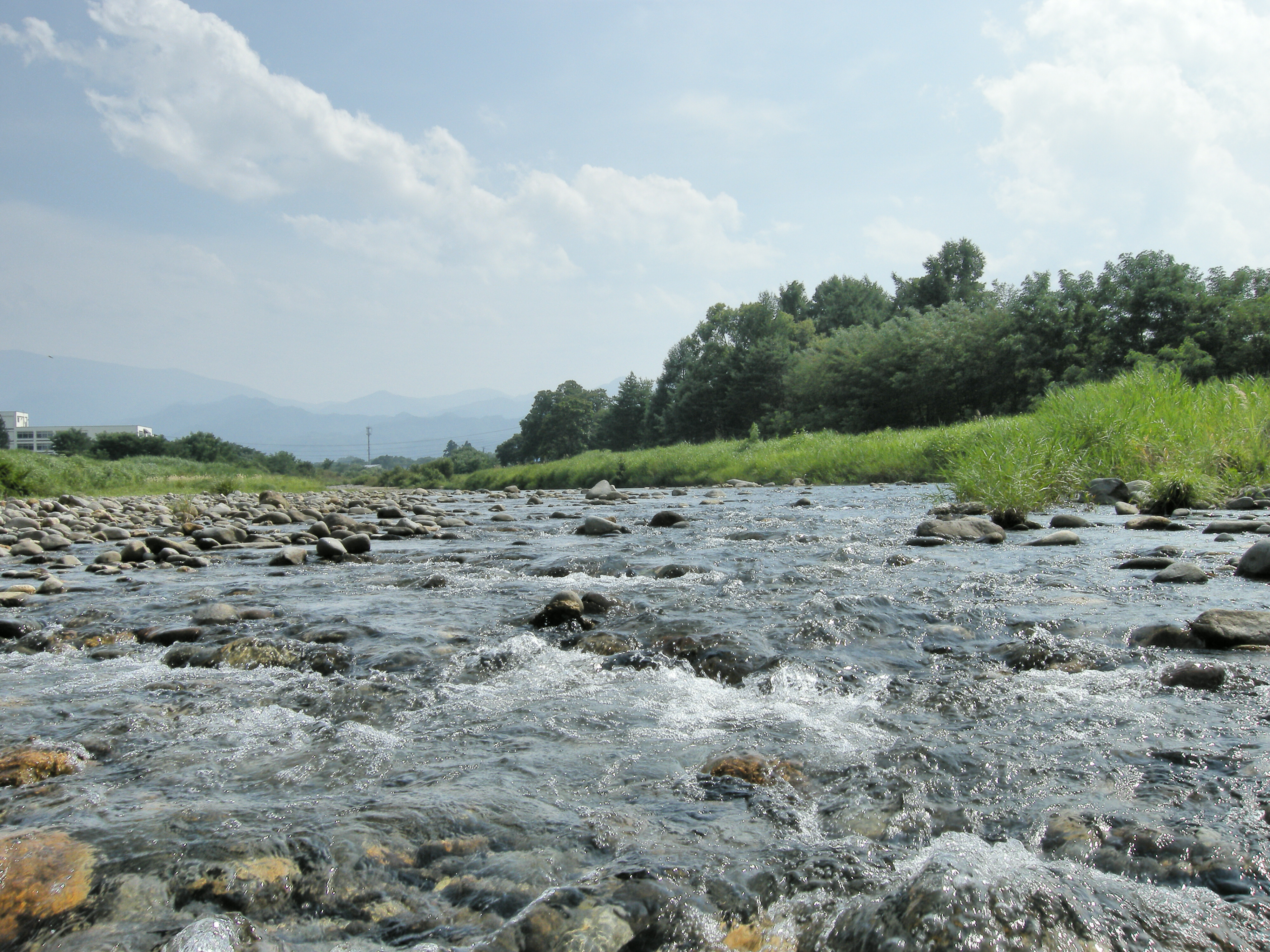
Mogami River
"Gathering the rains of the wet season -- swift, the Mogami River." When Matsuo Basho composed those words in the summer of 1689, he was clinging to a wooden boat as it pitched through rapids swollen by monsoon downpours. More than three centuries later, his haiku remains the most famous description of this 224-kilometer river, one of the three fastest in Japan. But the Mogami is more than a literary landmark. For centuries, it was the main artery of commerce in Yamagata Prefecture, carrying safflower, rice, and ramie downriver to the port of Sakata, where merchant ships waited to distribute Tohoku's wealth along the western sea routes to Osaka and Edo.
The Poet's Rapids
Matsuo Basho arrived at the Mogami River during his epic 1689 journey through northern Japan, documented in Oku no Hosomichi, 'The Narrow Road to the Deep North.' He had already visited the mountain temples of Yamadera and the sacred peaks of Dewa Sanzan. Now he boarded a river boat at the gorge and let the current carry him toward the Sea of Japan. The river was running high from the summer monsoon, the samidare rains, and Basho captured the experience in a hokku that became one of his most celebrated poems. The Mogami River holds a special place in Japanese literary tradition as an utamakura, a place name so laden with poetic associations that simply invoking it summons an entire emotional landscape. For Japanese readers, the name alone evokes speed, wildness, and the fleeting power of seasonal rain.
The Safflower Highway
Long before Basho's boat ride, the Mogami River was Yamagata's commercial lifeline. The river rises in the mountains of southern Yamagata Prefecture, flows north through the broad Yamagata Basin, makes a sharp westward turn at Shinjo, and empties into the Sea of Japan at the port city of Sakata. Flat-bottomed boats carried the region's most valuable exports downstream: safflower, prized for its red and yellow dyes and used in high-class textiles and cosmetics bound for Kyoto; rice from the fertile inland plains; and ramie, a plant fiber woven into samurai costumes and wealthy merchants' kimonos. In 1672, the Tokugawa shogunate appointed merchant Zuiken Kawamura to establish the Nishimawari sea route running from the Sea of Japan around western Honshu to the markets of Osaka and Edo. Sakata became a critical hub on this route, and the Mogami River was the funnel that fed it.
A River in Three Acts
The Mogami is classified alongside the Fuji River and the Kuma River as one of Japan's three most rapid rivers, the Nihon Sandaikyu. Its 224-kilometer course drains a watershed of 7,040 square kilometers, essentially the entire Yamagata Prefecture. The upper river meanders through rice paddies and orchard country. The middle stretch, where it turns west at Shinjo, narrows into the Mogami Gorge, a dramatic canyon where steep forested walls channel the current into surging whitewater. This is where Basho composed his haiku, and where modern tourists board the Mogami Gorge Basho Line boats, hour-long rides through the rapids while boatmen sing traditional Mogami River songs. The lower river broadens as it approaches Sakata and the coastal plain, slowing into the wide, silty estuary where it meets the Sea of Japan.
Warships, Anthems, and Anime
The Mogami's cultural reach extends well beyond poetry. Emperor Hirohito composed 'Mogami-gawa,' which became the anthem of Yamagata Prefecture. The Imperial Japanese Navy named two different cruisers Mogami, lending the river's swift reputation to warships that carried its name across the Pacific. In a more whimsical tribute, the anime series Nichijou features a character, Yuko Aioi, whose inner monologues take the form of attempted haiku. Unable to complete a proper 5-7-5 poem, she invariably ends each one with 'Mogami-gawa' as a comic non sequitur, an affectionate nod to the river's deep roots in Japanese verse. From Basho's brush to an anime punchline, the Mogami endures as a cultural touchstone, a river that runs as much through Japan's imagination as through its landscape.
From the Air
The Mogami River is located at approximately 37.764N, 140.18E where it flows through central Yamagata Prefecture. The river is a prominent silver ribbon visible from altitude, tracing a distinctive north-then-west course through the Yamagata Basin before reaching the Sea of Japan at Sakata. The Mogami Gorge section between Shinjo and Tozawa is particularly dramatic from the air, with steep forested canyon walls. Nearby airports include Yamagata Airport (RJSC) near the upper river and Shonai Airport (RJSY) near the river's mouth at Sakata. Recommended viewing altitude is 5,000-10,000 feet to follow the river's full course. The Yamagata Basin rice paddies flanking the upper river create a striking green patchwork in summer.