Moheli
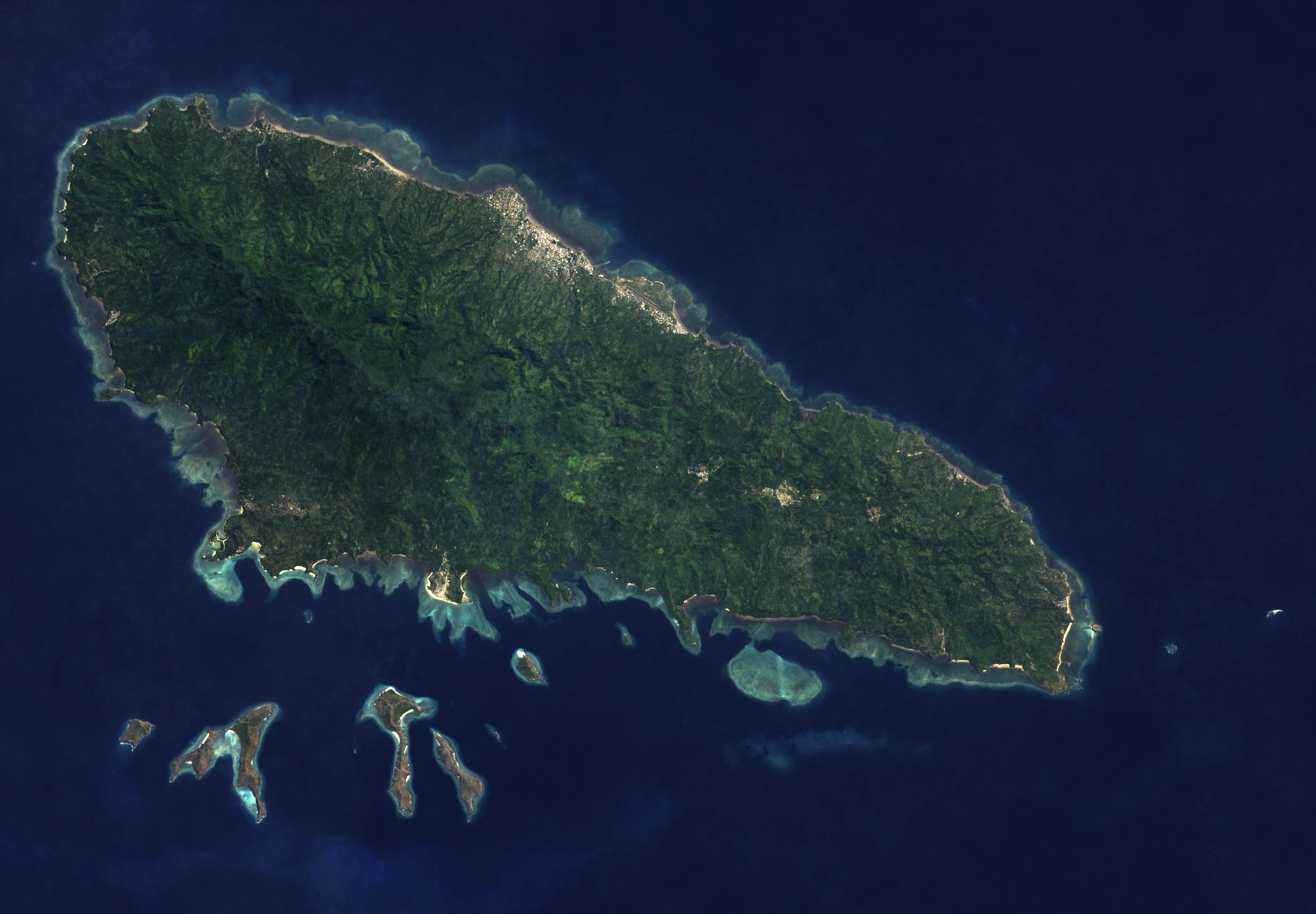
Fewer than 400 visitors find their way to Moheli in a given year. The smallest island in the Comoros archipelago -- 50 kilometers from east to west, just 20 from north to south -- has no rental car agencies, one bar, and a single road that a cyclone turned into a three-hour detour. It also has the richest biodiversity in the island nation: green turtles nesting on its beaches, Livingstone's fruit bats hanging from its forest canopy, and humpback whales passing through its surrounding waters from mid-July through late October. Moheli is a place that rewards patience and punishes schedules.
Getting There Is the Adventure
Reaching Moheli means choosing between a short flight into Bandar Es Eslam Airport in Fomboni, the island's capital, or a speedboat from Grande Comore's southern port of Chindini. The boat option is not for the faint-hearted. Small fiberglass fishing craft depart around 9 a.m. on calm days, crossing the channel in about an hour when conditions cooperate. In rough water, the journey stretches to several hours, and passengers arrive soaked. Travelers are advised to secure a life vest and -- when possible -- maneuver into the less crowded boat designated for women, children, and foreigners. Cargo boats offer an alternative: overnight crossings at the same price, sleeping upright in a chair with no beds available. The boats do not run when the weather turns, leaving travelers stranded on either shore until the sea calms.
Villages That Run Their Own Tourism
Without a functioning tax system, Comoran villages on Moheli devised their own economic model. Beginning in the village of Itsamia, communities built bungalows and reinvested the income into local priorities: scholarship grants, health center improvements, infrastructure repairs. The European Union later funded similar projects in Miringoni, Nioumachoua, Ouallah 1, and Ouallah 2. Every worker at these bungalows is a volunteer, elected democratically every two years from the village population. The elected teams form a management structure complete with president, general secretary, and accountant. Staying in a community bungalow directly funds the village that hosts it. The 2019 cyclone destroyed most of these guesthouses, and as of recent years, Itsamia was the only one still operating. Repairs proceed slowly on an island where fuel shortages are common and building materials arrive by boat.
Turtles, Bats, and Whales
Despite its modest size, Moheli holds the largest populations of green turtles and hawksbill turtles in the Comoros. The beach at Itsamia is the primary nesting site, where visitors can watch female turtles haul themselves ashore to lay eggs in the sand at night. In the forests near Ouallah -- a village split into two sections, Ouallah 1 and Ouallah 2 -- Livingstone's fruit bats roost in the canopy, one of the world's largest bat species with wingspans reaching 1.4 meters. The Moheli Marine Park, established off the coast of Nioumachoua among a scattering of peripheral islands, protects coral reefs where manta rays glide through the shallows. The staff at Laka Lodge can organize trips to find them, though sightings are never guaranteed. From mid-July through late October, humpback whales transit the Mozambique Channel within view of the island's southern coast.
Island Time, Enforced
Moheli operates on a rhythm that visitors must accept rather than fight. Buses -- which locals confusingly call taxis -- depart from the market in Fomboni and stop running before midday. Outside the capital, transport is scarce: most towns have one or two vehicles that leave for Fomboni at five in the morning, and seats should be reserved the day before. Mondays are particularly difficult, as teachers and students fill every available vehicle for their weekly commute. Hitchhiking is safe but slow, limited by the simple fact that few people own cars. The island experienced a fuel shortage in late 2018 that complicated all overland travel. There are very few restaurants. Supermarkets carry a narrow selection, and fruit appears only in its local season. What the markets lack in variety, they compensate in freshness -- everything comes directly from the fields that morning.
The Safest Place You Cannot Reach
Crime on Moheli is practically nonexistent. Solo travelers, including women, walk the island's roads and villages at night without concern. The island's isolation is its security: foreigners are a curiosity, not a target, and children are more likely to follow visitors out of excitement than any ill intent. Nioumachoua, the second-largest town on the southern coast, serves as a gateway to the marine park and its surrounding islands. The Vanilla Lodge offers clean rooms. Laka Lodge holds the island's sole liquor license. Beyond these, accommodation options are sparse and unpredictable. Moheli does not cater to travelers so much as tolerate them with warmth -- a place where the infrastructure barely exists but the welcome is genuine, and the natural world remains in charge.
From the Air
Located at 12.33S, 43.75E in the Mozambique Channel between Grande Comore to the northwest and Anjouan to the east. Moheli is the smallest of the three Comoran islands, clearly visible from cruising altitude as a low green island between its larger volcanic neighbors. Bandar Es Eslam Airport (FMCI) in Fomboni on the north coast is the only airfield. The Moheli Marine Park off the southern coast is visible as a cluster of small peripheral islands near Nioumachoua. Best viewed from 5,000-8,000 feet to appreciate the island's compact dimensions and surrounding reef systems.