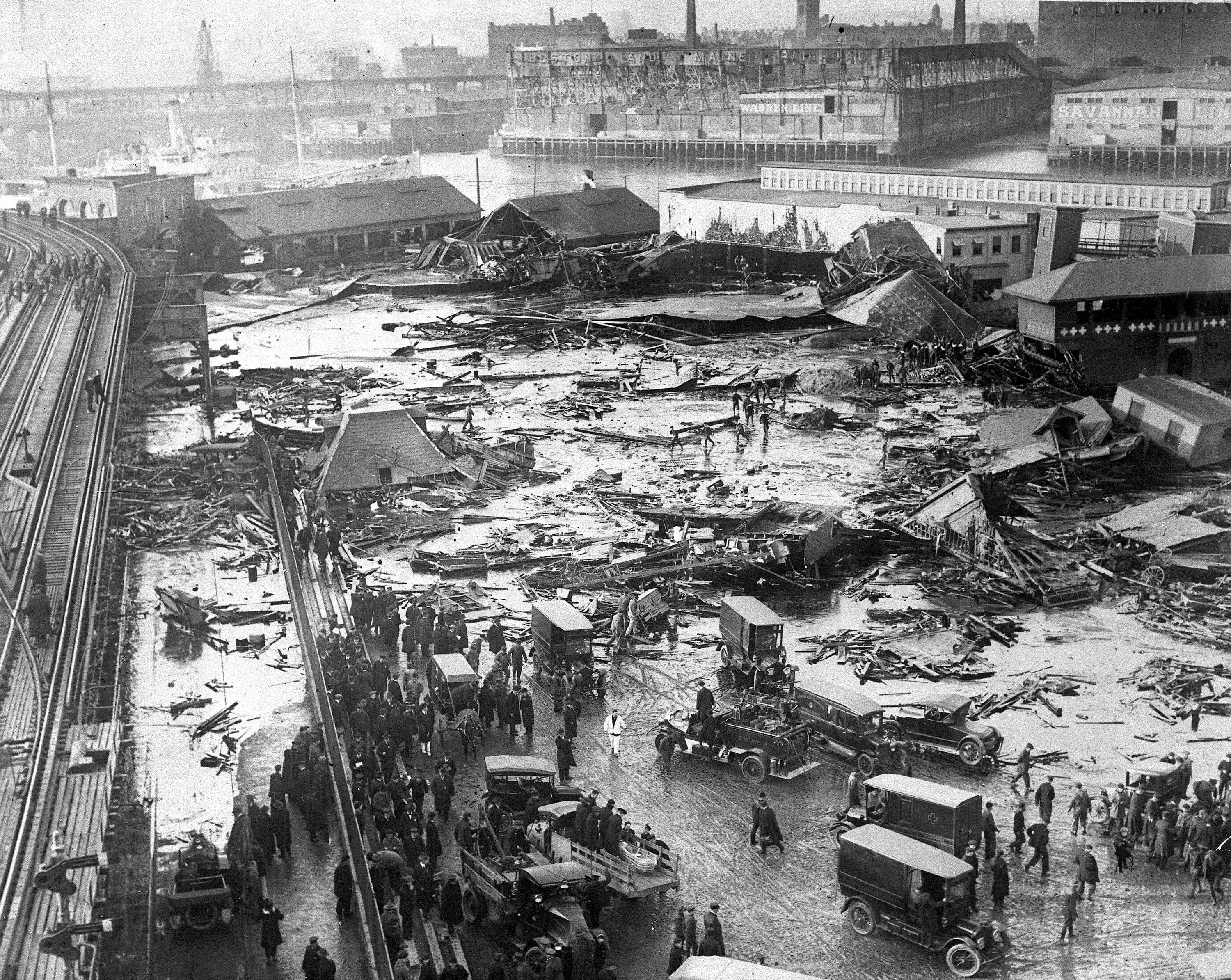
The Boston Molasses Flood: Death by Sweetness
At 12:40 PM on January 15, 1919, a rumbling sound echoed through Boston's North End, followed by a noise like machine-gun fire - the rivets of a massive storage tank exploding outward. What followed was almost too absurd to be tragedy: 2.3 million gallons of molasses burst from the tank in a wave 25 feet high, sweeping through the neighborhood at 35 miles per hour. Buildings were knocked off their foundations. Horses were trapped like flies on paper. People drowned in the sticky flood. Twenty-one died and 150 were injured in one of the strangest industrial disasters in American history.
The Tank
The molasses tank was a disaster waiting to happen. Built in 1915 by the Purity Distilling Company, the 50-foot-tall, 90-foot-diameter steel tank was constructed hastily to meet wartime demand for alcohol production. The tank leaked so badly that children would collect the molasses seeping from its seams. The owner painted it brown to hide the leaks rather than fixing them.
On January 15, the tank was nearly full - 2.3 million gallons of molasses recently delivered from Puerto Rico. The temperature had risen from near zero to above 40 degrees Fahrenheit over two days, warming the molasses and increasing pressure. The poorly constructed tank couldn't hold.
The Wave
When the tank failed, it failed completely. Steel plates ripped apart. Rivets shot out like bullets. A wave of molasses 25 feet high and 160 feet wide crashed through the Commercial Street area of the North End. The wave traveled at 35 miles per hour initially, faster than anyone could run.
The elevated railway structure was knocked off its supports. A fire station was pushed off its foundation. Houses were swept from their pilings. The steel tank itself was blown apart, pieces of it slicing through buildings. Those caught in the wave couldn't escape; molasses is heavy and viscous, trapping victims as effectively as quicksand.
The Rescue
Rescuers faced unique challenges. The molasses was waist-deep in some areas, making movement nearly impossible. It trapped victims in debris and filled their lungs as they struggled. The cold weather slowed the flow but also made rescue more difficult as the molasses thickened.
The USS Nantucket, moored nearby, sent 116 sailors to help. Nurses and doctors waded through the sticky mess. Rescuers used saws to cut through collapsed buildings while victims remained trapped in hardening molasses. Bodies were recovered for weeks, and the last victim wasn't found until four months later.
The Lawsuit
The disaster led to one of the first class-action lawsuits in Massachusetts history. Survivors and families of victims sued the United States Industrial Alcohol Company (Purity Distilling's parent company). The company's defense was creative: they claimed the tank had been bombed by anarchists.
The case took six years to resolve. Investigators found no evidence of sabotage but extensive evidence of negligent construction. The tank had never been properly tested. The steel was too thin. The rivets were insufficient. The company was found liable and paid nearly $1 million in damages - the equivalent of over $15 million today.
The Legacy
The Boston Molasses Disaster led to lasting changes in building regulations. Engineers were now required to certify structural plans. Inspections became mandatory. The disaster demonstrated that industrial negligence could have catastrophic consequences and that companies could be held legally responsible.
The cleanup took months. The harbor ran brown with molasses for weeks. Residents reported smelling molasses on hot summer days for decades. The North End Paving Company eventually paved over the area. Today, a small plaque marks the site. Old-timers insist they can still smell molasses on warm days - though this may be more legend than fact. What's certain is that Boston learned, in the strangest possible way, that even sweetness can kill.
From the Air
The molasses flood site (42.37N, 71.05W) was in Boston's North End at 529 Commercial Street, now Langone Park near the TD Garden. Logan International Airport (KBOS) is 3km east. The site is near the waterfront in a heavily developed area. The North End's dense urban fabric is visible. The Custom House Tower and downtown skyline are nearby. Weather is New England maritime - variable, with cold winters.