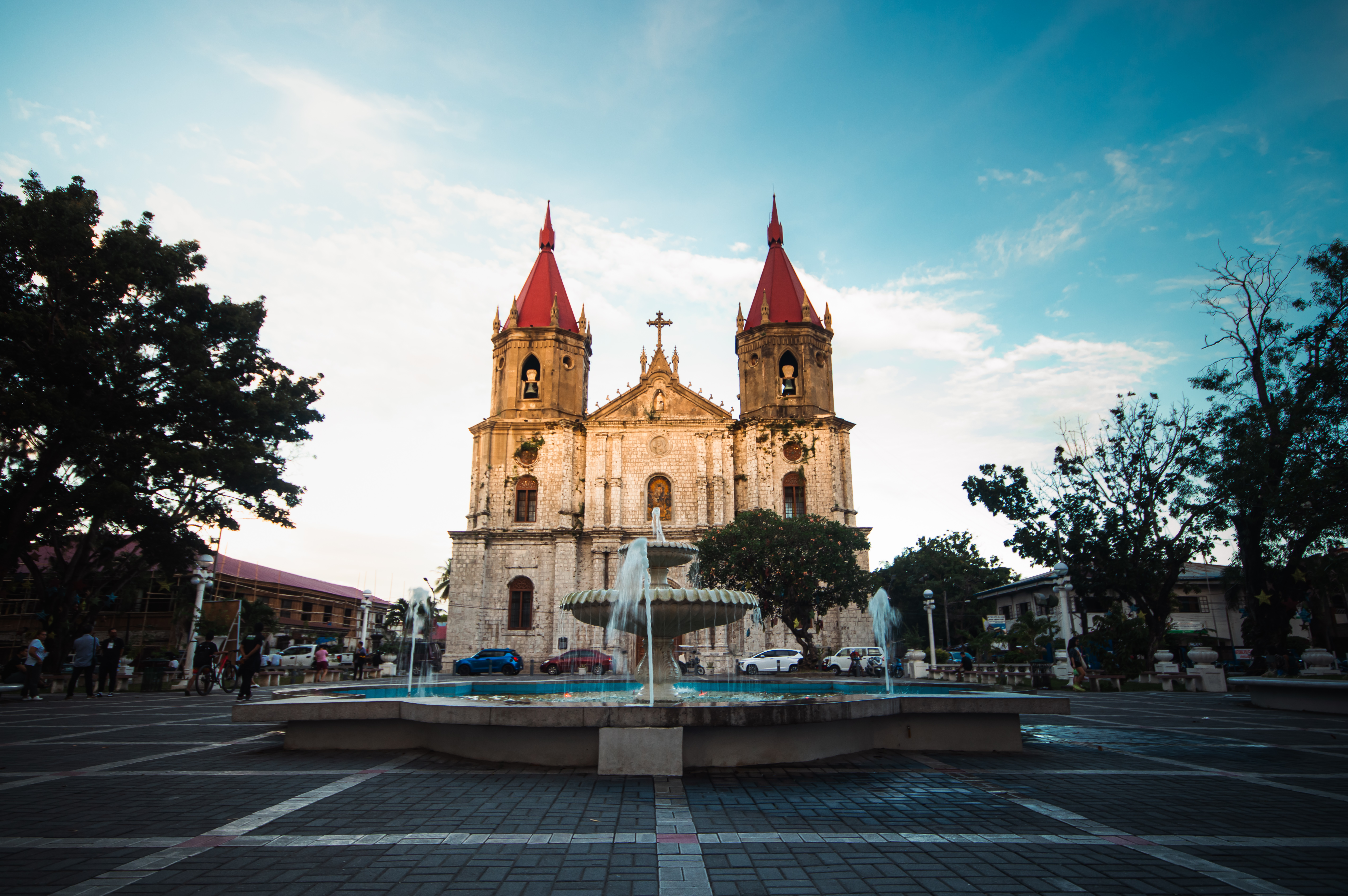
Molo, Iloilo City
The name is a mistake, and it stuck. Molo was supposed to be Moro - named for the Islamic raiders who frequently attacked the settlement on the southeastern coast of Panay. But the district's Chinese residents, who formed its earliest commercial population, could not pronounce the 'r.' They said molo. Everyone kept saying molo. Four centuries later, the mispronunciation is the official name of the most densely populated district in Iloilo City, a place that began as a Chinatown in 1637, became a center of learning that earned the title 'Athens of the Philippines,' and produced more Philippine chief justices, senators, and revolutionary generals per square kilometer than any comparable neighborhood in the archipelago.
The Parian and Its People
Molo was founded as a Chinese commercial district - a parian, in Spanish colonial terminology - to service the nearby Villa de Arevalo, where Mexicans and Spaniards had settled. Chinese traders supplied the colonists with goods and services, and the Spanish authorities formalized this arrangement by designating Molo as a recognized parian. The families that grew from this Chinese-Filipino mercantile community became some of the most influential in Philippine history: the Locsins, Lacsons, Saysons, Pisons, Yusays, Sansons, and Ganzons. Many traced their origins to Fujianese immigrants who adopted Hispanic names, converted to Roman Catholicism, and married into Filipino or Spanish families. Agustin Locsin - originally Wo Sin Lok, a Fujianese immigrant who arrived in Iloilo in the 1700s - became the patriarch of the Locsin family, one of the Philippines' most prominent clans.
Rizal's Exclamation and the Conspirators' Committee
In 1896, Jose Rizal, the national hero of the Philippines, passed through Molo on his way from exile in Dapitan to Manila. When he saw Molo Church, he could not contain himself. 'La iglesia bonita!' he declared - the beautiful church. The Gothic-style building, with its red spires crowning tall bell towers, was and remains the only Gothic church in the Philippines outside Manila. But Molo's beauty concealed revolutionary ambition. During that same period, the Comite Conspirador - a conspirators' committee - formed in the district to plan an uprising against Spanish colonial rule. By August 1898, the revolution had spread across Panay Island with Molo at its forefront. The revolutionaries established a temporary government that became the Provisional Government of the District of Visayas. The district that nurtured intellectuals also produced fighters.
The Feminist Church and the Most Beautiful Plaza
Molo Church carries a distinction no other Philippine church can claim: it is known as 'the feminist church.' Sixteen statues of women saints line the aisle pillars - an all-female ensemble unique in a country with thousands of Catholic churches. The National Historical Institute declared it a national landmark in 1992. Across the plaza stands the Yusay-Consing Ancestral House, better known as Molo Mansion, its Neoclassical balustrades and high ceilings embodying the wealth of the Chinese-Filipino merchant families who shaped the district. Molo Plaza itself, one of seven district plazas in Iloilo City, is considered the most beautiful in the city - its statues of Greek goddesses and a monument to Maria Clara creating an improbable Mediterranean atmosphere in the tropical Visayas. A fountain installed during the 2022 rehabilitation adds movement to the classical stillness.
Dumplings, Schools, and the First Elementary Outside Manila
Molo gave the Philippines two things that travel far beyond its 5.54 square kilometers: a dish and an idea about education. Pancit Molo - pork wrapped in wonton skins, served in a soup of shredded chicken and shrimp - carries the district's name into every Filipino kitchen and restaurant menu. The dumpling soup emerged from the same Chinese-Filipino culinary cross-pollination that produced much of Iloilo's food culture. The educational legacy runs equally deep. During the Spanish period, Molo housed four colleges, making it the Visayas' premier center of learning. In 1903, Rosendo Mejica, a labor leader and writer, founded Baluarte Elementary School - the first public elementary school established outside Manila. His house, which still stands across from the school, now serves as a museum. Today the district remains an educational hub, home to John B. Lacson Foundation Maritime University and several other colleges.
The Athens Roster
The title 'Athens of the Philippines' sounds like municipal boasting until you read the roster. Molo produced Chief Justice Ramon Avancena, who served from 1925 to 1941 and acted as legal adviser to the revolutionary Federal State of the Visayas. It produced Chief Justices Gregorio Araneta, Raymundo Melliza, and Felicisimo Feria. Franklin Drilon, a former president of the Senate, is from Molo. Generals Esteban de la Rama, Pablo Araneta, Aniceto Lacson, and Juan Araneta all fought in the Philippine Revolution - the latter two leading the Negros Revolution as well. The Arroyo family connections run through Molo: Jose Ma. Arroyo, a former senator, was the grandfather of Jose Miguel Arroyo, husband of President Gloria Macapagal Arroyo. From a district of 25 barangays and 76,793 people, this concentration of national leadership is not just notable. It is, for a neighborhood that started as a mispronounced Chinatown, extraordinary.
From the Air
Located at 10.691°N, 122.542°E in Iloilo City, on Panay island's southeastern coast. Molo is the third-smallest district in Iloilo City (5.54 km²), situated 3.21 km from City Proper. The Gothic red spires of Molo Church are a distinctive visual landmark from the air. The Batiano River mouth is in the southeastern part of the district. Iloilo International Airport (RPVI / ILO) is approximately 19 km northwest. Best viewed at 1,500-3,000 ft AGL.