Monaco
Monaco exists as an improbability made manifest: a sovereign nation of two square kilometers wedged between the French Riviera and the Mediterranean, governed by the same family since 1297. The Grimaldis have survived by making their tiny territory indispensable to those with money to protect - first as a safe harbor, now as a tax haven where income tax doesn't exist and discretion is guaranteed. The result is the world's most densely populated country, where more millionaires per capita reside than anywhere else on Earth, where supercars queue at traffic lights and superyachts jostle for berths in Port Hercule. Monaco is garish and glamorous, artificial and authentic, a fantasy of wealth made real on a Mediterranean hillside that somehow retains its own genuine identity beneath the glitter.
The Principality
The Grimaldi family arrived in 1297 when François Grimaldi, dressed as a Franciscan monk, seized the fortress that still overlooks the harbor. His descendants have ruled ever since, navigating between larger powers - Spain, France, Sardinia - to maintain independence against all odds. The current constitution dates from 1962, establishing a parliamentary system while preserving the prince's real authority. Prince Albert II, son of Prince Rainier III and the American actress Grace Kelly, maintains the blend of royal dignity and celebrity glamour that has defined Monaco since his parents' 1956 wedding captivated the world. The palace guards still change at 11:55 each morning; the prince still appears for national occasions; the principality still functions as a genuine if unusual state, issuing its own euro coins and postage stamps, fielding teams in international competitions, and maintaining diplomatic relations worldwide.
Monte Carlo Casino
The Casino de Monte-Carlo saved Monaco. When Charles III inherited the principality in 1856, it was impoverished and shrinking - France had just absorbed most of its territory. Charles granted a gambling concession, and by the 1870s the casino had transformed Monaco into the playground of European aristocracy. The building itself, designed by Charles Garnier (architect of the Paris Opera), remains a monument to Belle Époque excess - gilded ceilings, crystal chandeliers, and gaming rooms where fortunes change hands each night. Casino Square outside has become synonymous with wealth display: luxury hotels, designer boutiques, and the constant parade of exotic automobiles. Entry to the gaming rooms requires passport and appropriate dress; entry to the terrace and lobby costs nothing but provides the essential Monaco photo opportunity.
Grand Prix
Each May, the Formula 1 circus descends on Monaco for the most glamorous race on the calendar. The circuit winds through city streets - past the casino, through the tunnel, along the harbor, through the famous hairpin at the Fairmont Hotel - a layout so tight and unforgiving that overtaking is nearly impossible and crashes are spectacular. The race has been held since 1929, predating Formula 1 itself, and tradition grants it prestige that its narrow track would never earn if proposed today. Race week transforms the principality into a party for the global elite, with yachts offering harbor-view hospitality and rooftop terraces commanding six-figure rentals. The infrastructure remains all year - the barriers, the pit lane markings, the swimming pool complex built for spectators - reminders that this tiny country hosts one of motorsport's defining events.
Living in Monaco
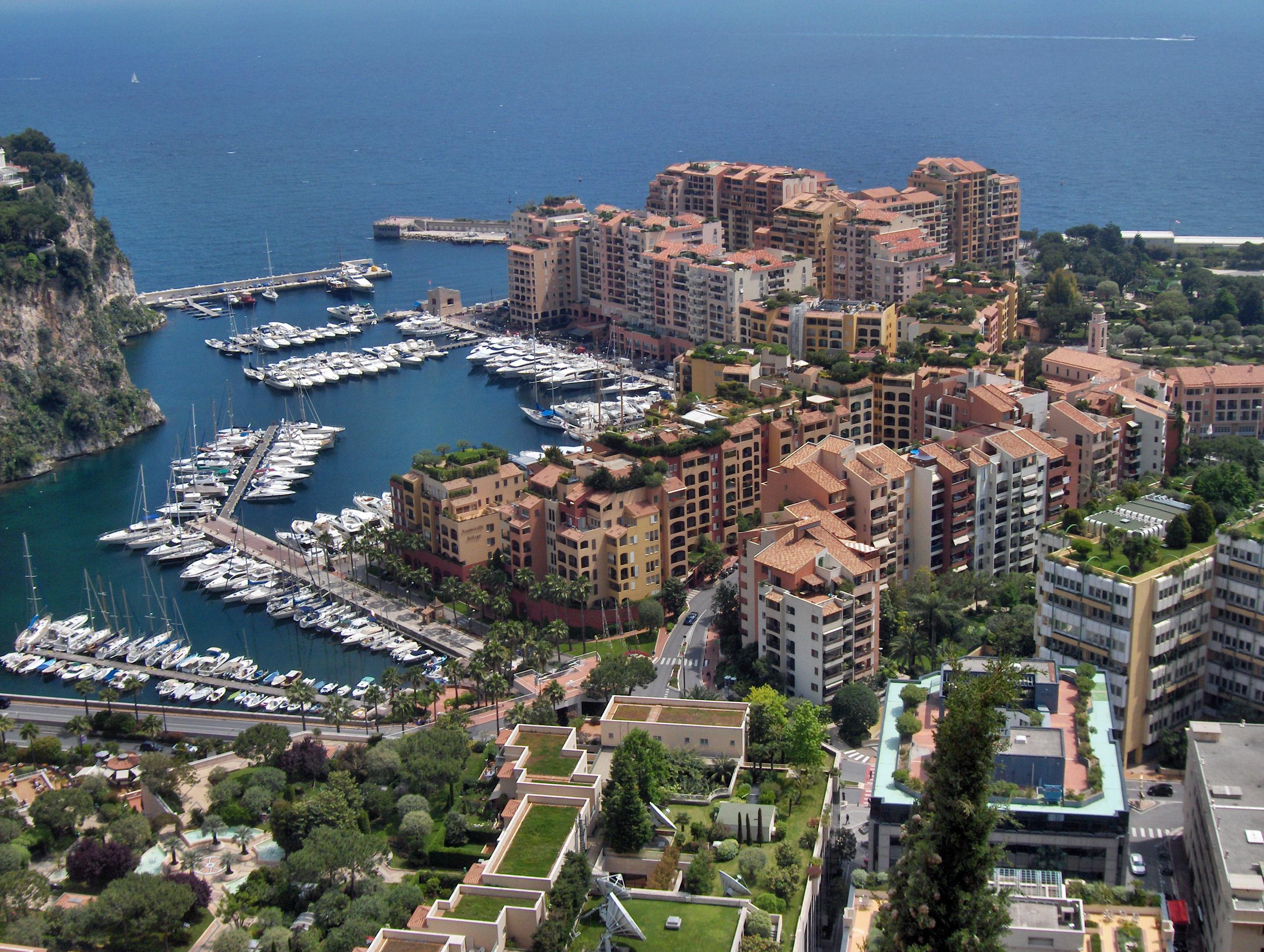
Moving to Monaco requires proving sufficient wealth to support yourself without working - the principality wants residents, not employees competing with its citizens. Those who qualify pay no income tax, no capital gains tax, and no wealth tax (unless they're French citizens, who remain subject to French taxation). The trade-off: apartment prices exceed €50,000 per square meter, making Monaco's real estate the most expensive on Earth. The principality has responded to demand by literally creating more land - the Fontvieille district was built on reclaimed seabed in the 1980s, and a new offshore extension is underway. Despite the tax-haven reputation, Monaco functions as an actual city: residents shop at the Condamine Market, children attend local schools, elderly citizens receive state support. The difference is that everyone sharing these civic amenities happens to be extraordinarily wealthy.
Visiting Monaco
Monaco doesn't require much time to see - you can walk the entire country in an hour - but it rewards exploration beyond the obvious. The Oceanographic Museum, built into the cliff face below the palace, houses remarkable aquariums and the office where Jacques Cousteau directed research for decades. The Exotic Garden clings to slopes above the principality, its succulent collection thriving in the Mediterranean climate. The view from the terrace of the old town encompasses the harbor, the casino, and the French Riviera stretching toward Italy. Nice airport lies 30 kilometers away, connected by express bus; the train station offers scenic coastal service to Italy and France. Budget travelers stay in Beausoleil, the French town immediately adjacent, or in Nice and day-trip to Monaco. However you arrive, the experience is the same: a glimpse into a world where money has become landscape.
From the Air
Located at 43.73°N, 7.42°E on the French Riviera between Nice and the Italian border. Monaco is visible from altitude as a dense urban cluster on a steep hillside, notably different in development intensity from surrounding French territory. Port Hercule and Port Fontvieille are prominent, often filled with large yachts. The Monaco heliport is adjacent to Fontvieille. Nice Côte d'Azur Airport (NCE) is 22km southwest. The Grand Prix circuit is traceable through the streets surrounding the harbor. The Tête de Chien cliff in France overlooks the principality.