Monastery of St. Mary Magdalene
The decree was signed on 9 November 1864 by imperial order, in the months following the suppression of the January Uprising against tsarist rule. The Russian Empire had decided that the former Polish-Lithuanian Commonwealth needed Russification, and a Russian Orthodox women's monastery in Vilnius would be one of the instruments. The buildings were taken from another monastic community: the Catholic nuns of the Order of the Visitation of Holy Mary were expelled from their convent on Ross Street, their church was rededicated to St. Mary Magdalene, and a new community of Orthodox nuns was brought in from the St. Alexis Convent in Moscow. That contested origin shaped the monastery's next 160 years - through Russian rule, Polish rule, Soviet occupation, and Lithuanian independence, the community was dispersed, resettled, and renamed three times before returning in 2015 to a wing of buildings near the Church of St. Alexander Nevsky.
Founded by Decree
The 1864 founding sat squarely inside an imperial program. After the January Uprising of 1863-1864, when Polish, Lithuanian and Belarusian rebels took up arms against Russian rule, Tsar Alexander II's administration responded with what came to be called Russification: the suppression of Catholic religious orders, restrictions on Lithuanian-language printing, the import of Russian institutions to replace local ones. The Visitation nuns, a Catholic order, were ordered out of their convent on Ross Street. Their church was adapted as the monastic Church of St. Mary Magdalene. The new Orthodox community, led by nuns transferred from Moscow, ran a school, an orphanage, and workshops producing liturgical vestments and hand-painted icons. By 1912 the monastery housed 89 nuns under the leadership of Hegumeness Vera (Potapienko), formerly of a St. Petersburg monastery. The founding had been blessed by Joseph Semashko, the Orthodox Metropolitan of Vilnius and Lithuania, a controversial figure who had led the conversion of the Belarusian Greek Catholic Church into the Russian Orthodox Church in 1839.
Exile, Then Polish Rule
In 1915, as German forces advanced on Vilnius during World War I, tsarist propaganda fueled mass panic among the Russian population, and the monastery's 114 nuns and novices left the city for exile in the Russian interior. After the war, when Vilnius came under Polish control as part of the Second Polish Republic, the Visitation nuns returned and reclaimed their convent on Ross Street. The Orthodox sisters who eventually came back found themselves homeless. Bishop Eleutherius (Bogoyavlensky) of the Russian Orthodox Diocese of Lithuania allowed them to settle in one of the buildings of the male Holy Trinity Monastery in the center of the Old Town. From 1928 to 1931 the new Hegumeness Nina (Bataszowa) negotiated with Polish authorities about the community's debts and its future. With support from Warsaw metropolitans, the Polish Orthodox Church merged the female communities of St. Mary Magdalene in Vilnius and Berezwecz on 1 May 1937 - the new community kept the name of Mary Magdalene, with permission to build for 32 nuns.
Through the War, Then Out Again
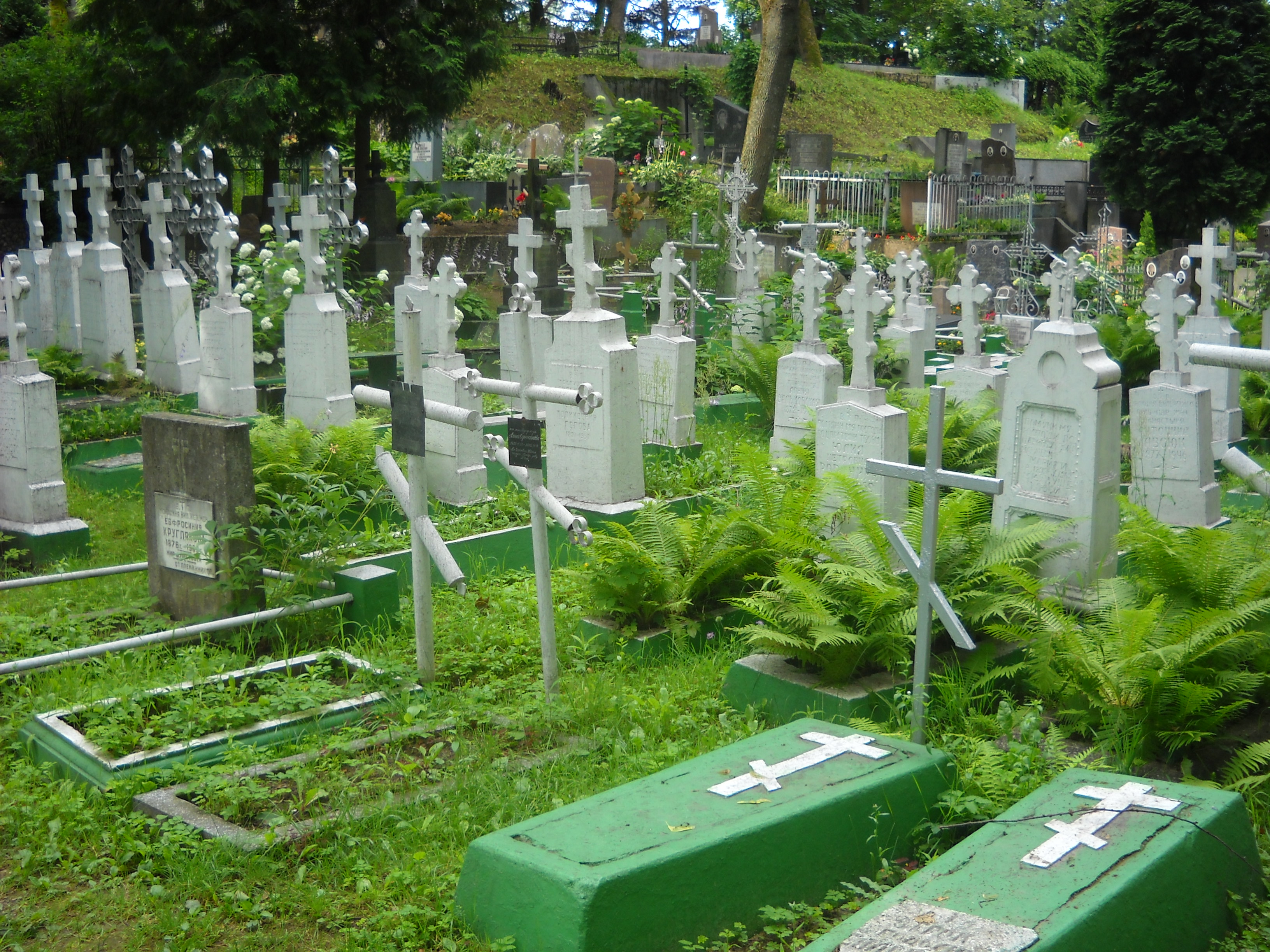
The community moved in 1937 to former school buildings near the Church of St. Alexander Nevsky. In 1939 Metropolitan Dionizy of Warsaw, recognizing the monastery's importance to Orthodoxy in the Lithuanian lands, donated to its church icons of St. Job of Pochayev and St. Mary Magdalene with their relics, plus a copy of the Theotokos of Pochayiv. Throughout World War II - through Soviet occupation, German occupation, and Soviet reoccupation - the monastery remained active, housing 35 nuns. In 1947, after the war, 23 nuns and 5 novices remained. Then in 1960, Soviet authorities expelled them again. The community moved into one wing of the male Monastery of the Holy Spirit complex in Vilnius - the same arrangement they had used in the 1920s. There the lives of the two communities became practically integrated: the nuns worked together in the kitchen, garden, and office, baked prosphora bread for the liturgy, tended the Orthodox cemetery, and sang in the choir.
A Return, Finally
On 24 May 2015, the nuns returned to the buildings near the Church of St. Alexander Nevsky that they had been forced to leave 55 years earlier. On the same day, Mother Superior Sister Serafina (Iwanowa) was elevated to the rank of hegumeness. The community remains the only women's monastery in the Russian Orthodox Diocese of Lithuania - the religious authority that traces back to the contested founding of 1864. As of recent counts, the monastery houses a small community: nine nuns and four novices in 2004, with leadership through several mother superiors since. In 2022, a branch church of the monastery was completed in the village of Posakiszki, in the Bezdonys Eldership of Vilnius District, dedicated to the Icon of the Mother of God 'Joy and Consolation' and consecrated on 3 February of that year. The graves of past mother superiors lie in the Vilnius Orthodox cemetery, including the former hegumenesses Flawiana and Antonina. The history of the monastery is, among other things, a record of how religious communities outlast the political programs that founded or expelled them - the Russification policy that created this monastery is long gone, but the nuns are still here.
From the Air
54.68N, 25.28E. The monastery's current location is near the Church of St. Alexander Nevsky in central Vilnius, near the Old Town. Recommended viewing altitude 2,000-3,500 feet AGL over the Vilnius Old Town UNESCO area. Vilnius International (EYVI) is about 6 km south. The Church of the Sacred Heart of Jesus, the monastery's original 1864 building on Ross Street, is also still visible in central Vilnius.