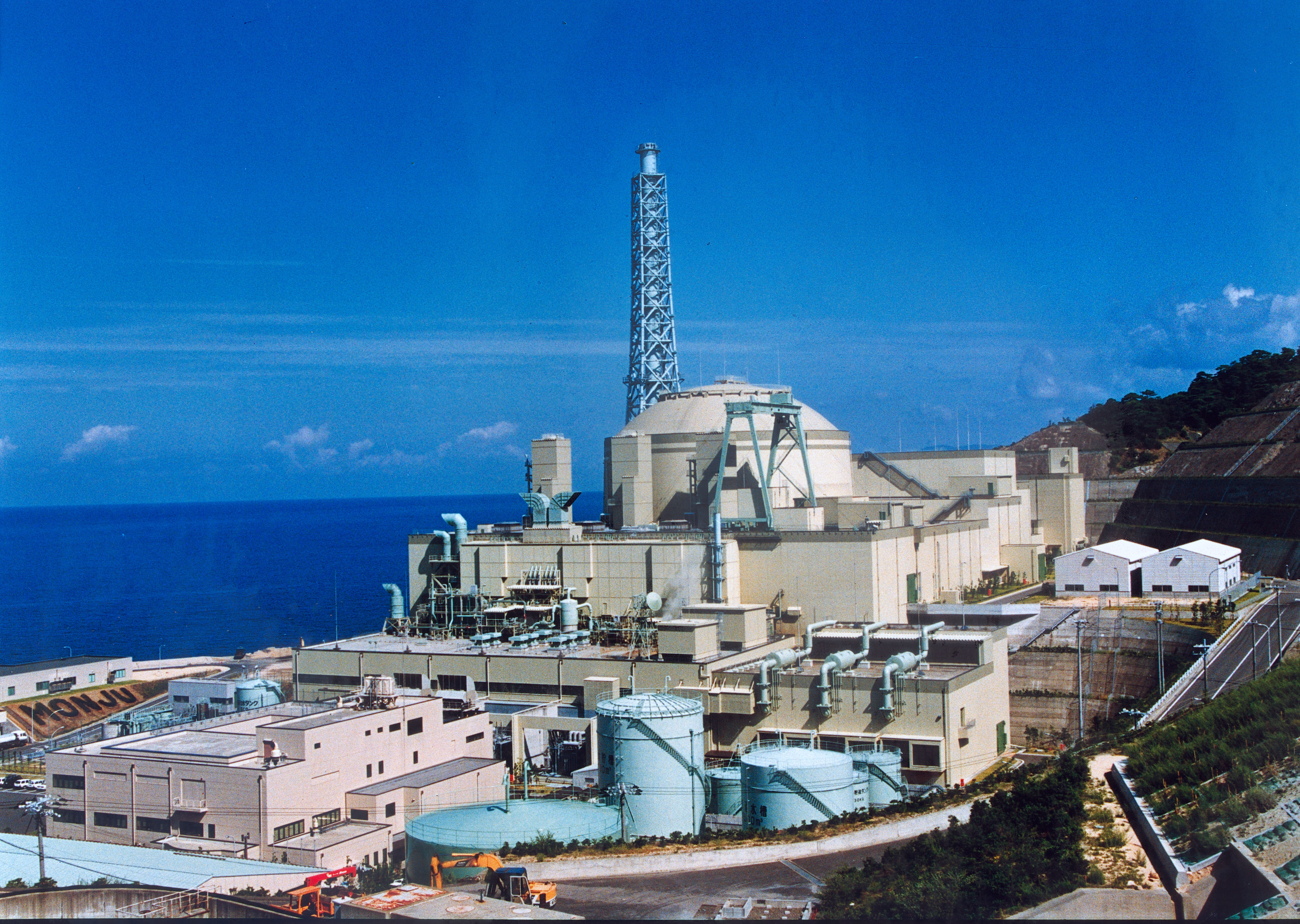
Monju: The Reactor Named for Wisdom That Never Learned Its Lesson
One hour. In the twenty years between its first test run and June 2011, Japan's prototype fast-breeder reactor Monju generated electricity for exactly one hour. The reactor consumed over one trillion yen -- approximately $9.8 billion -- during that time, not counting the 375 billion yen budgeted for a decommissioning process expected to stretch until 2047. Named after Manjusri, the bodhisattva of transcendent wisdom in Buddhist tradition, Monju became something closer to a parable about institutional failure. Construction began in 1986 near the Tsuruga Nuclear Power Plant on the coast of Fukui Prefecture. The reactor achieved criticality in April 1994. It was a sodium-cooled, MOX-fueled, loop-type machine designed to produce 280 megawatts of electricity from 714 megawatts of thermal energy, with a breeding ratio of 1.2 -- meaning it would produce more fissile material than it consumed. The dream was a reactor that created its own fuel. The reality was a facility that spent most of its life shut down.
Three Tons of Solidified Sodium
On the evening of 8 December 1995, an alarm sounded inside Monju. Intense vibration had snapped a thermowell inside a pipe carrying liquid sodium coolant, possibly at a defective weld point. Several hundred kilograms of sodium poured onto the floor below. Liquid sodium reacts violently with oxygen and moisture in air, and the leak filled the room with caustic fumes while producing temperatures of several hundred degrees Celsius -- enough to warp steel structures. The alarm triggered at 7:30 p.m., switching systems to manual control, but a full shutdown was not ordered until 9:00 p.m. When investigators reached the source of the spill, they found three tons of solidified sodium. The sodium was in the secondary cooling loop, so it was not radioactive. But the real damage came from what happened next. The Power Reactor and Nuclear Fuel Development Corporation, the semi-governmental agency running Monju, falsified reports, edited videotape taken immediately after the accident, and issued a gag order to prevent employees from revealing the cover-up.
A Death and a Fifteen-Year Silence
Shigeo Nishimura, the deputy general manager assigned to investigate the cover-up, committed suicide by leaping from the roof of a Tokyo hotel. Officials said he was not involved in the falsification but was distressed by the evidence he had unearthed. The public outrage over the cover-up was enormous, and Monju sat idle for nearly fifteen years. Japan Atomic Energy Agency announced restart intentions in 2000, triggering court battles that reached the Supreme Court. The Nagoya High Court reversed the reactor's original 1983 construction approval in 2003, but Japan's Supreme Court overruled that decision in 2005. By the time restart was authorized in 2010, the original fuel had degraded -- natural radioactive decay had halved the plutonium-241 content, making criticality impossible without replacement. Operators loaded fresh MOX fuel with plutonium content of 15 to 20 percent and began withdrawing control rods on 6 May 2010. Monju achieved criticality again on 8 May at 10:36 a.m. JST.
Something Heavy Falls
The second life lasted less than four months. On 26 August 2010, a 3.3-tonne In-Vessel Transfer Machine -- the device used to exchange nuclear fuel rods inside the reactor -- fell into the reactor vessel during a routine fuel replacement operation. The machine became misshapen on impact, jamming it inside the vessel and preventing retrieval through the upper lid. An attempt to recover it on 13 October 2010 failed. Preparatory engineering work to design extraction equipment began in May 2011, and the device was eventually retrieved. But Monju never operated again. The reactor that had taken twenty-four years from construction start to second criticality was shut down permanently after producing power for a single hour across its entire existence.
A Culture of Omission
Safety failures at Monju extended far beyond the two major accidents. In November 2012, regulators discovered that JAEA had failed to perform periodic safety checks on nearly 10,000 out of 39,000 pieces of equipment before their deadlines. In June 2013, inspections revealed another 2,300 pieces of uninspected equipment. By 2014, more than 100 improper corrections to inspection records had been found, raising suspicions of systematic falsification. In 2015, inspectors discovered that pipe thickness measurements on sodium cooling lines had not been conducted since 2007. Other incidents accumulated: a sodium detector malfunction in February 2012; an operating error in April 2013 that disabled two of three emergency diesel generators when staff forgot to close valves after testing; a typhoon in September 2013 that severed the reactor's data link to the government's Emergency Response Support System. The Nuclear Regulation Authority described the safety culture as 'deteriorated' and prohibited restart. JAEA's president resigned under pressure in May 2013.
Dismantling Wisdom
On 21 December 2016, the Japanese government confirmed what had seemed inevitable for years: Monju would be permanently closed and decommissioned. The Nuclear Regulation Authority accepted the decommissioning plan in March 2018, laying out a thirty-year process. Spent fuel was transferred to an on-site storage pool, a phase completed on 13 October 2022. The remaining steps -- extracting the liquid sodium coolant, dismantling equipment, and demolishing the reactor building -- are planned for completion by 2047, at a cost of at least 375 billion yen. Despite closing Monju, the Japanese government has not abandoned the fast-breeder concept entirely; Japan holds roughly 50 tonnes of plutonium that needs processing. A successor demonstration plant was once planned for completion around 2025 through the newly formed Mitsubishi FBR Systems company, but cooperation shifted toward the French ASTRID project, which was itself cancelled in August 2019. The bodhisattva of wisdom lent its name to a reactor. The wisdom came too late.
From the Air
Located at 35.74°N, 135.99°E on the Tsuruga Peninsula along the Sea of Japan coast in Fukui Prefecture. The reactor complex occupies a 1.08 km2 site on a coastal headland. From altitude, look for the distinctive dome of the reactor containment building set among cleared land on the peninsula's western shore. Best viewed at 3,000-5,000 feet AGL. Komatsu Airport (RJNK) lies approximately 80 km northeast. The nearby Tsuruga Nuclear Power Plant and Mihama Nuclear Power Plant are visible along the same stretch of coastline, making this one of the most concentrated nuclear corridors in the world.