Monkey Jungle
The tagline says it all: "Where humans are caged and monkeys run wild!" At Monkey Jungle in South Miami, visitors walk through screened tunnels while more than 300 primates swing, leap, and forage freely in a subtropical canopy overhead. The arrangement was not the original plan. In 1933, animal behaviorist Joseph DuMond released six Java macaques into a dense South Florida forest, hoping to study them in a semi-natural habitat. When he opened the grounds to the public to fund his research, the territorial monkeys attacked the wandering guests. DuMond's solution was ingenious: rather than cage the monkeys, he caged the people.
Six Monkeys and a Desperate Idea
Joseph DuMond came to South Florida in 1933 as an aspiring animal behaviorist with a straightforward ambition: observe primate behavior in something close to a natural environment. He released six Java monkeys into the dense tropical hammock south of Miami and set about watching them. Government funding never materialized. DuMond needed money, and the monkeys were his only asset. He opened the property to visitors. The Java macaques, however, had established territory, and they did not appreciate strangers wandering through it. Monkey attacks on guests were frequent and unpleasant. Caging the primates would have defeated the purpose of the entire experiment, so DuMond built screened walkways instead -- tunneling the humans through the monkeys' world rather than the other way around. It remains the park's defining feature more than ninety years later.
Ice Age Bones Beneath the Canopy
In 1994, archaeologist Robert S. Carr led a dig in naturally occurring sinkholes on Monkey Jungle's property and unearthed fossils more than 10,000 years old. The bones came from creatures that had roamed South Florida during the Pleistocene epoch: American lions, dire wolves, ancient horses, and camels. The find was one of the largest Pleistocene fossil discoveries anywhere in the state. The sinkholes that preserved these remains are a geological feature of the oolitic limestone bedrock underlying all of southeastern Florida -- the same porous rock that shapes the Everglades and the Biscayne aquifer. Beneath the chattering macaques and swinging spider monkeys, Monkey Jungle sits atop a time capsule from an era when megafauna still roamed the peninsula.
King and the Primatologist
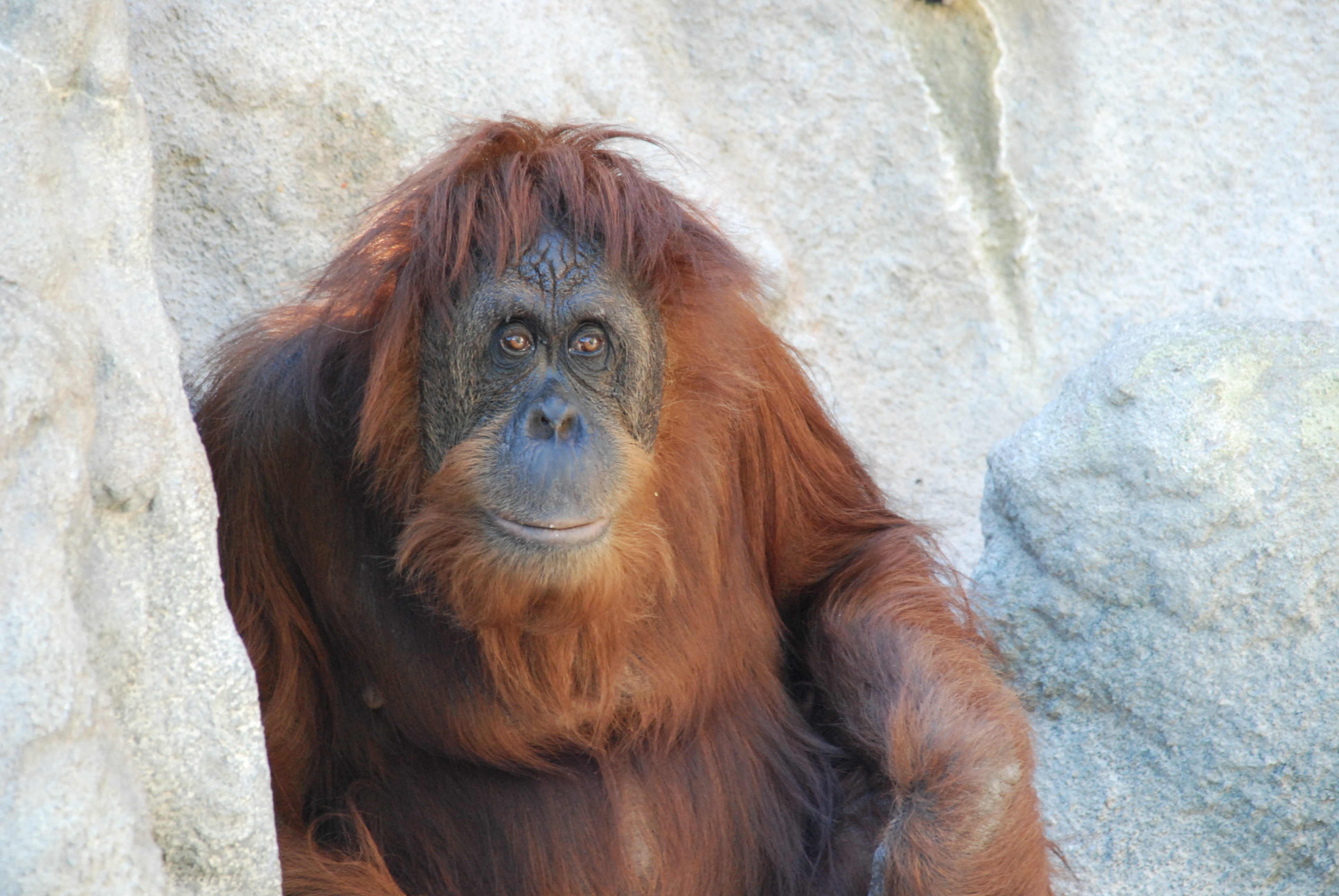
King, a Western lowland gorilla, became Monkey Jungle's most famous resident -- and its most controversial. By 1977, he was the park's sole adult male gorilla, living in isolation, and a public campaign emerged to relocate him to the Atlanta Zoo, which ran a program to re-socialize gorillas. The effort drew the attention of primatologist Jane Goodall, whose involvement amplified the pressure. In 2001, Monkey Jungle built a significantly larger enclosure for King rather than transfer him. The gorilla remained a lightning rod: in 2017, after Hurricane Irma swept through Florida, former employees accused the park of mistreating King and Mei, a thirty-two-year-old orangutan, alleging poor enclosure conditions documented with photographs. The accusations underscored the tension that has always defined Monkey Jungle -- a place that exists to let primates live freely, yet must also operate as a business.
The DuMond Conservancy
Monkey Jungle's scientific mission lives on through the DuMond Conservancy for Primates and Tropical Forests, its nonprofit research and education affiliate. Staff, volunteers, and university students partner with academic institutions and conservation organizations to study the primates in Monkey Jungle's unique semi-wild environment. Research focuses on primate ecology, biology, and development. The conservancy also provides sanctuary for owl monkeys retired from research laboratories, housing them in multi-acre forest enclosures where Florida's warm climate allows year-round outdoor living. Education programs offer South Florida youth immersive experiences in primate conservation and STEM topics. Today, the park's population of more than 300 primates includes squirrel monkeys -- roughly 125 of them -- along with species encountered through the Southeast Asian Wild Monkey Pool and Trail, the Cameroon Gorilla Forest, and the Amazonian Rainforest exhibit.
From the Air
Monkey Jungle is located at 25.57N, 80.43W in unincorporated Miami-Dade County, south of Kendall and west of Homestead. From the air, the park's dense tropical canopy stands out against the surrounding agricultural land and suburban development. The screened walkways are not visible from altitude, but the forest itself is a distinct green patch. Homestead Air Reserve Base (KHST) lies approximately 6 miles to the southeast. Tamiami Executive Airport (KTMB) is roughly 8 miles north. Miami International Airport (KMIA) is about 20 miles to the north-northeast. Terrain is flat limestone at sea level. Recommended viewing altitude: 1,500-2,500 feet AGL to distinguish the forested park from surrounding development.