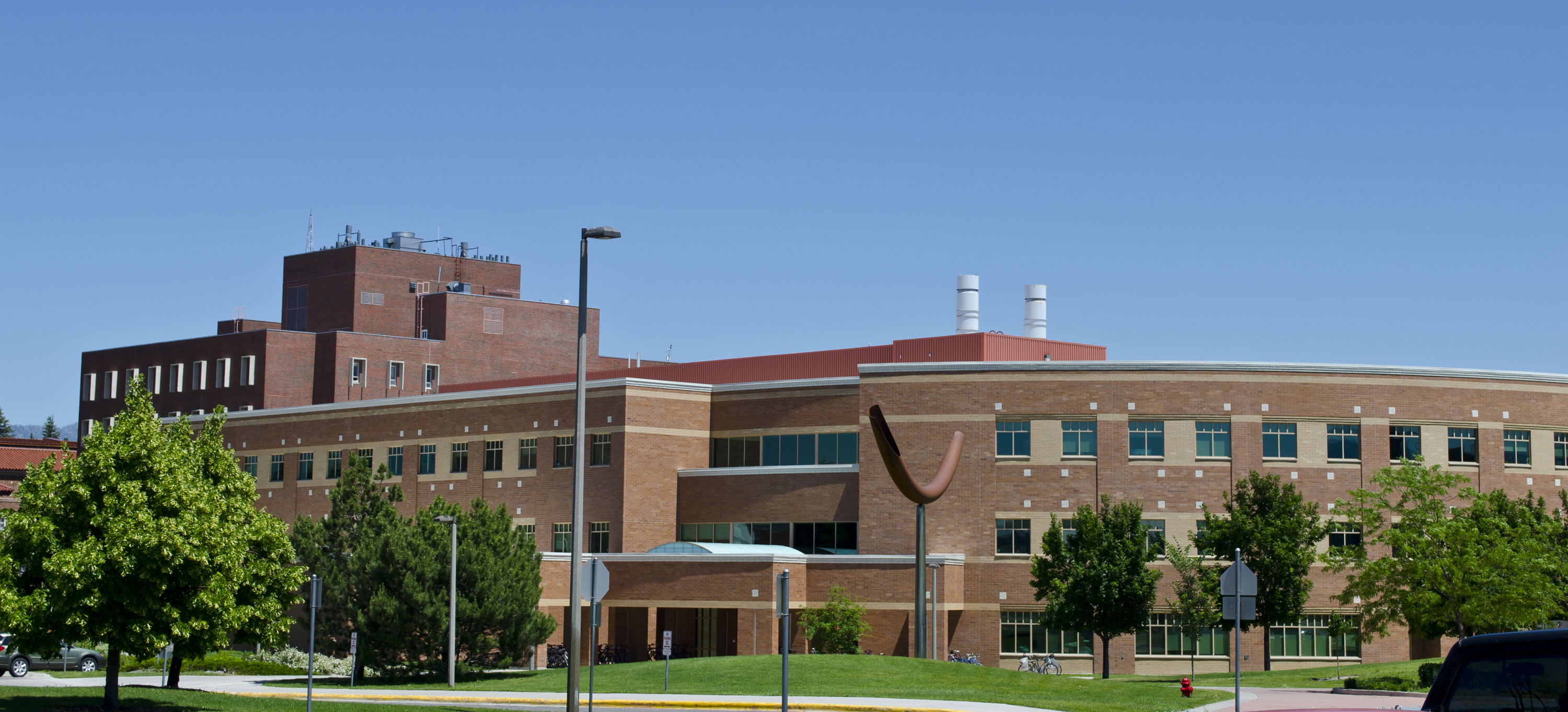
Montana State University
Bozeman wanted to be the capital of Montana. When Helena won that prize in 1889, the state legislature offered a consolation: the new state's land-grant college. Gallatin County donated half of its poor farm, rancher Nelson Story contributed $1,500, and on February 16, 1893, eight students gathered in borrowed rooms at the county high school to begin classes. The Agricultural College of the State of Montana had a horticulturist, a business instructor, and a mission to turn frontier children into farmers. What it became was something entirely different.
Racehorse Basketball
The 1920s transformed Montana State College into a basketball powerhouse through a revolutionary approach to the game. Coach Ott Romney, a Montana native, pioneered what he called racehorse basketball, an up-tempo style built around the fast break. Players Cat Thompson, John Brick Breeden, Frank Ward, Val Glynn, and Max Worthington won the Rocky Mountain Conference title three straight seasons, defeating Utah State, BYU, Colorado, and Denver. After Romney left for Brigham Young in 1928, Coach Schubert Dyche led the Golden Bobcats to a 36-2 record and the national championship. The Helms Foundation named Cat Thompson one of the five greatest college basketball players of the first half of the twentieth century.
The M on the Mountain
In 1916, students climbed the side of Mount Baldy in the foothills of the Bridger Range and laid out a giant letter M in whitewashed rocks. That icon still watches over the campus, visible for miles across the Gallatin Valley. Below it, the university grew through both prosperity and hardship. The school earned three national football championships across three different classifications, the only college team to achieve that distinction. ROTC arrived in 1917. The campus expanded with Mission Revival-style Hamilton Hall in 1910 and the barrel-vaulted Romney Gym in 1922. Each building marked another step from agricultural school toward comprehensive university.
Dinosaurs and Discovery
Research defines modern Montana State. The university ranks in the top three percent nationally for research expenditures, regularly exceeding $100 million annually. The Museum of the Rockies houses the largest collection of North American dinosaur fossils in the United States, including one of the world's largest Tyrannosaurus skulls. Paleontologist Jack Horner, who served as curator and Regents Professor, helped transform understanding of dinosaur behavior and biology. The university offers the world's only Master of Fine Arts in Science and Natural History Filmmaking. From Antarctic microbes to Yellowstone ecosystems, MSU researchers push the boundaries of scientific knowledge.
A University Takes Shape
Today more than 16,700 students attend Montana's largest university, choosing from 60 undergraduate fields, 68 master's programs, and 35 doctoral degrees across nine colleges. The campus spreads across the south side of Bozeman, anchored by Montana Hall where presidents have worked since 1898. The Bobcats compete in 13 varsity sports as charter members of the Big Sky Conference. Their rivalry with the University of Montana culminates each fall in the Brawl of the Wild football game. From eight students in borrowed rooms to a Carnegie-classified R1 research university, Montana State has traveled an improbable distance from that consolation prize of 1889.
From the Air
Located at 45.668N, 111.05W on the south side of Bozeman. The campus is Montana's largest, identifiable by its distinctive building cluster and athletic facilities including Bobcat Stadium. Look for the large whitewashed M on Mount Baldy to the northeast. Nearest airports: Bozeman Yellowstone International (KBZN) 8 miles northwest. The Museum of the Rockies sits on the campus edge. Best viewed at 2,000-4,000 feet AGL.