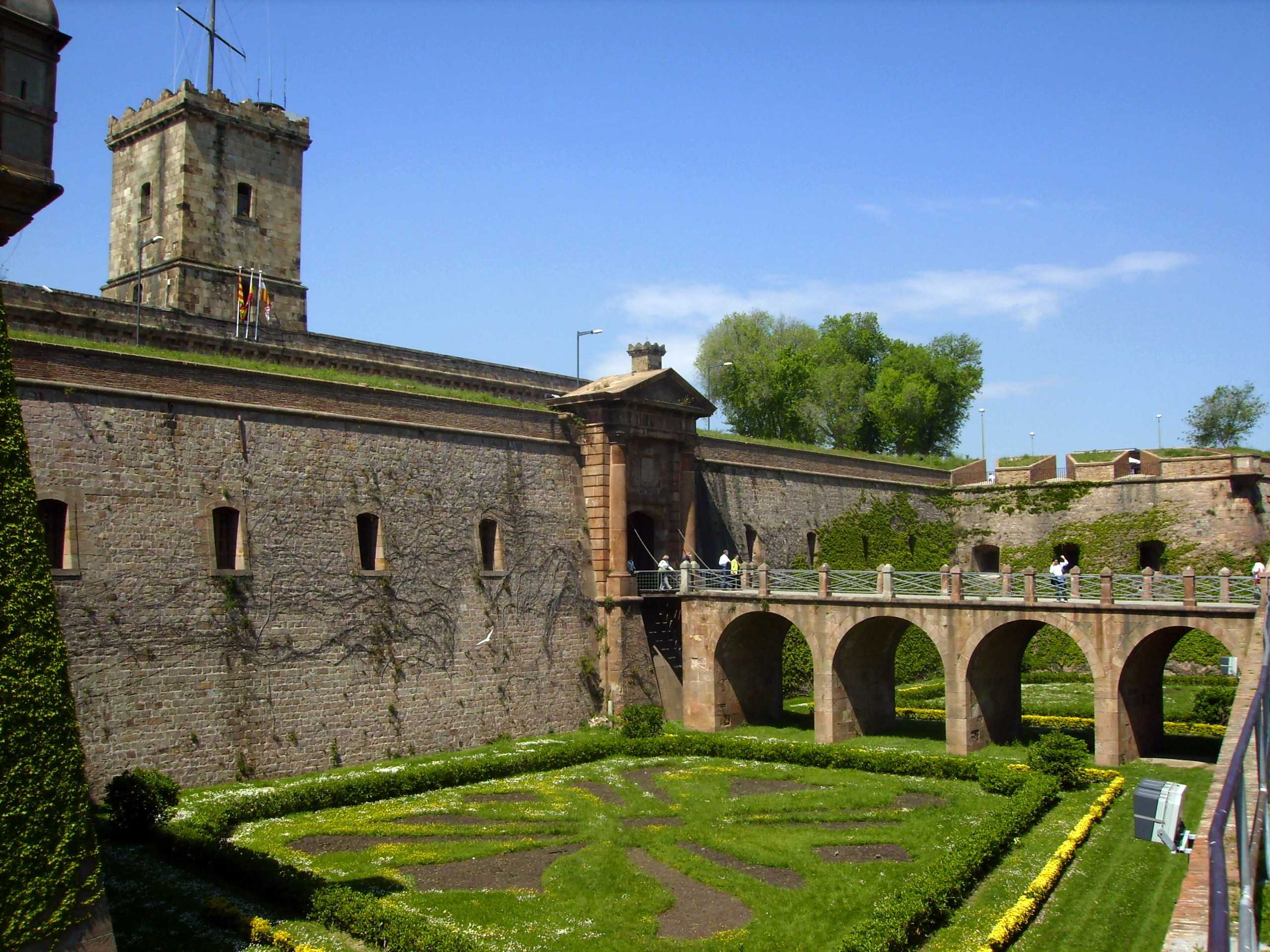
Montjuic Castle
On October 15, 1940, Lluis Companys -- the elected president of the Generalitat of Catalonia -- was led before a firing squad in the moat of Montjuic Castle. He had been captured by the Gestapo in occupied France, handed to Franco's regime, and subjected to a military tribunal that lasted less than an hour. He refused a blindfold. His last words were reportedly "Per Catalunya!" -- For Catalonia. The castle on the hill above Barcelona's harbor had seen centuries of bloodshed by then, but the execution of Companys seared it into Catalan memory as a symbol of everything the fortress had come to represent: power wielded against the people it was built to protect.
Born in Revolt
The fortress traces its origins to 1640, when Catalonia rose against the Spanish crown in what became the Reapers' War. The foundation stone was laid that year, and by January 1641 the new fortification faced its first test. Pedro Fajardo marched on Barcelona with 26,000 men to crush the revolt. The Battle of Montjuic that followed was a Catalan victory, led by Francesc de Tamarit, though it cost the life of Colonel Shane O'Neill -- an Irish exile known in Spain as Prince Juan O'Neill -- who fell from a musket ball near Castelldefels. The King of Spain posthumously granted him the title Viscount Montjuic. It was a fitting irony: the fortress that the Catalans had built to resist Spanish authority ended up named for an Irish soldier who died defending it in the Spanish king's service.
Reshaped by Conquerors
Fifty years after its founding, in 1694, the simple fortification was upgraded with new bastions and battlements, earning the designation of castle. During the Siege of Barcelona in 1705, British forces under Lieutenant-Colonel William Southwell captured it, and Southwell was made its governor -- a reminder that in the War of the Spanish Succession, Barcelona's fate interested all of Europe. The castle's current form dates to 1751, when the Spanish architect Juan Martin Cermeno demolished the old structure and rebuilt it based on designs that the Italian engineer Giovanni Antonio Medrano had drawn up in 1730. Between 1779 and 1799, the castle received its final shape and was armed with 120 cannons. During the Napoleonic Wars, French troops took it without a fight -- the garrison had been ordered not to resist, and Napoleon's army walked in.
The Dark Synonym
After the Catalan defeat of 1714, Montjuic became a tool of the central state. In the late 19th century, the castle grew synonymous with what contemporaries called barbarism -- the systematic torture of anarchists and political prisoners within its walls. The Spanish Civil War deepened its reputation. Between 1936 and 1939, the fortress served as a prison and execution site. Companys' death in 1940 was the culmination of this dark chapter, but hardly the end of it. Franco inaugurated a Military Armor Museum within the walls in 1963, repurposing a place of suffering as a monument to military power. The ironies stacked up like the geological layers of the hill itself, each era depositing its own weight of meaning on the same coordinates.
From Fortress to Forum
In April 2007, the Spanish government transferred Montjuic Castle to Barcelona's city council, and the castle began a transformation from military installation to municipal facility. The military museum closed in 2009. Restoration work addressed the roof and a watchtower, and plans emerged for L'Espai de la Memoria -- a space of memory -- and an interpretive center for the mountain. Today, visitors reach the castle by the Montjuic cable car, a gondola lift whose upper station sits near the entrance, or by the funicular from the Paral-lel metro station. The Port Vell Aerial Tramway offers a third route from the old harbor. From the ramparts, the view sweeps across the city, the port, and the Mediterranean -- a panorama that once served military surveillance and now serves reflection. The cannons are silent. The moat where Companys died is dry, planted with gardens. But Catalonia has not forgotten what happened here.
From the Air
Located at 41.363N, 2.166E atop Montjuic hill, the star-shaped fortress is one of Barcelona's most prominent aerial landmarks. From cruising altitude, the castle is visible on the hill's summit overlooking the harbor and Port Vell to the east. The hill itself rises approximately 170 meters above sea level. Nearest airport: Barcelona-El Prat (LEBL), approximately 10 km southwest. The Montjuic cable car and communications tower nearby provide additional visual references. Best viewed at 3,000-5,000 feet to appreciate the star-fort geometry.