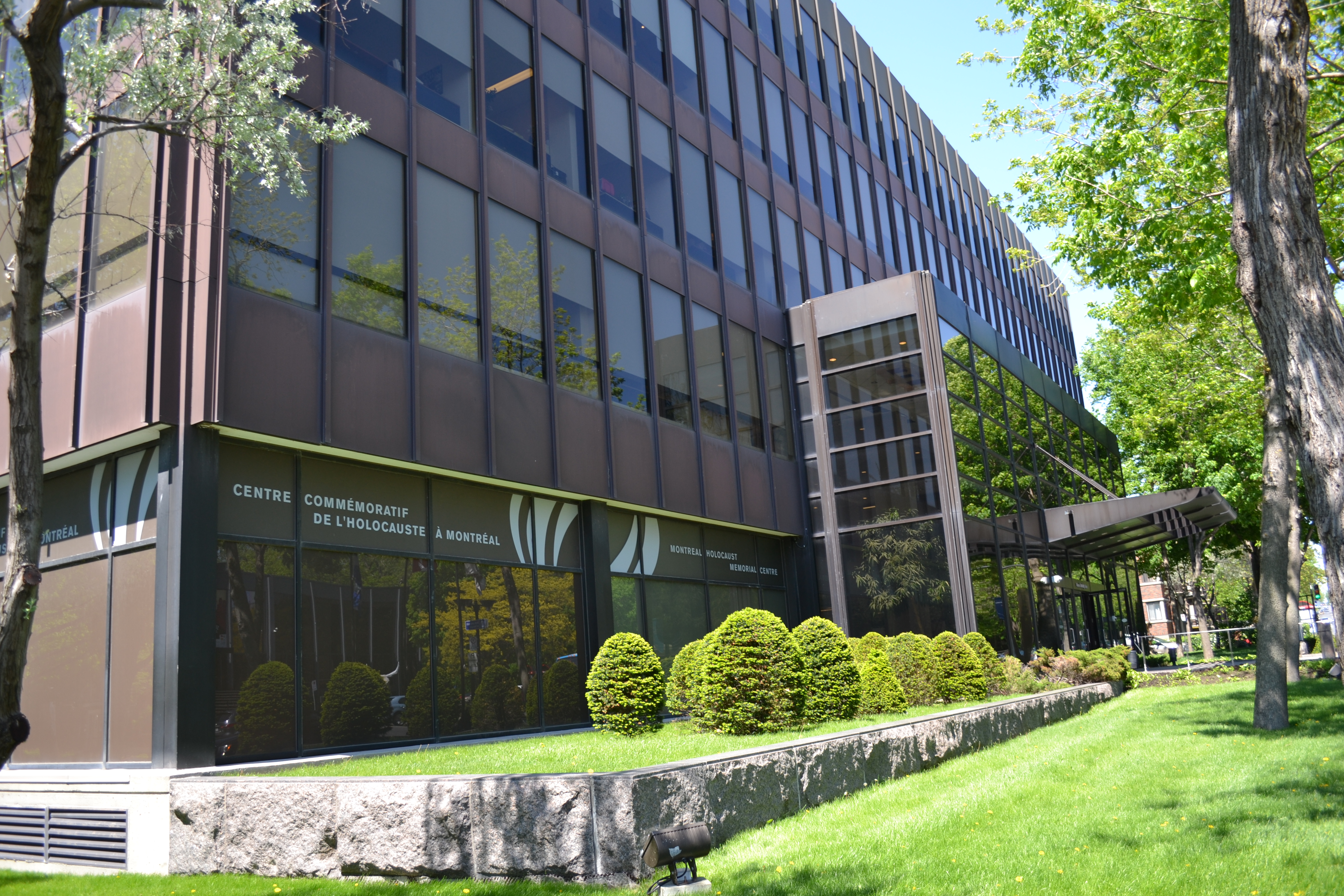
Montreal Holocaust Museum: Canada's First Witness
After the war, they came to Montreal. Jewish refugees who had survived the camps, the ghettos, the years in hiding -- thousands of them settled in this city on the St. Lawrence, making Montreal home to the third-largest population of Holocaust survivors in the world, proportional to its inhabitants, after Israel and New York. For three decades they rebuilt their lives in relative quiet. Then, in 1979, members of the Association of Survivors of Nazi Oppression and young members of the Montreal Jewish community decided that quiet was no longer enough. Led by Steven Cummings, they established the Montreal Holocaust Memorial Centre -- Canada's first institution dedicated to preserving the memory of the Holocaust. What began as a modest exhibition space in the Allied Jewish Community Services building has grown into the country's only recognized Holocaust museum, a place where more than 4,000 artefacts and hundreds of recorded testimonies bear witness to what happened, and what was built afterward.
Objects That Survived
The museum's collection is unlike that of any other Holocaust institution in the world. Nearly every artefact was donated by a local survivor or their descendants -- personal objects carried across oceans and through decades, kept in drawers and closets in Montreal homes until their owners decided the stories attached to them needed a wider audience. A worn pair of shoes from a concentration camp. A prayer book hidden during the years of persecution. Family photographs salvaged from destroyed communities. Over 4,000 of these objects are accessible digitally through the Canadian Jewish Heritage Network, though the museum's full collection numbers more than 12,900 objects, but their physical presence in the museum carries a weight that no screen can replicate. The permanent exhibition, titled "To Learn, To Feel, To Remember," was launched after a major renovation in 2003 funded by government grants and private donations. Interactive touch-screens with maps and timelines were added in 2014, and a free mobile app developed in 2013 extends the exhibition into classrooms that cannot make the trip to Montreal.
Voices Before Silence
The museum holds the largest oral history collection of Holocaust survivor testimonies in Canada, a program that began in 1994 with a sense of urgency that has only deepened with time. Each recorded testimony is designed to capture not just the horror of the Nazi era but the fullness of a life: Jewish culture in Europe before the war, the destruction that followed, and the painstaking work of rebuilding in a new country. The exhibition "And In 1948, I Came to Canada: The Holocaust in Six Dates" focuses on six pivotal moments from the Nazi party's rise to power through the liberation of the concentration camps, with particular emphasis on Canada's response -- a history that includes the country's refusal to accept Jewish refugees aboard the MS St. Louis in 1939. By weaving Montreal survivors' own words and personal artefacts into this chronological framework, the museum transforms abstract historical dates into lived experience.
Remembrance as Practice
Every year, the museum organizes public commemorations for Yom Hashoah, Kristallnacht, and International Holocaust Remembrance Day, gatherings attended by survivors, members of the Jewish community, and public dignitaries. Since 2016, the museum has also held an annual commemoration of the Roma Genocide, organized in partnership with Romanipe, a local non-profit that combats prejudice against Roma people and advocates for Canadian recognition of the genocide of Roma and Sinti. The virtual exhibition "United Against Genocide: Understand, Question, Prevent" explores the similarities and differences between genocides worldwide, extending the museum's mandate beyond the Holocaust into broader questions of how mass atrocity unfolds and how it can be interrupted. Another virtual exhibition, "Building New Lives," follows Jewish refugees in Canada after the war, documenting their contributions to the communities that became their home.
Teaching Beyond the Walls
The museum produces bilingual educational resources -- in English and French -- including pedagogical tools such as "A Brief History of Antisemitism in Canada," "The Heart From Auschwitz," and "Hana's Suitcase," all available for free on its website. A biennial conference trains educators across the country in teaching about the Holocaust and human rights. In 2017, a Canadian government grant funded the "Beyond the Walls" project, which partners with teachers' associations, universities, Holocaust education centres, Jewish Federations, and the Canadian Museum for Human Rights to provide educators in multiple provinces with classroom-ready tools. The museum was renamed from the Montreal Holocaust Memorial Centre to the Montreal Holocaust Museum in 2016, a change intended to reinforce its openness to all visitors and its unique status as the only Holocaust museum in Canada. Since 2012, the institution has also taken public positions on contemporary human rights issues, issuing statements and organizing events that draw direct lines between the history it preserves and the present it inhabits.
From the Air
The Montreal Holocaust Museum is located at 45.489N, 73.636W in the Cote-des-Neiges-Notre-Dame-de-Grace borough of Montreal, housed within the Federation CJA building on Cote-Sainte-Catherine Road. From the air, the building sits in a residential neighborhood west of Mount Royal. Nearby airports include Montreal-Trudeau International (CYUL) approximately 15 km west and Montreal-Saint-Hubert (CYHU) 20 km southeast. Best viewed at 3,000-5,000 feet AGL. The Universite de Montreal campus is visible nearby to the north, and Mount Royal's wooded slopes rise to the east.