Montreal Locomotive Works
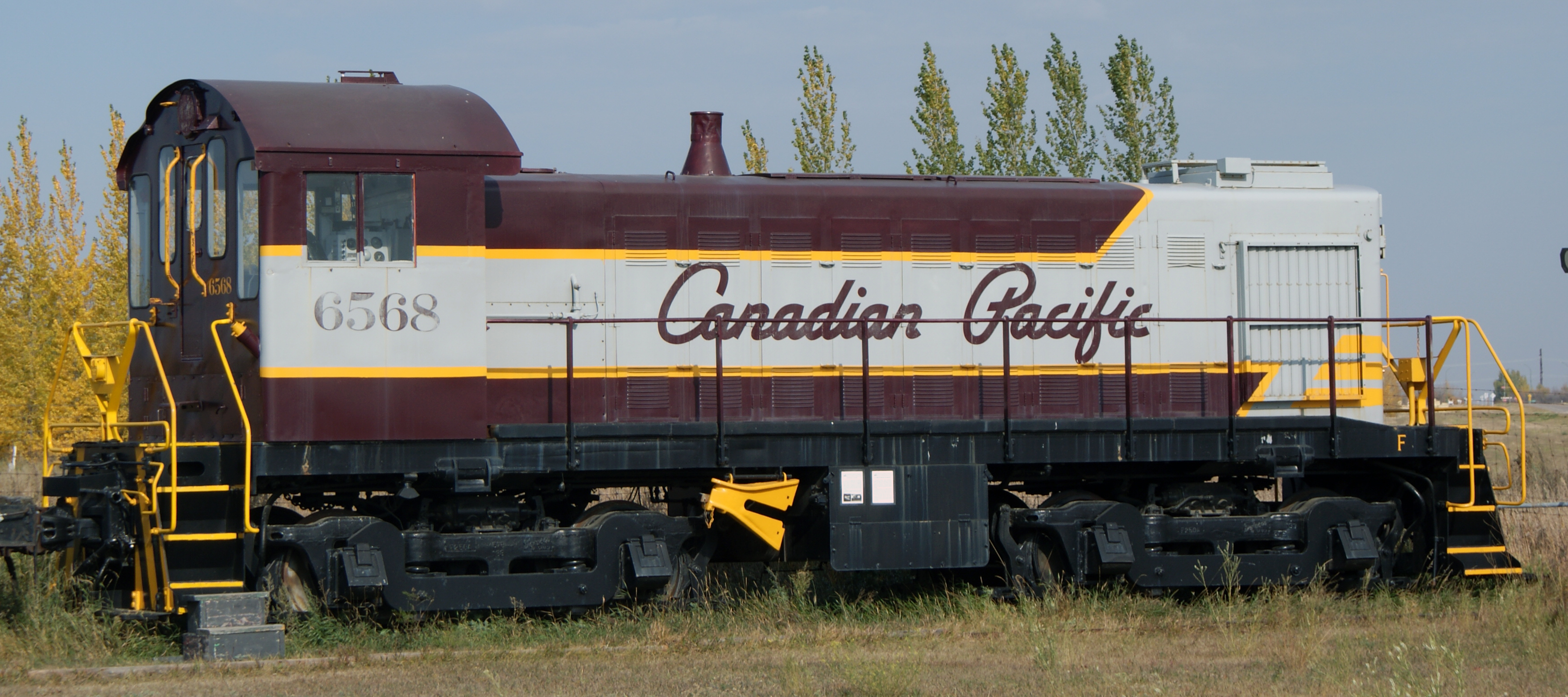
The locomotive that pulled the royal train across Canada in 1939 -- earning the unprecedented right to carry a crown on its running board -- was built in a sprawling factory in Montreal's Hochelaga-Maisonneuve neighborhood. Canadian Pacific 2850, a 4-6-4 Hudson class engine, rolled out of Montreal Locomotive Works and into history, and the entire series of later 2800s (numbered 2820-2864) became known as Royal Hudsons, with permission granted by the king himself. By the time the factory fell silent in 1985, it had passed through five corporate owners, survived the transition from steam to diesel, built tanks for two world wars, and invented the safety cab that became a North American railroad standard. Today, only the 1911 administration building at 1505 Dickson Street survives.
Smoke and Steel on the St. Lawrence
The story begins in 1883, when the Locomotive and Machine Company of Montreal Limited opened for business, building primarily for the booming domestic market -- the Canadian Pacific Railway, the Grand Trunk Railway, and the Intercolonial Railway. In 1901, the American Locomotive Company (Alco), formed by a merger of struggling manufacturers in Schenectady, New York, purchased the Montreal firm in 1904 to tap into the Canadian market. The subsidiary was renamed Montreal Locomotive Works. Protective customs tariffs discouraged Canadian railways from buying American-built locomotives, and when the federal government nationalized several bankrupt private railways between 1918 and 1922 to form Canadian National Railways, it mandated that the new Crown corporation spread its purchases among all Canadian manufacturers. MLW thrived on this guaranteed demand, becoming one of the country's premier locomotive builders.
Tanks on the Assembly Line
When the Second World War arrived, MLW's factory floor transformed almost overnight. The plant's heavy manufacturing capabilities were redirected toward military production for the Commonwealth and Allied war effort, with a largely female workforce turning out Ram tanks and Sexton self-propelled guns -- both based on American chassis designs adapted for Canadian and British service. The Grizzly I cruiser tank, based on the M4 Sherman, rolled off the same floor that had produced Hudson-class steam locomotives just a few years earlier. The war years swelled the factory to its greatest physical extent and cemented its reputation as a versatile heavy manufacturer capable of far more than railroad equipment.
The Diesel Revolution
After the war, MLW faced the same existential challenge as every steam locomotive builder: the diesel-electric engine was coming. In 1949, the same year General Motors established its Canadian diesel subsidiary in London, Ontario, MLW introduced its first Alco-GE-derived diesel designs. Canadian railways were slower to dieselize than their American counterparts -- steam held on through the 1950s -- but by 1960, the transition was essentially complete. MLW's diesel road switchers earned a reputation for superior rail adhesion at low speeds, making them favorites on steeply graded lines. The company also ventured briefly into mass transit, winning a 1960 contract to build 36 subway cars for the Toronto Transit Commission -- the first rapid transit vehicles designed and built in Canada.
Five Owners and the Safety Cab
MLW's corporate parentage reads like a genealogy of North American industrial decline. Alco was purchased by Worthington Corporation in 1964, renaming the subsidiary MLW-Worthington. Worthington merged with Studebaker in 1967. After Alco's Schenectady plant closed in 1969, locomotive designs transferred to Montreal. Through all the corporate turmoil, MLW-Worthington kept innovating. At the request of Canadian National, the company developed the wide-nosed safety cab, which provided improved crew accommodation and collision protection. First appearing on the M-420, this design became a North American industry standard. MLW also partnered with Pratt and Whitney Canada to build the TurboTrain fleet that ran between Toronto and Montreal from 1968 to 1982. In 1975, Quebec-based Bombardier purchased a 59 percent stake and pushed MLW into building the LRC (Light, Rapid, Comfortable) passenger locomotives for the newly created Via Rail.
Rubble on Dickson Street
In 1985, Bombardier reorganized and ceased locomotive manufacturing, shifting to passenger rolling stock and aircraft. The dormant MLW plant was sold to General Electric in 1988 -- ironically, GE used it to rebuild the very locomotive models that had driven Alco out of business. GE closed the plant in 1993. Fire destroyed half of it in 2001. By 2004, the enormous complex was demolished entirely, replaced by a shipping warehouse and a parts store. Some rubble from the factory can still be seen on the vacant lot east of Dickson Street and Souligny Avenue. Bombardier eventually returned to locomotive manufacturing using European designs that retained nothing of the Alco/MLW heritage, and in 2021, Bombardier Transportation itself was sold to French manufacturer Alstom. The century-long lineage of Montreal-built locomotives had ended, but its legacy -- the safety cab, the Royal Hudsons, the TurboTrains -- still runs on Canadian rails.
From the Air
Located at 45.569N, 73.531W in the Hochelaga-Maisonneuve district of east Montreal. The original MLW factory complex has been demolished; only the 1911 administration building at 1505 Dickson Street remains. The site sits roughly 1.5nm east-northeast of Olympic Stadium. From the air, the area now appears as a mix of industrial lots and commercial buildings near the intersection of Dickson Street and Souligny Avenue. Nearest airports: Montreal/Pierre Elliott Trudeau International (CYUL) approximately 13nm west, Montreal/Saint-Hubert (CYHU) approximately 7nm southeast. Best viewed at 2,000-4,000 feet AGL.