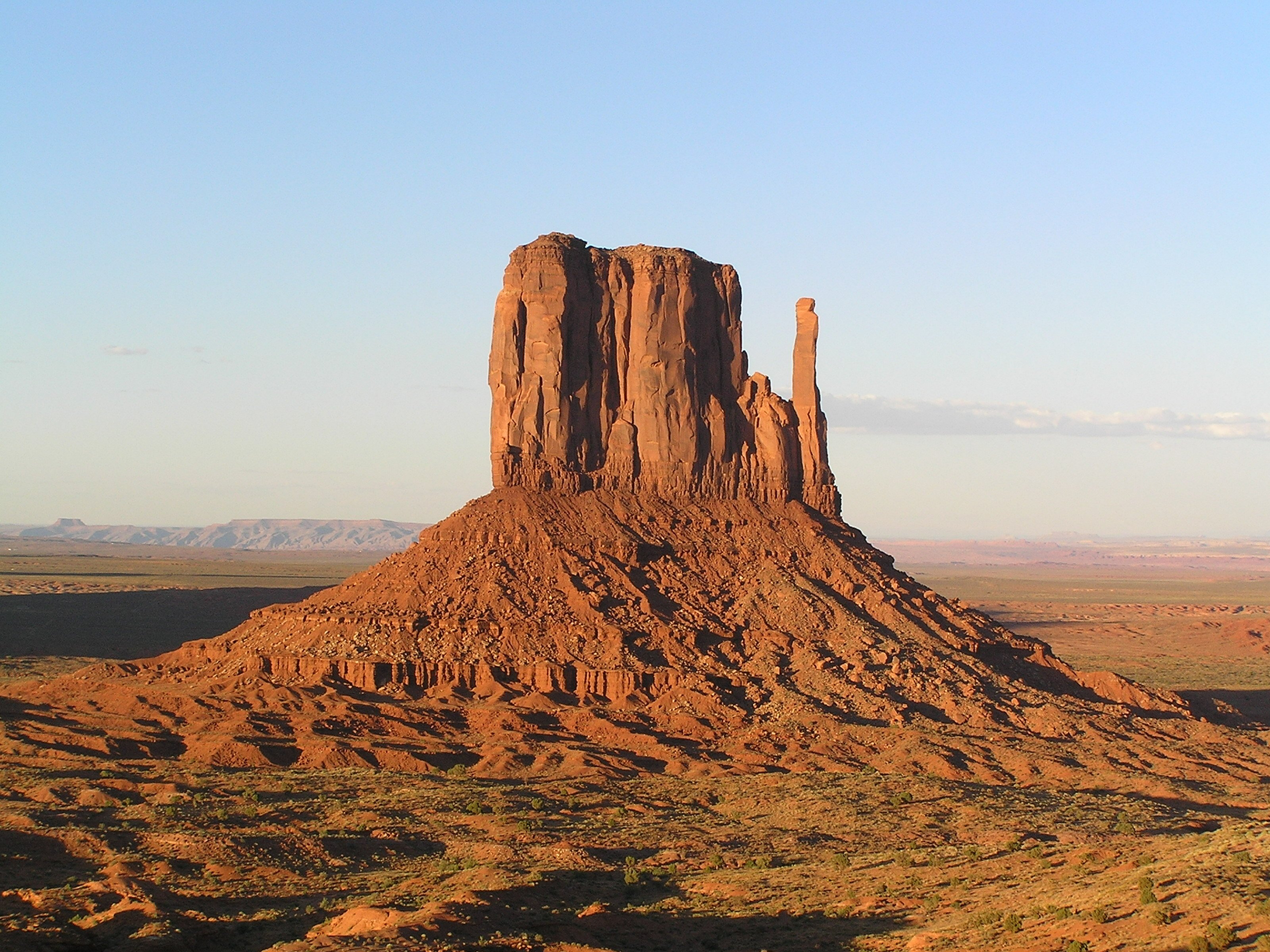
Monument Valley: The Landscape That Became the West
You've seen Monument Valley even if you've never been there. The Mittens, Merrick Butte, the Totem Pole - these formations appear in every visual vocabulary of the American West. John Ford filmed nine movies here, establishing the landscape as Western shorthand. Every car commercial, every cigarette ad, every movie needing 'West' points cameras at these buttes. The irony is thick: Monument Valley is Navajo Nation, Indigenous land managed by Indigenous people, but its image represents the cowboy mythology that displaced Indigenous peoples. The formations don't care about the contradiction. They've stood for 50 million years, icons whether or not anyone was watching.
The Geology
Monument Valley's buttes are remnants of a sandstone plateau - what remains after millions of years of erosion removed the rest. The formations are Permian-age rock, deposited 250-290 million years ago in coastal dunes and riverbeds. The red color comes from iron oxide; the dramatic shapes result from differential erosion of harder and softer layers. The buttes are slowly disappearing, losing material to wind and water, eventually to become mesas, then buttes, then spires, then nothing. What seems permanent is geological moment - formations captured in their photogenic phase before erosion reduces them further.
The Films
Director John Ford discovered Monument Valley in 1938 and made it Hollywood's West. 'Stagecoach,' 'The Searchers,' 'She Wore a Yellow Ribbon' - Ford's westerns used the buttes as backdrop for stories that had nothing to do with the Navajo who lived there. The visual power was undeniable; imitators followed. The valley became synonymous with a mythological West of cowboys and Indians, the formations so familiar that viewers assumed the 'real' West looked like this everywhere. It doesn't. Monument Valley is unique - but the association with Western mythology is now inseparable from the landscape.
The Nation
Monument Valley is part of the Navajo Nation, the largest Native American reservation in the United States. The Navajo have lived in this region for centuries, herding sheep, building hogans, developing one of North America's most resilient Indigenous cultures. Monument Valley Navajo Tribal Park is managed by the Navajo Parks and Recreation Department, not the federal government. Entrance fees and tour revenues benefit the Navajo Nation. Navajo guides lead tours into areas closed to unaccompanied visitors, providing cultural context that independent exploration cannot. The landscape that Hollywood used to tell settler stories is Navajo homeland, and the Navajo control access.
The Experience
Monument Valley's scale exceeds photographs. The buttes are larger, the distances greater, the silence more complete than any image conveys. The 17-mile scenic drive is unpaved and rough, passable in regular vehicles but better suited to high-clearance. Navajo-led tours access areas closed to independent visitors, including slot canyons, petroglyphs, and viewpoints beyond the scenic drive. The View Hotel, the only lodging inside the park, offers sunrise balcony views that justify the premium. Visitors seeking authentic West find it here - not cowboy mythology but Navajo reality, ancient geology shaping modern economy.
Visiting Monument Valley
Monument Valley Navajo Tribal Park is located on the Arizona-Utah border within the Navajo Nation, approximately 180 miles north of Flagstaff. The visitor center offers orientation and tour booking. The 17-mile Valley Drive is self-guided, rough, and spectacular - allow 2-3 hours. Navajo-guided tours access restricted areas and provide cultural interpretation. The View Hotel and Goulding's Lodge provide accommodation near the park. The park observes Navajo Nation time, which does not follow daylight saving. Admission fees benefit the Navajo Nation. Photography is welcomed except at certain cultural sites. The experience rewards patience and early rising - sunrise paints the buttes in color that midday bleaches away.
From the Air
Located at 36.98°N, 110.10°W on the Arizona-Utah border within the Navajo Nation. From altitude, Monument Valley's buttes are unmistakable - red sandstone towers rising from beige desert floor, the formations' isolation making them visible from extreme distance. The Mittens and Merrick Butte are the most recognizable shapes. The valley floor shows roads and scattered structures. The surrounding Navajo Nation extends in all directions - one of America's largest continuous territories under Indigenous governance. The Four Corners monument is visible to the east. The landscape that defined Hollywood's West is visible from altitude as what it actually is: Navajo homeland, ancient rock in Indigenous care, icons that belong to those who have lived among them longest.