Moore Dry Dock Company
The 1906 San Francisco earthquake destroyed a lot of things. One of them was a small iron works in Hunter's Point that belonged to Robert and Joseph Moore and their partner John Thomas Scott. Rather than rebuild in the ruins, they looked across the Bay and saw an opportunity on the Oakland Estuary. That decision - to start over on the other shore - would produce one of the most productive shipyards in American history, a place where over a hundred vessels launched for the Navy during World War II alone, and where a labor dispute in 1950 generated legal standards that courts still apply seven decades later.
Iron Men on the Estuary
The Moore brothers and Scott were shipbuilding royalty, or close to it. Robert Moore had been vice president of the Risdon Iron Works in San Francisco. John Thomas Scott was nephew to Henry T. and Irving M. Scott, owners of the nearby Union Iron Works, where John had worked his way from apprentice to superintendent. In 1905 they purchased the National Iron Works and founded Moore & Scott Iron Works. A year later, the earthquake and its fires leveled their enterprise. By 1909 they had purchased the W. A. Boole & Son Shipyard at the foot of Adeline Street in Oakland for roughly $500,000. The Boole yard had its own claim to history: on May 18, 1901, it launched the Lahaina, the first ship ever built in Oakland. Moore and Scott were not starting from nothing. They were building on a tradition.
Two Wars and the Ships Between
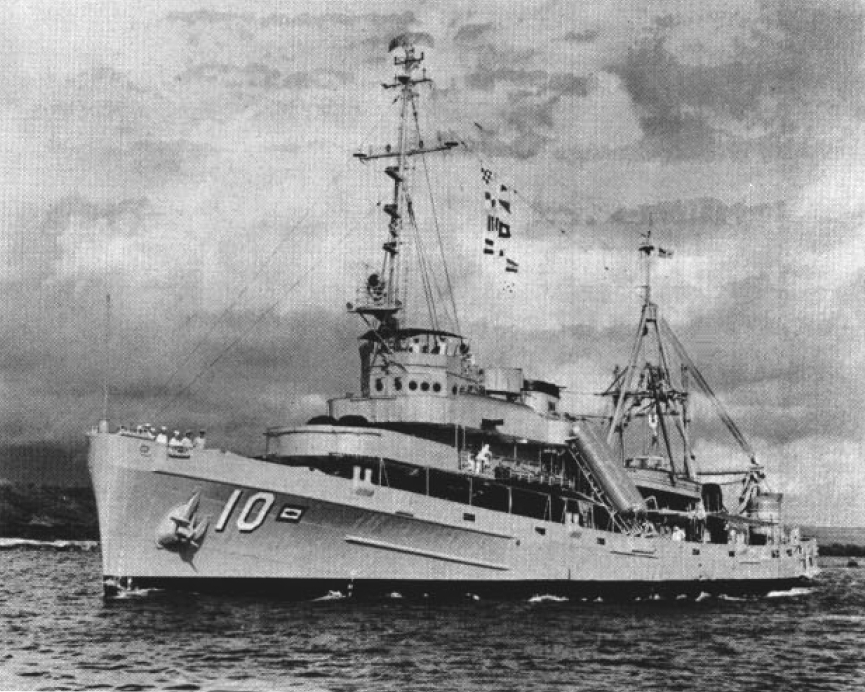
In 1917, Robert Moore bought out Scott and renamed the operation Moore Shipbuilding Company. During World War I, the yard built ships for the U.S. Shipping Board, including vessels that would later serve as British Empire ships. Then the orders stopped. The postwar collapse in demand, compounded by arms reduction treaties and the Great Depression, forced a reinvention. In 1922, the company became Moore Dry Dock Company, pivoting to ship repair as its primary business. When World War II arrived, the yard expanded with an urgency that matched the crisis. Moore Dry Dock built C2 and C3 cargo ships, Ashland-class dock landing ships, refrigerated cargo vessels, submarine tenders, submarine rescue ships, and seaplane wrecking derricks. Over a hundred ships in all. The company ranked 82nd among U.S. corporations in the value of wartime military production contracts - a remarkable output for a yard that had spent the previous two decades patching hulls rather than building them.
The Picket That Made Law
In 1950, a dispute between the Sailors' Union of the Pacific and a ship owner brought picketers to Moore's gate. The ship in question was sitting in Moore's dry dock for repairs, and the union's quarrel was with the ship's owner, not with Moore itself. But the picket line shut down the entire yard. The resulting legal battle reached the National Labor Relations Board, which established what became known as the Moore Dry Dock Standards - a set of rules governing when unions can picket at a secondary employer's site. The decision, formally Sailors' Union of the Pacific (Moore Dry Dock Co.), 92 NLRB 547, remains foundational in American labor law. It clarified the boundaries between a union's right to protest and a neutral employer's right to operate without being dragged into someone else's fight. Few shipyards can claim to have shaped constitutional labor doctrine. Moore can.
The Yard Goes Quiet
Shipbuilding ceased at Moore when the war ended, though repair work continued for another sixteen years. By 1961, the economics no longer worked. The yard that had launched the first ship built in Oakland and armed the Pacific fleet closed its gates for the last time. The site at the foot of Adeline Street on the Oakland Estuary was acquired by Schnitzer Steel, now known as Radius Recycling. The inner harbor where Moore's cranes once swung ship hulls into the water became a scrap metal operation - a fitting if unglamorous second life for a place that had always worked with steel. Moore Dry Dock Company existed for fifty-six years. In that span it survived an earthquake, two world wars, a depression, and the boom-and-bust cycles that define American shipbuilding. What it could not survive was peace.
From the Air
The former Moore Dry Dock Company site (37.797N, -122.290W) sits on the north bank of the Oakland Estuary, at the foot of Adeline Street. From 2,000-3,000 feet AGL, the Oakland Estuary is the narrow tidal channel separating Oakland from Alameda, lined with port facilities and industrial operations. The former Moore site is now a Radius Recycling (formerly Schnitzer Steel) facility, identifiable by scrap metal piles near the estuary's north bank. The Port of Oakland's container cranes are visible to the northwest. Oakland Metro (KOAK) is 3nm southeast. San Francisco International (KSFO) is 14nm south across the Bay.