Moray Firth Fishing Disaster
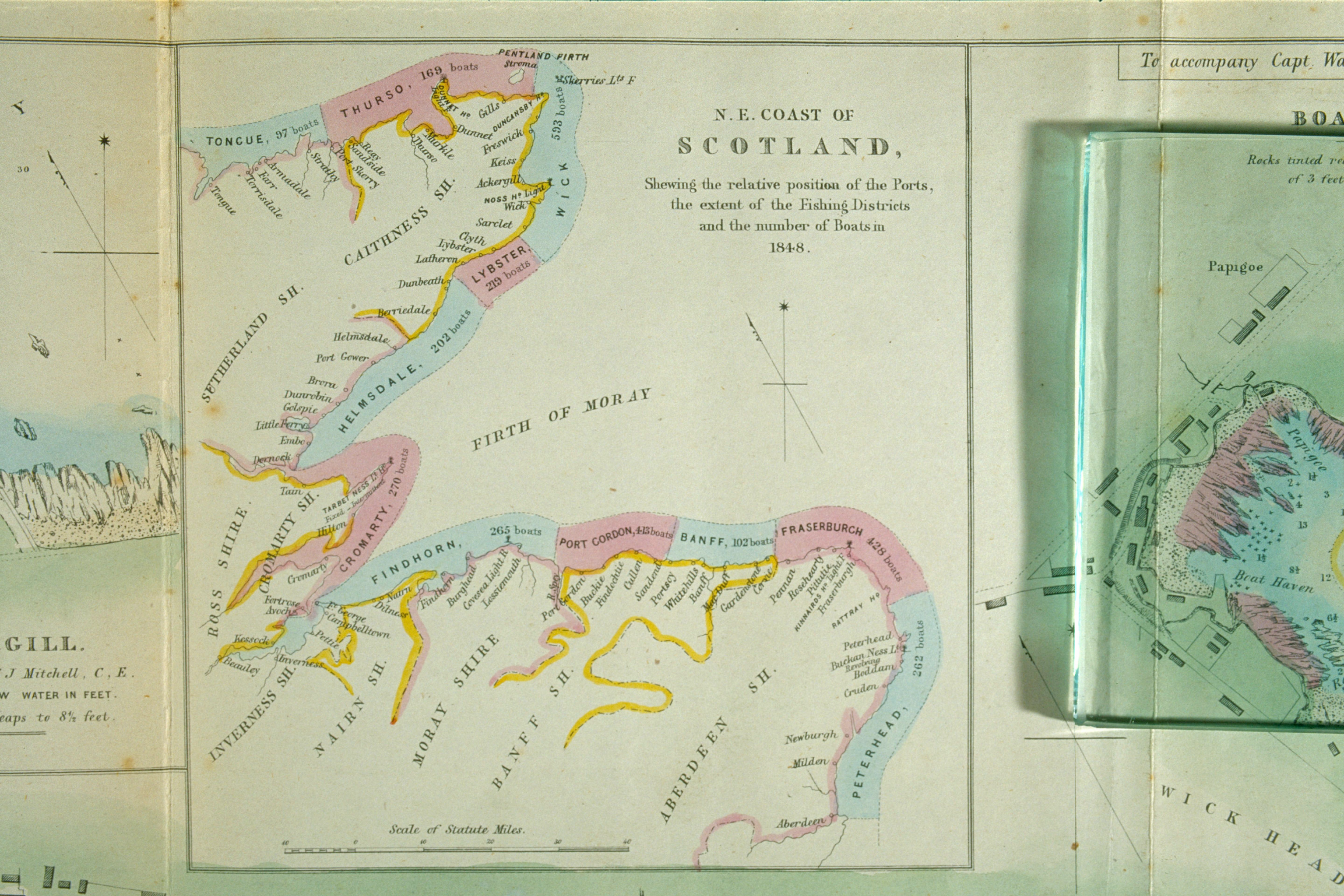
On the afternoon of 18 August 1848, the weather looked promising. From Wick in the far north to Stonehaven in the south, roughly 800 small fishing boats set out into the Moray Firth to gather the day's herring catch. By midnight, the wind had turned savage. By morning, 124 boats had been lost and 100 fishermen were dead, leaving behind 47 widows and 161 children. It was one of the worst fishing disasters in Scotland's maritime history, and its aftermath reshaped an entire industry.
Open Boats on an Open Sea
Scottish fishing boats of the early 19th century were small, shallow-draughted vessels with open hulls -- no decks, no shelter, no protection for the crew if the sea turned hostile. The design had practical logic: open boats were light enough to be launched from beaches and small harbours, and their unobstructed hulls could hold the maximum catch. The herring trade had been growing for decades, spurred by government bounties that rewarded larger catches rather than safer vessels. Dutch fishermen had long used large, decked "Buss" boats that stayed at sea for weeks, but Scottish boats remained stubbornly open, working close to shore in vessels that could be swamped in minutes by a rising sea.
A Night That Changed Everything
The storm struck without adequate warning, and many skippers were already far from harbour when the winds strengthened. Boats that had survived previous gales were overwhelmed. Many were lost while attempting to enter harbour -- crushed against piers or capsized in the surf at the harbour mouth. The human toll rippled through fishing communities along hundreds of miles of coastline. These were not anonymous deaths: every skipper, every crewman was known by name in his home village. The widows and children they left behind faced not only grief but destitution, since in many households the men who drowned had been the sole source of income.
Captain Washington's Report
The government appointed Captain John Washington of the Admiralty to investigate. His 1849 report to the House of Commons reached two conclusions: the open-hulled design of the fishing boats was fundamentally dangerous, and Scotland's east coast lacked sufficient harbours accessible in all tidal conditions. Washington recommended both decked vessels and a programme of harbour improvements. The Fishery Board for Scotland took up the cause, though fishermen initially resisted the introduction of decks -- partly because decking reduced the space available for the catch, and partly from a fear that decks would increase the risk of men being swept overboard.
The Boats That Followed
Change came gradually. The main boat types on the east coast were the Fifie and the smaller Skaffie, common around the Moray Firth. As decks were introduced, boats grew larger to compensate for lost cargo space. New vessels added a small forecastle in the bow, providing bunks and shelter for crews who had previously worked exposed to wind and spray. This evolution led to the Baldie in 1860 and the Zulu in 1879 -- hybrid designs that combined the best features of the Fifie and Skaffie with full decking and greater seaworthiness. By the end of the century, every east coast fishing vessel was fully decked. A hundred fishermen died because their boats had no protection from the sea. Their deaths ensured that the boats that followed would.
From the Air
Located at 57.695N, 3.604W in the Moray Firth, northeast Scotland. The disaster affected the entire firth from Wick to Stonehaven. The fishing harbours of Lossiemouth, Burghead, and Buckie are visible along the south shore. Best viewed at 3,000-5,000 ft AGL. Nearest airports: Inverness (EGPE) 20 nm west, RAF Lossiemouth (EGQS) 10 nm east.