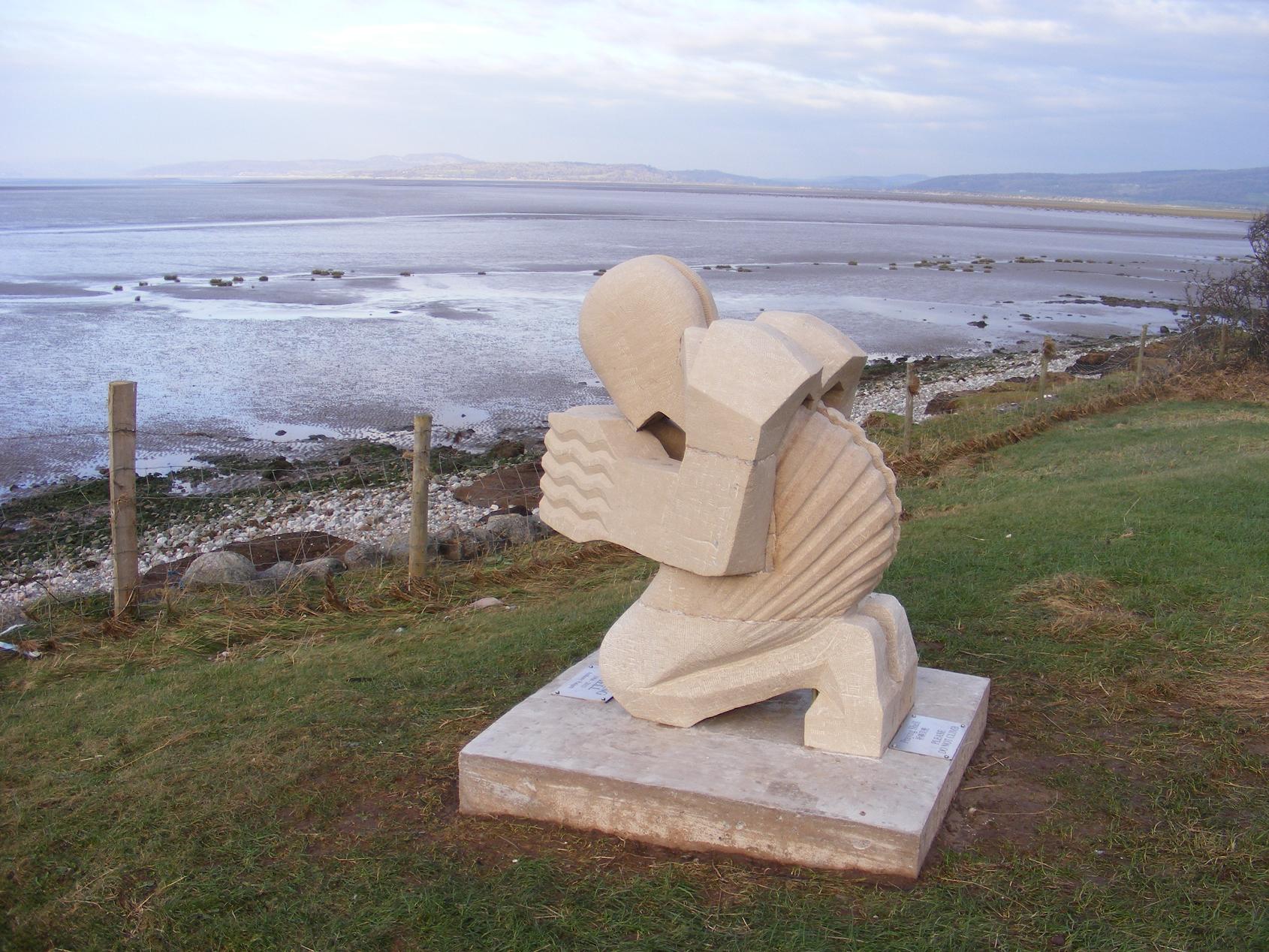
Morecambe Bay Cockling Disaster
The emergency call came just before nightfall. A man's voice, barely audible, speaking almost no English, managed two words before the line cut off: 'sinking water.' It was the evening of 5 February 2004, and somewhere on the vast tidal sand flats of Morecambe Bay, 23 Chinese workers were being swallowed by an incoming tide. They had been sent onto the sands to harvest cockles -- a job that locals understood was governed by tide tables, shifting channels, and centuries of hard-won knowledge. The workers, most of them farmers from rural Fujian Province, had none of that knowledge. They had been trafficked into Britain in shipping containers, controlled by criminal networks, and sent to work dangerous tidal flats by a gangmaster who valued their labour and not their lives.
Far from Home
The workers had arrived in Liverpool the way many trafficked labourers reached Britain -- through a network of Chinese criminal organizations that charged enormous fees for passage and then kept their charges in debt bondage. Most had been farmers in China. Two had been fishermen. None understood the lethal rhythms of Morecambe Bay, where the tide comes in across miles of flat sand faster than a person can run, and where the channels that seem shallow at low tide become deep, swift rivers within minutes. The cockles they were harvesting are found at low tide on the sand flats near Warton Sands, close to Hest Bank. Around thirty workers set out at four in the afternoon, when the tide was retreating. By the time it turned, they were stranded.
The Tide Comes In
British cockle pickers returning to shore that evening saw the Chinese group still working on the sands. They tried to warn them, tapping their watches and attempting to communicate across the language barrier. The warnings went unheeded or ununderstood. As the tide swept in, four workers died when the truck they had used to reach the cockling area was overwhelmed by water. Others scattered across the sands in darkness, trying to find higher ground that did not exist. At least eighteen more drowned in the rising water, some attempting to swim in the wrong direction. Fifteen members of the group managed to reach shore. The remains of one further missing worker were not found until 2010.
The Gangmaster
Lin Liang Ren, a gangmaster operating from Lemon Street in Kirkdale, Liverpool, was found guilty of the manslaughter of at least 21 people and sentenced to 14 years in prison. Two associates received lesser sentences for facilitating illegal immigration and perverting the course of justice. The trial exposed a system of exploitation in which undocumented workers were entirely dependent on their gangmasters for housing, transport, and work -- with no recourse, no language skills, and no understanding of the dangers they faced. The disaster led directly to the creation of the Gangmasters Licensing Authority, now the Gangmasters and Labour Abuse Authority, which regulates labour providers in agriculture, shellfish gathering, and food processing.
The Bay Remembers
Morecambe Bay is beautiful and treacherous in equal measure. At low tide, the sand flats stretch for miles under wide Lancashire skies, the channels braiding like silver ribbons across the brown expanse. It is a landscape of deceptive calm -- until the tide turns. Nick Broomfield's 2006 film Ghosts dramatized the journey of one worker from China to the sands of Morecambe Bay. Artist Isaac Julien's 2010 film Ten Thousand Waves took its name from a line of Chinese poetry about drowning. Folk musician Kevin Littlewood wrote 'On Morecambe Bay,' later covered by Christy Moore. These works share a common purpose: to ensure that the 23 people who died on a February evening are remembered not as statistics or immigration cases, but as human beings who traveled thousands of miles seeking a better life and found, instead, cold water rising in the dark.
From the Air
Morecambe Bay is at approximately 54.11N, 2.83W, a vast tidal inlet on the Lancashire/Cumbria coast in northwest England. The sand flats where the workers drowned are near Warton Sands, close to Hest Bank on the eastern shore. The bay is one of the largest in England, clearly visible from altitude as a massive expanse of sand and water between Lancaster and Barrow-in-Furness. Nearest airports: Blackpool (EGNH, 20nm southwest) and Lancaster (no ICAO). The bay's distinctive shape and the Kent and Leven estuaries feeding into it are unmistakable landmarks.